Connectome‐based predictions of cognition and sex differences in midlife individuals at risk for Alzheimer's Disease
Qing Qi, Rory Boyle, Bolin Cao, Graciela Muniz‐Terrera, Ivan Koychev, Paresh Malhotra, John T O'Brien, Craig Ritchie, Brian Lawlor, Lorina Naci

TL;DR
This study finds that brain networks linked to memory differ between men and women in midlife, which may explain why women are more affected by Alzheimer's disease.
Contribution
The study identifies sex-specific brain networks associated with episodic and relational memory in midlife individuals at risk for Alzheimer's.
Findings
Both positive and negative brain networks were linked to memory in the overall group.
Female-only models showed better prediction of memory-related networks than male-only models.
Results did not generalize to an external dataset, suggesting a need for further validation.
Abstract
Females generally show better memory performance, particularly in episodic memory, than males across the lifespan [1‐3]. However, two‐thirds of Alzheimer's disease (AD) cases occur in females, who experience more rapid cognitive decline and brain atrophy in the presence of AD‐related neuropathology [4]. The functional brain architecture underlying episodic and relational memory in middle‐aged individuals—and whether this differs by sex—remains poorly understood. This study aimed to identify the functional brain architecture associated with episodic and relational memory using a data‐driven approach, focusing on sex differences. Resting‐state functional MRI data and neuropsychological assessments were obtained from 488 cognitively healthy individuals (316 F/172 M), aged 40‐59 years, from the PREVENT‐Dementia study. Connectome‐based predictive modeling (CPM) was used to identify…
Genes, proteins, chemicals, diseases, species, mutations and cell lines named across the full text — each resolved to its canonical identifier and authoritative record.
Click any figure to enlarge with its caption.
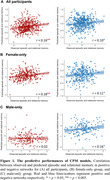 Figure 1
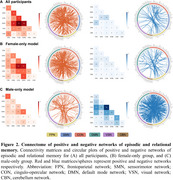 Figure 2
Peer Reviews
No public reviews on file for this paper yet. If you reviewed it on a platform where reviews are public (OpenReview, ICLR, NeurIPS, ICML), you can paste yours below so the community can read it here.
Videos
No videos yet. Explain this paper in a talk, walkthrough, or lecture? Add one.
Taxonomy
TopicsFunctional Brain Connectivity Studies · Dementia and Cognitive Impairment Research · Mental Health Research Topics