Older adults with subjective memory complaints and brain amyloidosis show stable electroencephalographic rhythms, cortical structure, and cognitive performances over 2 years
Susanna Lopez, Harald Hampel, Claudio Del Percio, Giuseppe Noce, Roberta Lizio, Stefan J. Teipel, Martin Dyrba, Andrea Vergallo, Raffaele Ferri, Matteo Pardini, Claudio Babiloni

TL;DR
The study found that older adults with memory complaints and brain amyloidosis showed stable brain rhythms and cognitive performance over two years, regardless of education level.
Contribution
The study explores how education level affects brain rhythms and progression in older adults with memory complaints and amyloidosis.
Findings
SMCneg with high education showed greater posterior alpha rhythms compared to those with low education.
SMCpos with high education showed reduced alpha rhythms and parietal cortical thickness compared to low education SMCpos.
No significant changes in EEG or MRI markers occurred over two years in the studied group.
Abstract
It is well‐known that in patients with Alzheimer's disease (AD) and high education attainment, cognitive performance is typically better than expected based on the burden of brain neuropathology and neurodegeneration (Stern et al., 2018; doi: 10.1016/j.neuroimage.2018.05.033). This resilience of the cognitive status was attributed to a sort of cognitive reserve (CR) accumulated by persons with high education attainment, which predicts a life with engaging job, intellectual, and social demands (Arenaza‐Urquijo et al. 2015; doi: 10.3389/fnagi.2015.00134; Stern et al. 2018). Previous resting‐state eyes‐closed electroencephalographic (rsEEG) studies showed that alpha rhythms in posterior visual and visuospatial areas are related to CR in healthy adults, subjective memory complaints (SMC) seniors, and patients with mild cognitive impairment due to AD (ADMCI). In the present exploratory…
Genes, proteins, chemicals, diseases, species, mutations and cell lines named across the full text — each resolved to its canonical identifier and authoritative record.
Click any figure to enlarge with its caption.
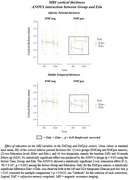 Figure 1
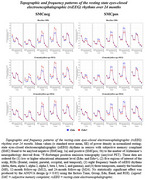 Figure 2
Peer Reviews
No public reviews on file for this paper yet. If you reviewed it on a platform where reviews are public (OpenReview, ICLR, NeurIPS, ICML), you can paste yours below so the community can read it here.
Videos
No videos yet. Explain this paper in a talk, walkthrough, or lecture? Add one.
Taxonomy
TopicsDementia and Cognitive Impairment Research · Alzheimer's disease research and treatments · Functional Brain Connectivity Studies