Association of Occipital Amyloid PET Burden with ARIA‐E: Exploratory Analyses in Three Clinical Trials of Donanemab
Ian A. Kennedy, Min Jung Kim, Ming Lu, John R. Sims, Mark A. Mintun, Emily C. Collins, Sergey Shcherbinin

TL;DR
This study finds that higher amyloid buildup in the occipital brain region at the start of treatment is linked to a higher risk of brain swelling in patients treated with donanemab for early Alzheimer's.
Contribution
The study introduces occipital amyloid burden as a novel predictor of ARIA-E risk in donanemab-treated Alzheimer's patients.
Findings
Elevated baseline occipital amyloid burden was independently associated with increased ARIA-E risk over 76 weeks.
Both comparable and elevated occipital burden showed statistically significant higher ARIA-E risk compared to lower burden.
Elevated occipital burden was associated with ARIA-E across all APOE ε4 carrier groups.
Abstract
Amyloid‐related imaging abnormalities including edema/effusions (ARIA‐E) occur with amyloid‐targeting therapies. Major risk factors for ARIA‐E include apolipoprotein (APOE) ε4 carrier status, microhemorrhages, and cerebral amyloid angiopathy (CAA). Though differential diagnosis between CAA and Alzheimer's disease (AD) is challenging, amyloid plaque burden in occipital regions may be higher in CAA than AD. This work explores the association of ARIA‐E with occipital amyloid burden in donanemab‐treated participants with early symptomatic AD. Data included donanemab‐treated participants with early symptomatic AD in TRAILBLAZER‐ALZ (NCT03367403), TRAILBLAZER‐ALZ 2 (NCT04437511), and TRAILBLAZER‐ALZ 4 (NCT05108922). Amyloid pathology was assessed with florbetapir or florbetaben positron emission tomography (PET). Baseline amyloid burden was calculated in the atlas‐based lateral occipital…
Genes, proteins, chemicals, diseases, species, mutations and cell lines named across the full text — each resolved to its canonical identifier and authoritative record.
Click any figure to enlarge with its caption.
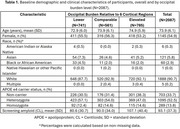 Figure 1
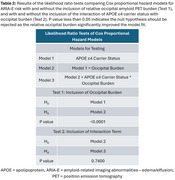 Figure 2
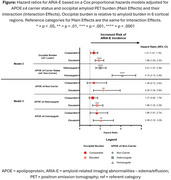 Figure 3
Peer Reviews
No public reviews on file for this paper yet. If you reviewed it on a platform where reviews are public (OpenReview, ICLR, NeurIPS, ICML), you can paste yours below so the community can read it here.
Videos
No videos yet. Explain this paper in a talk, walkthrough, or lecture? Add one.
Taxonomy
TopicsIntracerebral and Subarachnoid Hemorrhage Research · Dementia and Cognitive Impairment Research · Alzheimer's disease research and treatments