Plasma biomarkers predict long‐term longitudinal cognitive decline in individuals at‐risk for Alzheimer's disease: differences across demographic groups
Armand González Escalante, Paula Ortiz‐Romero, Javier Torres‐Torronteras, Esther Jiménez‐Moyano, Helena Blasco‐Forniés, Marina De Diego‐Osaba, Federica Anastasi, Gallen Triana‐Baltzer, Hartmuth Christian Kolb, Eugeen Vanmechelen, David López‐Martos, Gonzalo Sánchez‐Benavides

TL;DR
Plasma biomarkers can predict cognitive decline in people at risk for Alzheimer's, with some differences based on sex and other factors.
Contribution
This study identifies plasma p-tau biomarkers as strong predictors of cognitive decline and reveals sex-specific effects of GFAP.
Findings
Plasma p-tau217, p-tau181, and p-tau231 showed the strongest associations with cognitive decline.
Plasma GFAP was linked to cognitive decline in men but not in women.
Most biomarkers were robust across demographic factors like age, BMI, and education.
Abstract
Plasma biomarkers are promising tools for detecting Ab pathology in cognitively unimpaired (CU) individuals. However, their association with cognitive trajectories and how this associations vary across demographic subgroups remain unclear. This study investigates a range of plasma biomarkers to determine whether baseline levels predict cognitive trajectories in CU individuals at‐risk of Alzheimer's disease (AD) and explores differences in these associations across age, sex, Body Mass Index (BMI), APOE‐ε4 carriership and years of education, regardless of amyloid status. We included 235 CU participants at‐risk of AD from the ALFA+ study, who are visited every 3 years, and had cognitive trajectories assessed using a sensitive modified preclinical Alzheimer's cognitive composite (mPACC) over three visits (follow‐up: 6.56±0.52 years; Table 1). Baseline plasma biomarkers (p‐tau181 [Quanterix…
Genes, proteins, chemicals, diseases, species, mutations and cell lines named across the full text — each resolved to its canonical identifier and authoritative record.
Click any figure to enlarge with its caption.
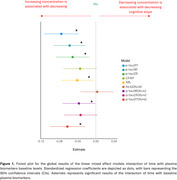 Figure 1
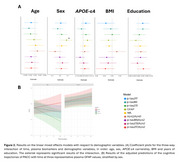 Figure 2
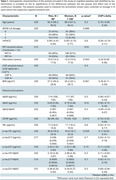 Figure 3
Peer Reviews
No public reviews on file for this paper yet. If you reviewed it on a platform where reviews are public (OpenReview, ICLR, NeurIPS, ICML), you can paste yours below so the community can read it here.
Videos
No videos yet. Explain this paper in a talk, walkthrough, or lecture? Add one.
Taxonomy
TopicsDementia and Cognitive Impairment Research · Alzheimer's disease research and treatments · Cancer-related cognitive impairment studies