Developing a genetic return of results service core
Jennifer A. McKenzie, Erin McRoy, Kevin M. Bowling, Jorge Luis Granadillo De Luque, Jessica Mozersky, Erin Linnenbringer, Dustin Baldridge, Jonathan W. Heusel, Julie A. Neidich, Amanda F. Cashen, Laura J. Bierut, Sarah M. Hartz, Christina A. Gurnett

TL;DR
This paper introduces a service to return genetic test results to research participants, aiming to improve trust and health equity.
Contribution
The paper presents a new protocol and service for returning genetic results with a focus on transparency and accessibility.
Findings
Less than 6% of genomic research protocols included plans to return results to participants.
The gROR service reduces investigator burden and provides participants with genetic information and guidance.
Investigator costs are subsidized to encourage delivery of actionable genetic test results.
Abstract
Research participants should be informed of genetic test results that could impact their health, particularly when they have expressed interest in receiving such information. Furthermore, the return of genetic test results is essential to improve trust, transparency, and health equity. However, investigators often encounter barriers in returning genetic test results to research participants. We examined genomic research at a large, research-intensive medical school and found less than 6% of protocols included plans to return results to participants. This study describes our development of protocols for returning primary and secondary genetic test results and implementation of a Genomic Return of Results (gROR) service. This arose through a collaboration with experts in community engagement, genetics, and pathology to consider consent adequacy, analytical/clinical validity, and clinical…
Genes, proteins, chemicals, diseases, species, mutations and cell lines named across the full text — each resolved to its canonical identifier and authoritative record.
Click any figure to enlarge with its caption.
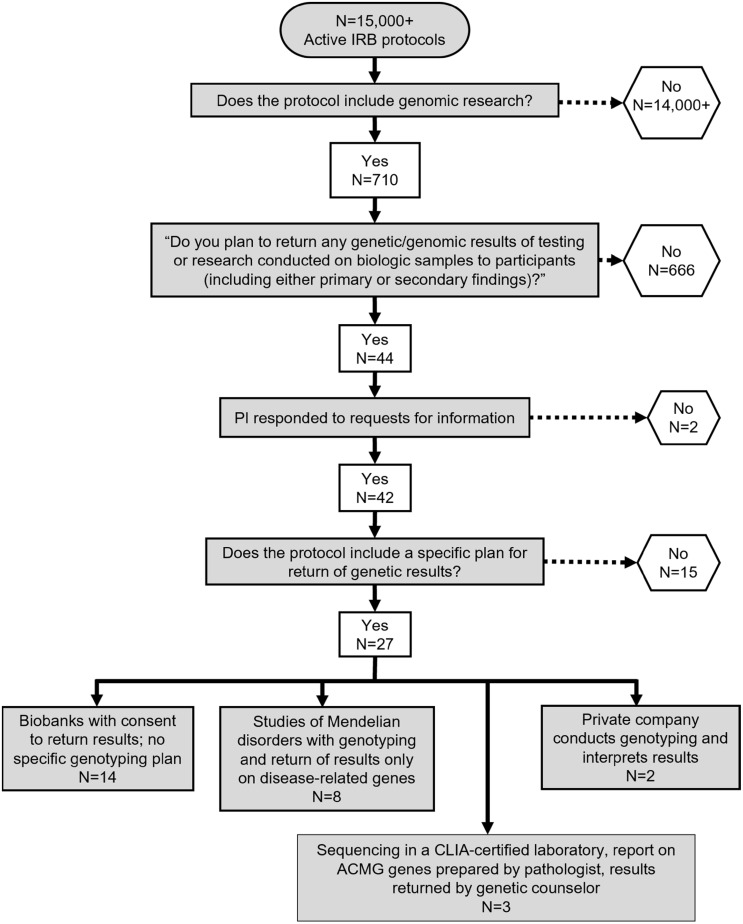 Figure 1
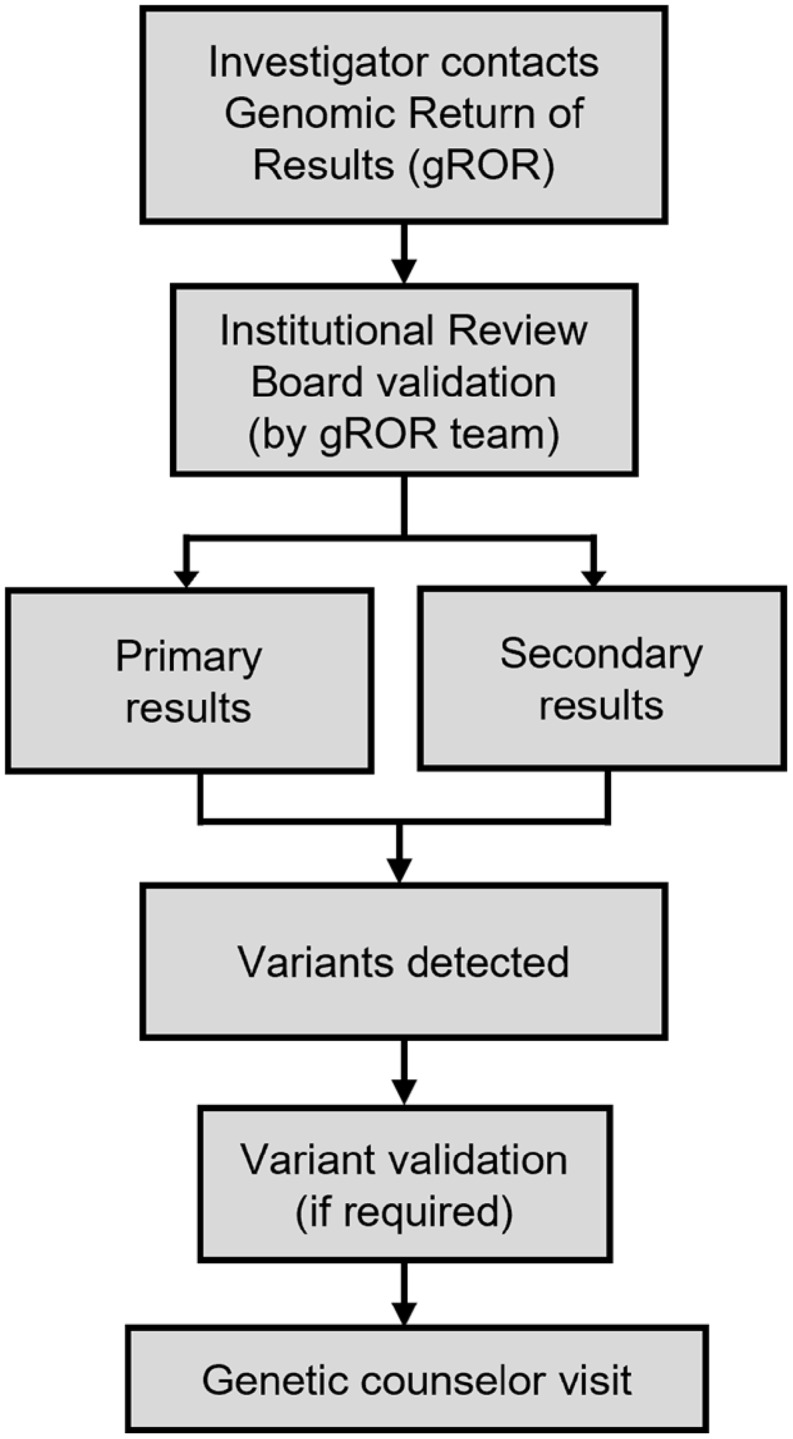 Figure 2
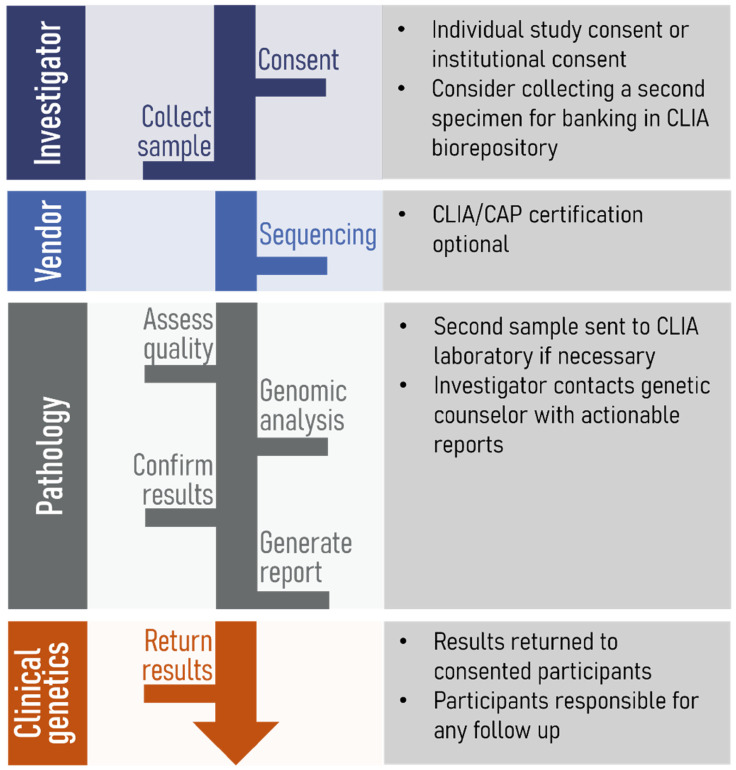 Figure 3
Peer Reviews
No public reviews on file for this paper yet. If you reviewed it on a platform where reviews are public (OpenReview, ICLR, NeurIPS, ICML), you can paste yours below so the community can read it here.
Videos
No videos yet. Explain this paper in a talk, walkthrough, or lecture? Add one.
Taxonomy
TopicsBRCA gene mutations in cancer · Genomics and Rare Diseases · Ethics in Clinical Research