Amyloid Status and Cerebral Atrophy in Down Syndrome: a visual scale‐based analysis through normal and pathologic aging
Isabela dos Santos Alves, Mateus Rozalem Aranha, Daniele de Paula Faria, Dimitri Brigide De Almeida Mantovani, Laura Cavalcanti de Oliveira, Claudia da Costa Leite, Douglas Mendes Nunes, Alexandre Bejanin, Carlos Alberto Buchpiguel, Juan Fortea, Artur Martins Coutinho

TL;DR
This study finds that hippocampal atrophy in Down syndrome is linked to amyloid buildup, suggesting early Alzheimer's disease pathology.
Contribution
The study introduces the use of the MTA scale as an early indicator of AD pathology in Down syndrome individuals.
Findings
DS individuals showed significant hippocampal atrophy in those over 45 years old.
Amyloid positivity was more common in DS individuals, even in those under 45.
The MTA scale correlates with amyloid status in early adulthood.
Abstract
Down syndrome (DS) is considered a genetic form of Alzheimer's disease (AD) and is characterized by early neurodegeneration and cortical atrophy. Subjective scale‐based visual evaluation of brain atrophy is widely used in clinical neuroradiology. This study aims to evaluate brain atrophy scales in DS individuals from a young age and investigate its relationship with cortical amyloid status. A bi‐centric retrospective analysis was conducted at Hospital das Clínicas, Brazil, and Hospital de la Santa Creu i Sant Pau, Spain, using 3T Magnetic resonance imaging (MRI) data from individuals aged 18 years or older. Amyloid status was classified as positive (A+) or negative (A‐) based on [11C]PiB‐PET‐amyloid scans obtained within 30 days of MRI or cerebrospinal fluid analysis, with a positive result defined as an Aβ42/40 ratio < 0.062. MRI was independently analyzed by two expert…
Genes, proteins, chemicals, diseases, species, mutations and cell lines named across the full text — each resolved to its canonical identifier and authoritative record.
Click any figure to enlarge with its caption.
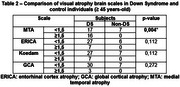 Figure 1
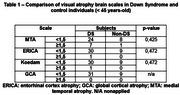 Figure 2
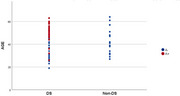 Figure 3
Peer Reviews
No public reviews on file for this paper yet. If you reviewed it on a platform where reviews are public (OpenReview, ICLR, NeurIPS, ICML), you can paste yours below so the community can read it here.
Videos
No videos yet. Explain this paper in a talk, walkthrough, or lecture? Add one.
Taxonomy
TopicsDown syndrome and intellectual disability research · Dementia and Cognitive Impairment Research · Genetic Neurodegenerative Diseases