Altered spatiotemporal brain dynamics of interoception in behavioural‐variant frontotemporal dementia
Jessica L Hazelton, Gabriel Della Bella, Pablo Barttfeld, Martin Dottori, Raul Gonzalez‐Gomez, Joaquín Migeot, Sebastian Moguilner, Agustina Legaz, Hernan Hernandez, Pavel Prado, Jhosmary Cuadros, Marcelo Adrian Maito, Matias Fraile‐Vazquez, María Luz González Gadea, Yasir Çatal

TL;DR
This study shows that people with behavioral-variant frontotemporal dementia have altered brain dynamics in processing bodily signals, which may explain their complex behaviors.
Contribution
The study introduces intrinsic neural timescales as a dynamic measure of interoception in behavioral-variant frontotemporal dementia.
Findings
bvFTD patients showed longer interoceptive-ACWs in fronto-temporal and parietal regions compared to controls.
Longer interoceptive-ACW in bvFTD was linked to worse sociocognitive performance.
Structural correlates in bvFTD included the anterior cingulate, insula, and orbitofrontal cortex.
Abstract
Dysfunctional allostatic‐interoception, altered processing of bodily signals in response to environmental demands, occurs in behavioural‐variant frontotemporal dementia (bvFTD) patients. Previous research, however, has focused on static measures of interoception (e.g., heart‐evoked potential, HEP). These measures do not capture the dynamic nature of interoception, unlike intrinsic neural timescales. Intrinsic neural timescales refers to the temporal durations over which information is processed within the spatiotemporal hierarchy of the brain, with shorter timescales representing more rapid processing. We hypothesised that longer intrinsic neural timescales of interoception would occur in bvFTD patients, evidencing dysfunctional allostatic‐interoception. One‐hundred and twelve participants (31 bvFTD patients, 35 Alzheimer's disease patients, AD and 46 healthy controls) completed a…
Genes, proteins, chemicals, diseases, species, mutations and cell lines named across the full text — each resolved to its canonical identifier and authoritative record.
Click any figure to enlarge with its caption.
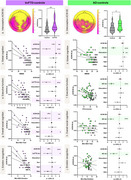 Figure 1
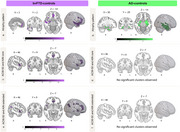 Figure 2
Peer Reviews
No public reviews on file for this paper yet. If you reviewed it on a platform where reviews are public (OpenReview, ICLR, NeurIPS, ICML), you can paste yours below so the community can read it here.
Videos
No videos yet. Explain this paper in a talk, walkthrough, or lecture? Add one.
Taxonomy
TopicsPsychosomatic Disorders and Their Treatments · Traumatic Brain Injury Research · Action Observation and Synchronization