Cardiovascular risk factors and the allostatic interoceptive network in dementia
Jessica L Hazelton, Joaquín Migeot, Raul Gonzalez‐Gomez, Florencia Altschuler, Claudia Duran‐Aniotz, Olivia Wen, Dante Sebastián Galván Rial, Pablo Barttfeld, Vicente Medel, Cecilia Gonzalez Campo, Ana Maria Castro Laguardia, Hernan Hernandez, Carolina Gonzalez‐Silva

TL;DR
This study explores how cardiovascular risk factors like diabetes and hypertension affect brain networks linked to dementia, showing they harm a key network involved in bodily monitoring.
Contribution
The study reveals disease-specific effects of cardiovascular risk on the Allostatic-Interoceptive Network in frontotemporal lobar degeneration and Alzheimer's disease.
Findings
Higher cardiovascular risk is linked to reduced structural and functional integrity of the AIN in both FTLD and AD.
FTLD patients show widespread AIN disruptions, while AD patients exhibit structural reductions and limited functional changes.
Cardiovascular risk factors may worsen neurodegenerative processes, highlighting the need to manage these risks in dementia care.
Abstract
Cardiovascular risk factors, such diabetes, hypertension, blood pressure, obesity, and smoking, are linked with allostatic‐interoception – the continuous monitoring of internal bodily states in anticipation of environmental demands. These risk factors are associated with dementia risk. How these factors affect brain networks vulnerable to neurodegeneration and involved in allostatic‐interoception, such as the Allostatic‐Interoceptive Network (AIN), is unknown. We investigated the relationship between cardiovascular risk and AIN structure and function in frontotemporal lobar degeneration (FTLD) and Alzheimer's disease (AD). We recruited 1501 participants (304 with FTLD, 512 with AD, and 685 healthy controls) from the Multi‐Partner Consortium to Expand Dementia Research in Latin America (ReDLat)(Figure 1). A cardiovascular risk score was calculated based on: age, sex, diabetes,…
Genes, proteins, chemicals, diseases, species, mutations and cell lines named across the full text — each resolved to its canonical identifier and authoritative record.
Click any figure to enlarge with its caption.
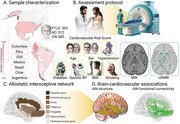 Figure 1
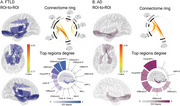 Figure 2
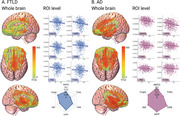 Figure 3
Peer Reviews
No public reviews on file for this paper yet. If you reviewed it on a platform where reviews are public (OpenReview, ICLR, NeurIPS, ICML), you can paste yours below so the community can read it here.
Videos
No videos yet. Explain this paper in a talk, walkthrough, or lecture? Add one.
Taxonomy
TopicsFunctional Brain Connectivity Studies · Psychosomatic Disorders and Their Treatments · Epilepsy research and treatment