Alpha‐Synuclein Pathology in Down Syndrome‐Associated Alzheimer's Disease: Insights from Seed Amplification Assay and Neuropathology
Íñigo Rodríguez‐Baz, Alexander M Bernhardt, Iban Aldecoa, Javier Arranz, José Enrique Arriola‐Infante, Lucía Maure‐Blesa, Maria Carmona‐Iragui, Sebastian Longen, Svenja Verena Trossbach, Armin Giese, Torsten Matthias, Bessy Benejam, Laura Videla, Laura Del Hoyo, Isabel Barroeta

TL;DR
People with Down syndrome often develop Alzheimer's and Lewy body pathology, and this study finds that misfolded alpha-synuclein can be detected in cerebrospinal fluid from an early age.
Contribution
First study to explore alpha-synuclein pathology in Down syndrome-associated Alzheimer's using seed amplification assays and link it to brain pathology.
Findings
Alpha-synuclein positivity was found in 9.2% of Down syndrome individuals, similar to autosomal dominant Alzheimer's.
Lewy body pathology was present in 47% of brain cases, with amygdala and olfactory bulb most affected.
Plasma neurofilament light chain levels were higher in alpha-synuclein positive individuals.
Abstract
Down syndrome (DS) is a genetic cause of Alzheimer's disease (AD), with virtually all individuals developing AD pathology by their fourth decade due to Amyloid Precursor Protein (APP) gene overexpression. In addition to amyloid beta (Aβ) plaques and hyperphosphorylated tau (p‐Tau) aggregates, DS‐associated AD (DSAD) often includes α‐synuclein (αSyn) aggregates, contributing to Lewy body pathology (LBP). The αSyn Seed Amplification Assay (SAA) in cerebrospinal fluid (CSF) enables the in vivo detection of misfolded αSyn. While αSyn‐SAA has revealed αSyn pathology in autosomal dominant (6%–11%) and sporadic (21%–45%) AD, its role in DSAD remains unexplored. This study investigates αSyn‐SAA positivity in DSAD, linking in vivo findings to fluid biomarkers and neuropathology. We analyzed CSF of 270 adults with DS from the DABNI and AD21 cohorts by αSyn‐SAA, encompassing asymptomatic and…
Genes, proteins, chemicals, diseases, species, mutations and cell lines named across the full text — each resolved to its canonical identifier and authoritative record.
Click any figure to enlarge with its caption.
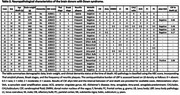 Figure 1
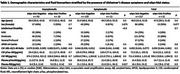 Figure 2
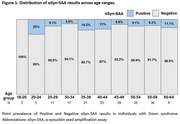 Figure 3
Peer Reviews
No public reviews on file for this paper yet. If you reviewed it on a platform where reviews are public (OpenReview, ICLR, NeurIPS, ICML), you can paste yours below so the community can read it here.
Videos
No videos yet. Explain this paper in a talk, walkthrough, or lecture? Add one.
Taxonomy
TopicsDown syndrome and intellectual disability research · Parkinson's Disease Mechanisms and Treatments · Alzheimer's disease research and treatments