Pyruvate kinase M (PKM) single nucleotide polymorphisms are related to glucose hypometabolism in cognitively impaired individuals
Lorenzo Celia Ferreira, Rodrigo Sebben Paes, Christian Limberger, Gabriela Mantovani Baldasso, Marco Antônio De Bastiani, Eduardo R. Zimmer

TL;DR
This study finds that certain genetic variations in the PKM gene are linked to reduced brain glucose metabolism in people with cognitive impairment, possibly contributing to Alzheimer's disease progression.
Contribution
The study identifies specific PKM gene SNPs associated with glucose hypometabolism in cognitively impaired individuals, suggesting a genetic link to Alzheimer's progression.
Findings
Six SNPs in the PKM gene are significantly associated with reduced brain glucose metabolism in cognitively impaired individuals.
Glucose hypometabolism occurs in brain regions typically affected by Alzheimer's disease, such as the entorhinal and temporal cortex.
No significant association was found between PKM SNPs and glucose metabolism in cognitively unimpaired individuals.
Abstract
Brain glucose hypometabolism is associated with neurodegeneration in Alzheimer's disease (AD). Individuals at risk for AD can exhibit reduced glucose metabolism in brain regions typically affected by AD pathology, even years before the diagnosis. However, the impact of glycolytic metabolism dysfunction on AD progression remains to be fully elucidated. Herein, we investigated the impact of single nucleotide polymorphisms (SNPs) in the pyruvate kinase M (PKM) gene ‐ a key glycolytic enzyme ‐ on brain glucose metabolism across AD stages. We analyzed 203 cognitively unimpaired (CU) and 416 cognitively impaired (CI) individuals from ADNI. Seven SNPs (rs62026270, rs2856929, rs8192431, rs8192386, rs2607090, rs1037680, and rs4506844) related to the PKM gene were identified. We examined the association between SNP carriership and brain glucose metabolism in FDG metaROI using linear mixed‐effect…
Genes, proteins, chemicals, diseases, species, mutations and cell lines named across the full text — each resolved to its canonical identifier and authoritative record.
Click any figure to enlarge with its caption.
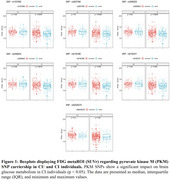 Figure 1
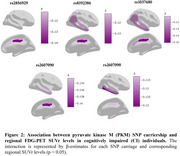 Figure 2
Peer Reviews
No public reviews on file for this paper yet. If you reviewed it on a platform where reviews are public (OpenReview, ICLR, NeurIPS, ICML), you can paste yours below so the community can read it here.
Videos
No videos yet. Explain this paper in a talk, walkthrough, or lecture? Add one.
Taxonomy
TopicsAlzheimer's disease research and treatments · Biochemical Acid Research Studies · Cancer, Hypoxia, and Metabolism