Transcriptional regulation of the GTP cyclohydrolase I gene via the NF-κB pathway by bacterial and viral immune stimulants
Miori Ozawa, Satoshi Hara, Masaru Sakamoto, Takahiro Suzuki, Shuhei Niiyama, Yasuyuki Kakihana, Hiroshi Ichinose

TL;DR
This study shows how bacterial and viral immune signals increase BH4 production through the GCH enzyme via the NF-κB pathway in macrophages.
Contribution
The first identification of the 5′-untranslated region of GCH responsible for LPS-induced expression and its regulation by NF-κB.
Findings
Poly(I:C), R848, and LPS increase GCH expression and BH4 levels in RAW264.7 cells.
NF-κB pathway inhibition suppresses GCH expression in both cell culture and mouse macrophages.
The 149-bp 5′-untranslated region of exon 1 is critical for LPS-induced GCH expression.
Abstract
Tetrahydrobiopterin (BH4) is an essential cofactor for biosynthesis of monoamines and nitric oxide. An excess of BH4 in infiltrated macrophages was reported to cause pain, while a certain level of BH4 is essential for cell survival and proliferation. GTP cyclohydrolase I (GCH) is a rate-limiting enzyme for the de novo synthesis of BH4. Our previous study showed that GCH expression was elevated by an enhancer region containing the C/EBP and Ets binding motifs in macrophage-like RAW264.7 cells when stimulated with lipopolysaccharide (LPS). In this study, we showed that poly(I:C) and R848, Toll-like receptors ligands for RNA viruses, increased GCH expression and BH4 levels in RAW264.7 cells as well as bacterial LPS. We examined the intracellular signaling pathway for the induction of the Gch gene, and found that inhibitors for the NF-κB pathway suppressed the GCH expression by these…
Genes, proteins, chemicals, diseases, species, mutations and cell lines named across the full text — each resolved to its canonical identifier and authoritative record.
Click any figure to enlarge with its caption.
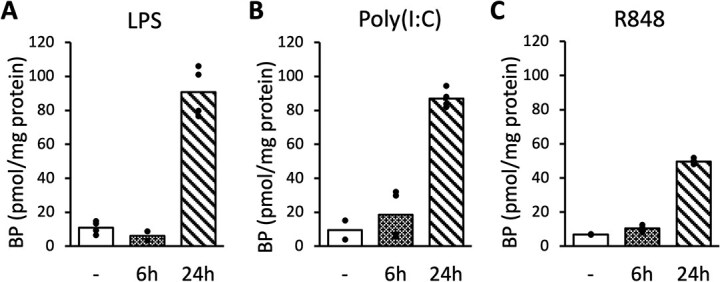 Figure 1
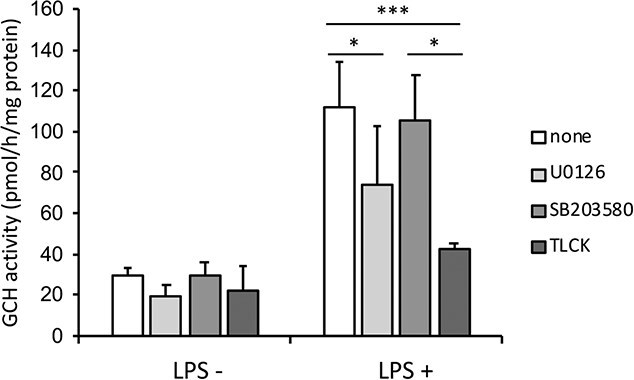 Figure 2
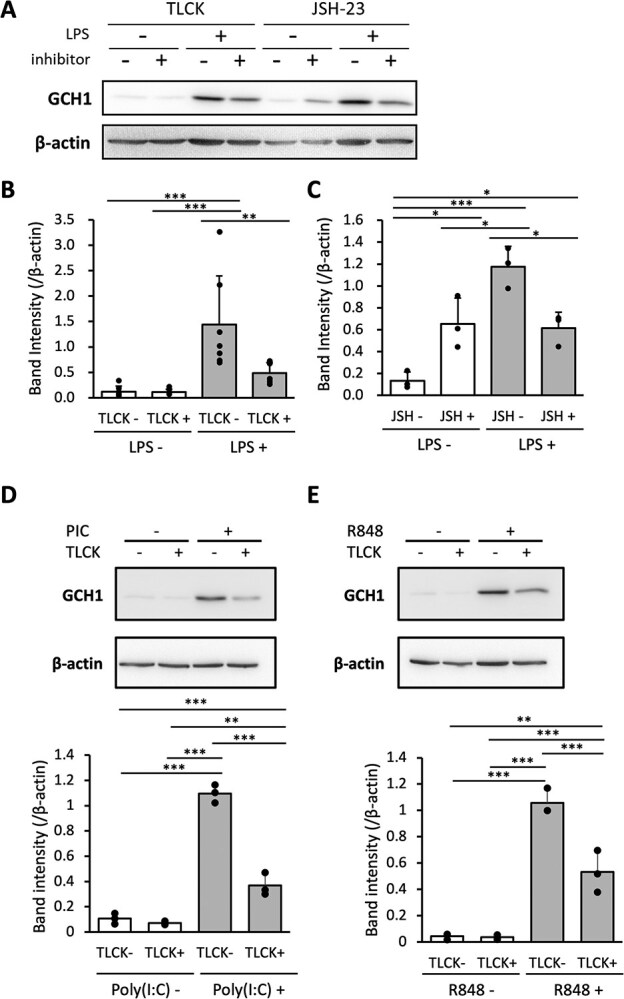 Figure 3
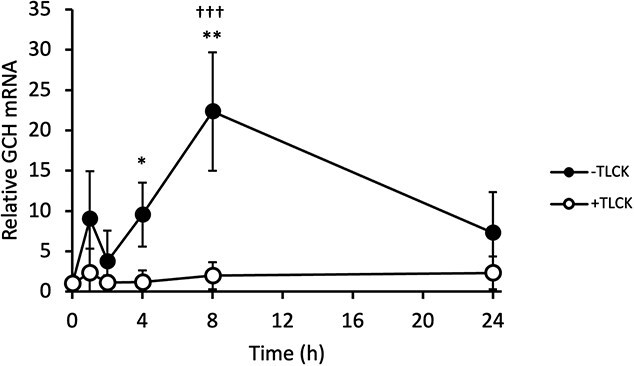 Figure 4
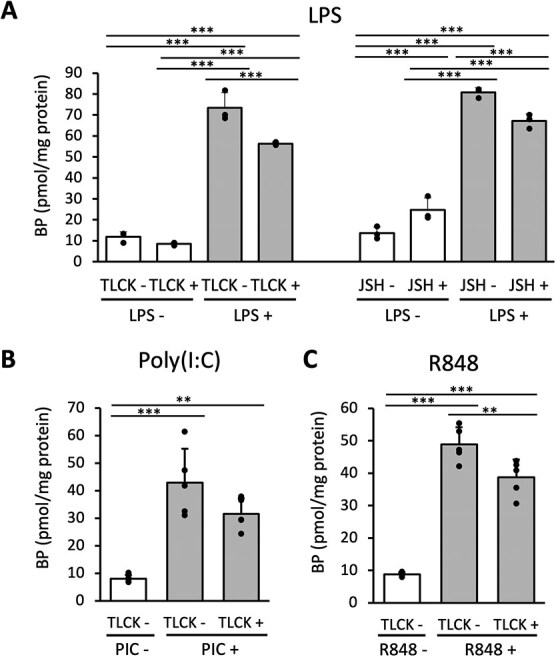 Figure 5
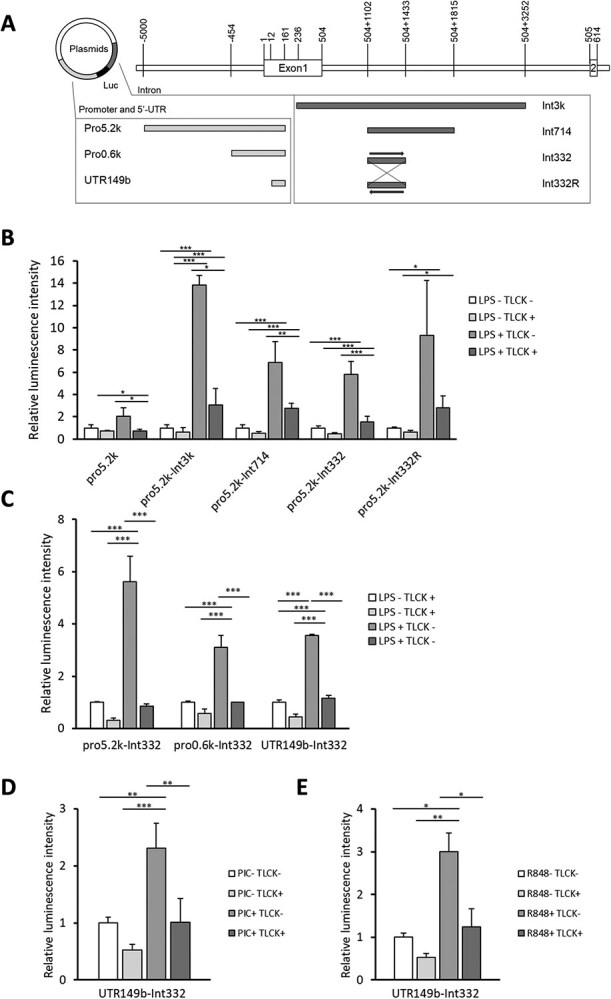 Figure 6
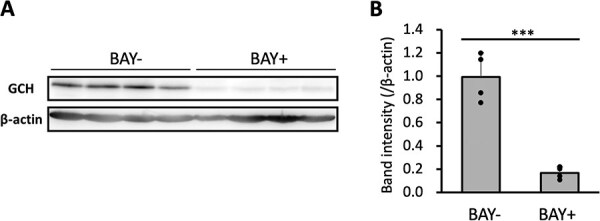 Figure 7
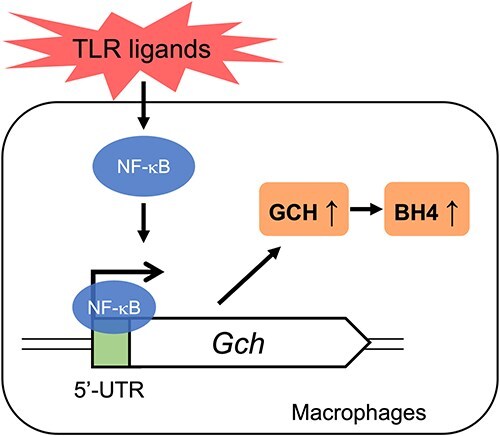 Figure 8
Peer Reviews
No public reviews on file for this paper yet. If you reviewed it on a platform where reviews are public (OpenReview, ICLR, NeurIPS, ICML), you can paste yours below so the community can read it here.
Videos
No videos yet. Explain this paper in a talk, walkthrough, or lecture? Add one.
Taxonomy
TopicsBiochemical and Molecular Research · Adenosine and Purinergic Signaling · Cancer Research and Treatments