Biomarker confirmed reference values for acoustic voice features: findings from the Framingham Heart Study
Huitong Ding, Xavier Serrano, Cody Karjadi, Christina B. Young, Elizabeth C. Mormino, Preeti Sunderaraman, Ashita S. Gurnani, Rhoda Au, Katherine A. Gifford

TL;DR
The study establishes reference values for voice features in people with and without Alzheimer's-related amyloid buildup, suggesting these features could help detect early signs of the disease.
Contribution
This is the first study to provide normative acoustic voice feature values stratified by amyloid PET status in cognitively unimpaired individuals.
Findings
Four acoustic features showed significant differences between amyloid-positive and amyloid-negative groups.
Reference values for 65 acoustic features were established across multiple percentiles.
Three of the four significant features had higher median values in the amyloid-positive group.
Abstract
Interest in acoustic voice features as digital biomarkers of underlying Alzheimer's disease (AD) has been increasing. However, lacking confirmation of AD specificity and reference values or normative information, particularly in relation to AD‐specific biomarkers, greatly limits the ability to determine measurement thresholds that are clinically meaningful. We present preliminary normative values of acoustic voice features for those who are positron emission tomography (PET) beta amyloid positive (Aß+) and negative (Aß‐). This study included 268 cognitively unimpaired participants (mean age 57.2 ± 9.9 years; 50.4% female) from the Framingham Heart Study Brain Aging Program who had voice recordings of neuropsychological assessment obtained within one year before amyloid PET imaging. Sixty‐five acoustic features (i.e., prosodic, spectral, and sound quality voice features) were extracted…
Genes, proteins, chemicals, diseases, species, mutations and cell lines named across the full text — each resolved to its canonical identifier and authoritative record.
Click any figure to enlarge with its caption.
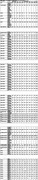 Figure 1
Peer Reviews
No public reviews on file for this paper yet. If you reviewed it on a platform where reviews are public (OpenReview, ICLR, NeurIPS, ICML), you can paste yours below so the community can read it here.
Videos
No videos yet. Explain this paper in a talk, walkthrough, or lecture? Add one.
Taxonomy
TopicsDementia and Cognitive Impairment Research · Voice and Speech Disorders · Traumatic Brain Injury Research