Heterogeneous tau patterns in atypical AD are explained by connectivity‐associated tau progression
Hannah de Bruin, Colin Groot, Henryk Barthel, Gérard N Bischof, Ganna Blazhenets, Ronald Boellaard, Baayla D.C. Boon, Matthias Brendel, David M Cash, William Coath, Gregory S Day, Brad C. Dickerson, Elena Doering, Alexander Drzezga, Christopher H van Dyck, Thilo van Eimeren

TL;DR
This study shows that tau protein spreads through brain connections in different types of Alzheimer's disease, supporting the idea that brain connectivity guides tau progression.
Contribution
The study demonstrates that connectivity-based tau progression applies to atypical Alzheimer's disease variants with heterogeneous tau patterns.
Findings
Tau-PET epicenters align with clinical AD variants, such as posterior patterns in PCA-AD and left-hemispheric patterns in lvPPA-AD.
Stronger functional connectivity correlates with synchronized tau levels, confirmed by post-mortem data.
Connectivity profiles of tau-PET epicenters match tau progression patterns across AD variants.
Abstract
The link between regional tau load and clinical manifestation of Alzheimer's disease (AD) highlights the importance of characterizing spatial tau distribution. In typical (memory‐predominant) AD, the spatial progression of tau pathology mirrors the functional connections from temporal lobe epicenters. However, atypical (non‐amnestic‐predominant) AD variants with heterogeneous tau patterns provide a key opportunity to assess the universality of connectivity as a scaffold for tau progression. We included tau‐PET data from 320 subjects with atypical AD, characterized by highly heterogeneous tau patterns (n = 139 posterior cortical atrophy/PCA‐AD; n = 103 logopenic variant primary progressive aphasia/lvPPA‐AD; n = 35 behavioural variant AD/bvAD; n = 43 corticobasal syndrome/CBS‐AD) from 14 sites, with a subset of patients (n = 78) having longitudinal tau‐PET data. As an independent sample,…
Genes, proteins, chemicals, diseases, species, mutations and cell lines named across the full text — each resolved to its canonical identifier and authoritative record.
Click any figure to enlarge with its caption.
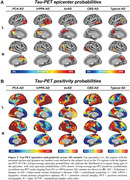 Figure 1
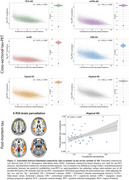 Figure 2
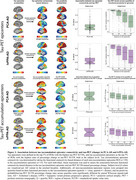 Figure 3
Peer Reviews
No public reviews on file for this paper yet. If you reviewed it on a platform where reviews are public (OpenReview, ICLR, NeurIPS, ICML), you can paste yours below so the community can read it here.
Videos
No videos yet. Explain this paper in a talk, walkthrough, or lecture? Add one.
Taxonomy
TopicsDementia and Cognitive Impairment Research · Alzheimer's disease research and treatments · Functional Brain Connectivity Studies