Early changes in basal forebrain volume and cognitive function in preclinical autosomal dominant Alzheimer's disease
Bing He, Paula Ospina, Alejandro Espinosa, Juan Camilo Becerra‐Mateus, Laura Osorio, Diana Alzate, Sergio Alvarez, Alice Grazia, Stefan Teipel, Vincent Malotaux, Catarina Tristão‐Pereira, Meredith Rowe, Averi Giudicessi, Sonia Do Carmo, David Fernando Aguillón Niño

TL;DR
This study examines whether the basal forebrain volume changes in individuals with a genetic risk for early-onset Alzheimer's before symptoms appear.
Contribution
The study investigates BF volume in preclinical autosomal dominant Alzheimer's using a large genetic cohort.
Findings
BF volume did not differ significantly between mutation carriers and non-carriers in early preclinical stages.
Age was negatively correlated with BF volume in both carriers and non-carriers.
BF volume showed no significant correlation with cognitive test scores in the studied population.
Abstract
The basal forebrain (BF), home to cholinergic neurons essential for attention and memory undergoes structural changes in sporadic Alzheimer's Disease and in at‐risk individuals, contributing to cognitive decline. To investigate whether BF volume is reduced in preclinical autosomal‐dominant Alzheimer's disease (ADAD), we studied cognitively‐unimpaired carriers of the PSEN1 E280A mutation from the Colombian kindred, the largest ADAD cohort with a single mutation, known for early cognitive decline (mild cognitive impairment at age 44, dementia at 49). Age was used as a proxy for disease progression to analyze BF volume and its relationship with age and cognitive performance. This study included 127 cognitively‐unimpaired individuals from the PSEN1 Colombian kindred (60 carriers, 67 non‐carriers; mean‐age: 30.67 ± 6.65 years; mean‐education: 12.24 ± 3.06 years). Unimpaired status was…
Genes, proteins, chemicals, diseases, species, mutations and cell lines named across the full text — each resolved to its canonical identifier and authoritative record.
Click any figure to enlarge with its caption.
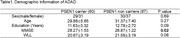 Figure 1
Peer Reviews
No public reviews on file for this paper yet. If you reviewed it on a platform where reviews are public (OpenReview, ICLR, NeurIPS, ICML), you can paste yours below so the community can read it here.
Videos
No videos yet. Explain this paper in a talk, walkthrough, or lecture? Add one.
Taxonomy
TopicsDementia and Cognitive Impairment Research · Alzheimer's disease research and treatments · Memory and Neural Mechanisms