Missense Variants in the Second Transmembrane Domain of TMEM17 Disrupt Its Stability and Function and Lead to a Wide Phenotypic Spectrum of Ciliopathies
Lucile Boutaud, Chunmei Li, Candice Moncler, Laure Verlin, Meriem Garfa‐Traoré, Nicolas Bourgon, Dhruvin Akbari, Jeanne Porée, Valentina Serpieri, Marine Panza, Lynda Haddad, Patrick Nitschké, Jacqueline Aziza, Cristina Matt, Enza Maria Valente, Patricia Gargallo

TL;DR
Missense variants in TMEM17 disrupt its function in cilia, causing a range of ciliopathy disorders from mild to severe.
Contribution
Expands TMEM17's phenotypic spectrum to include Meckel syndrome and confirms its role as a ciliopathy gene.
Findings
TMEM17 missense variants cause destabilization and mislocalization of the protein.
Variants disrupt ciliary function and Sonic Hedgehog signaling.
TMEM17 is confirmed as a key gene in ciliopathies with a wide phenotypic range.
Abstract
Ciliopathies are rare genetic disorders characterized by significant genetic and phenotypic variability. Over 140 proteins localized to primary cilia, which are sensory organelles essential for vertebrate development, are implicated. TMEM17 encodes a transmembrane protein at the ciliary transition zone and was previously proposed as a potential ciliopathy gene, based on reports of individuals from two families with orofaciodigital syndrome type 6 (OFD6) and Joubert syndrome (JS). Here, we report two unrelated fetuses with occipital encephalocele, polydactyly, and kidney cysts, in whom exome sequencing identified a founder homozygous missense variant (Arg94Trp) in TMEM17, affecting a highly conserved residue. This expands the TMEM17‐associated phenotypic spectrum to include Meckel syndrome (MKS). Comprehensive functional analyses of all known TMEM17 variants, using patient tissues/cells…
Genes, proteins, chemicals, diseases, species, mutations and cell lines named across the full text — each resolved to its canonical identifier and authoritative record.
Click any figure to enlarge with its caption.
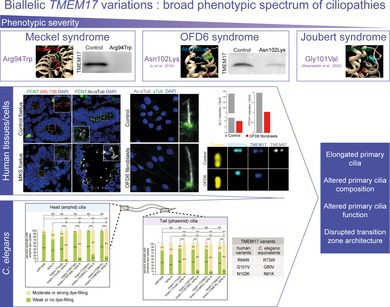 Figure 1
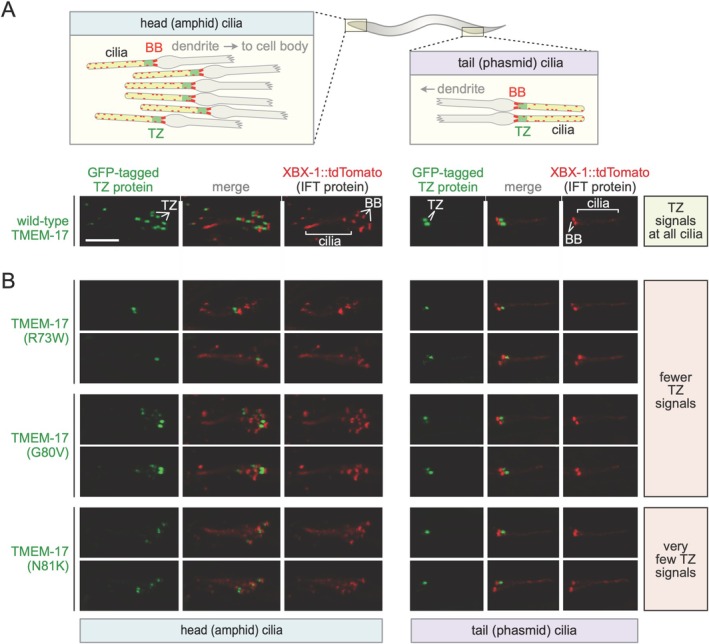 Figure 2
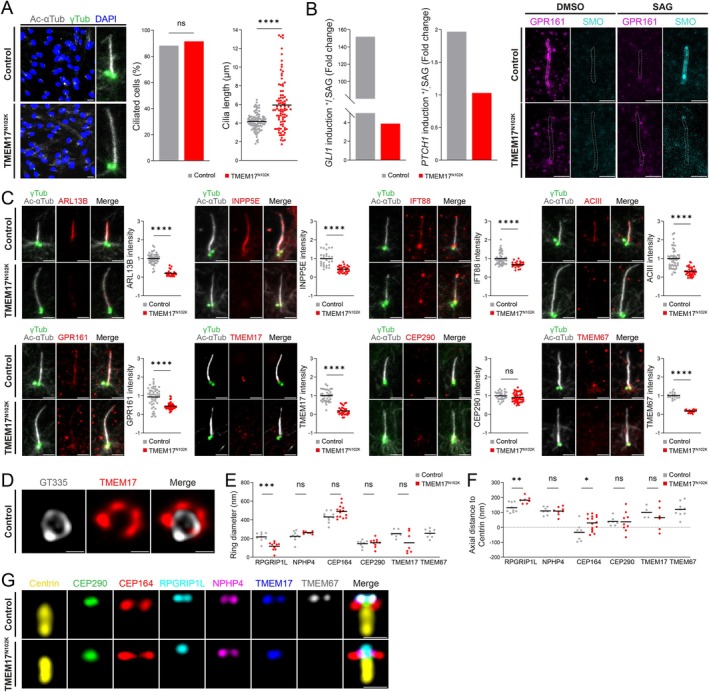 Figure 3
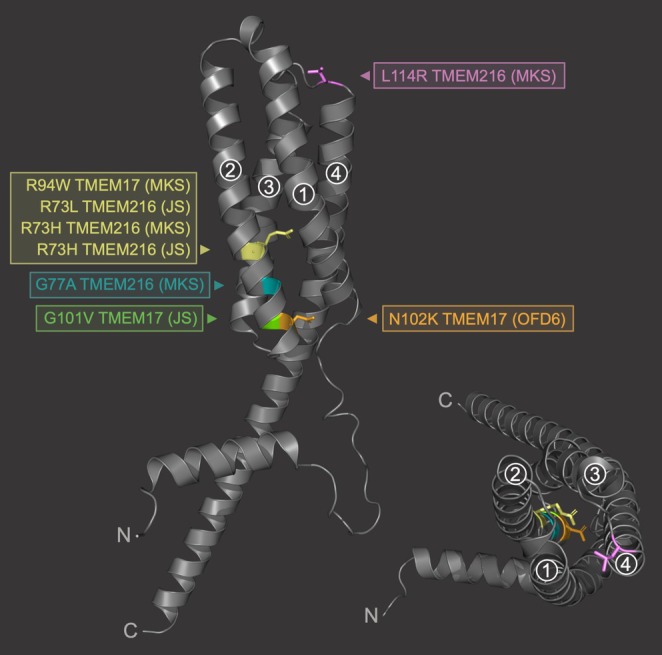 Figure 4
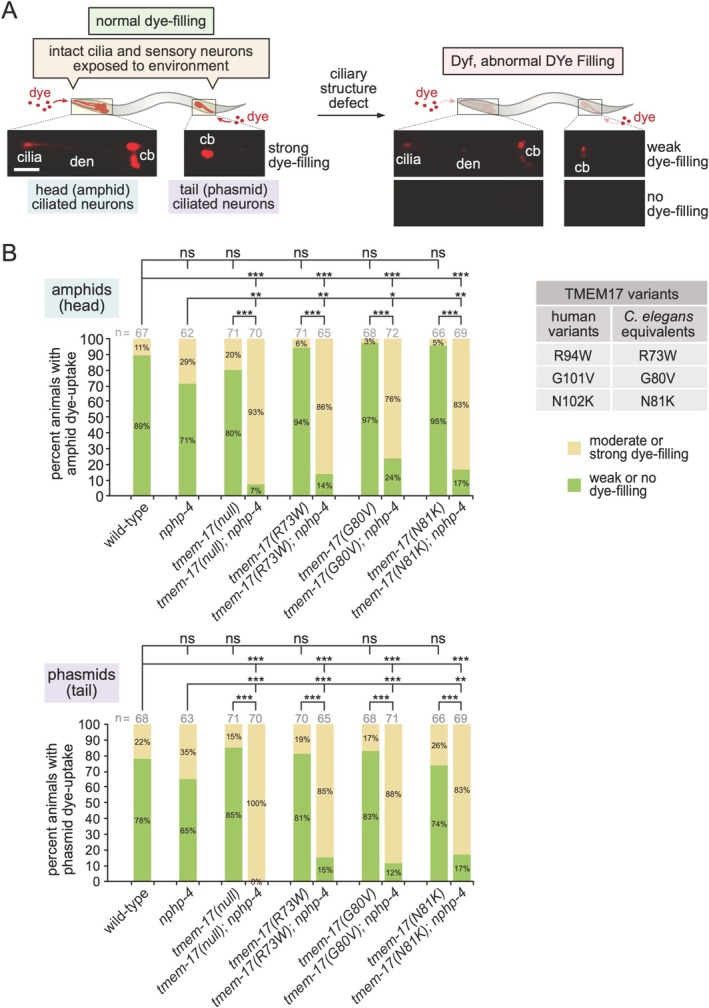 Figure 5
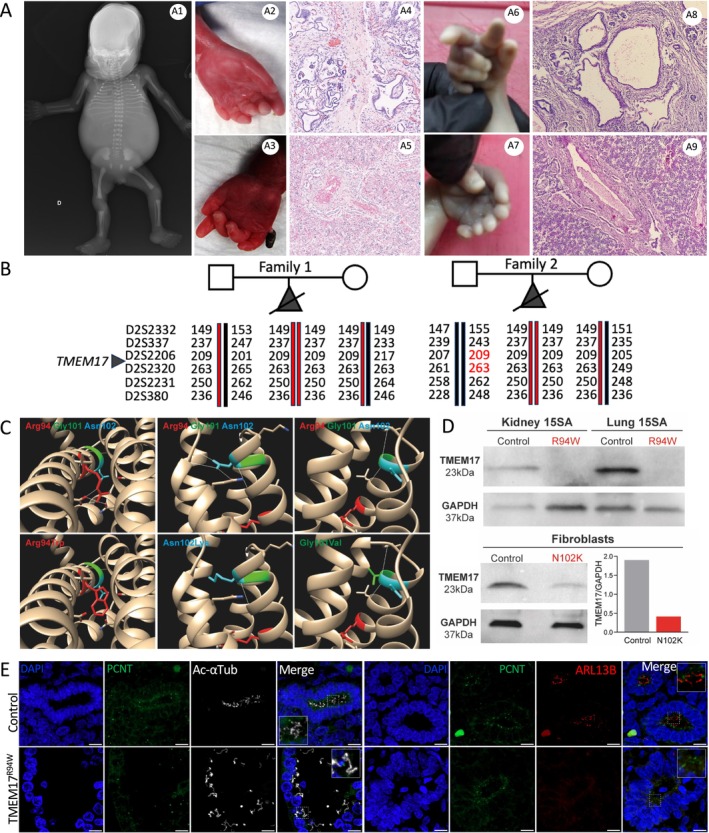 Figure 6
Peer Reviews
No public reviews on file for this paper yet. If you reviewed it on a platform where reviews are public (OpenReview, ICLR, NeurIPS, ICML), you can paste yours below so the community can read it here.
Videos
No videos yet. Explain this paper in a talk, walkthrough, or lecture? Add one.
Taxonomy
TopicsGenetic and Kidney Cyst Diseases · Renal and related cancers · Protist diversity and phylogeny