Asymmetric Gingival Margins of Maxillary Central Incisors: Does It Matter to Lay Persons and Professionals
Jadbinder Seehra, Laura Cockerham, Spyridon N. Papageorgiou, Jonathon T. Newton, Martyn T. Cobourne

TL;DR
This study found that asymmetry in the gum line between upper front teeth is perceived as less attractive by both laypeople and dental professionals.
Contribution
The study provides empirical evidence on aesthetic preferences for gingival symmetry in maxillary central incisors, comparing lay and professional perceptions.
Findings
Symmetrical gingival margins (Image E) were ranked most attractive (60.8%).
Asymmetric margins (Images D and F) were rated least attractive.
Gender influenced image rankings, and symmetry was a key theme in attractiveness judgments.
Abstract
The aim of this study was to assess the aesthetic judgements made by lay people and professionals relating to an asymmetric maxillary central incisors' gingival margin position. Multi‐center institutional study. A high‐quality intra‐oral photograph of a previously treated case was manipulated (six images). Parents of children undergoing conventional orthodontic treatment (PCT), parents of children undergoing combined surgical‐orthodontic treatment for a unilateral impacted maxillary central incisor (PI) and professionals (dental and orthodontic specialists) were asked to evaluate and rank the images in terms of aesthetics and provide free‐text responses to support their rankings (least and most attractive). All data was analysed statistically with regressions at 5% and a thematic analysis of the free‐text responses was performed. The responses from 120 participants (mean age 42.2…
Genes, proteins, chemicals, diseases, species, mutations and cell lines named across the full text — each resolved to its canonical identifier and authoritative record.
Click any figure to enlarge with its caption.
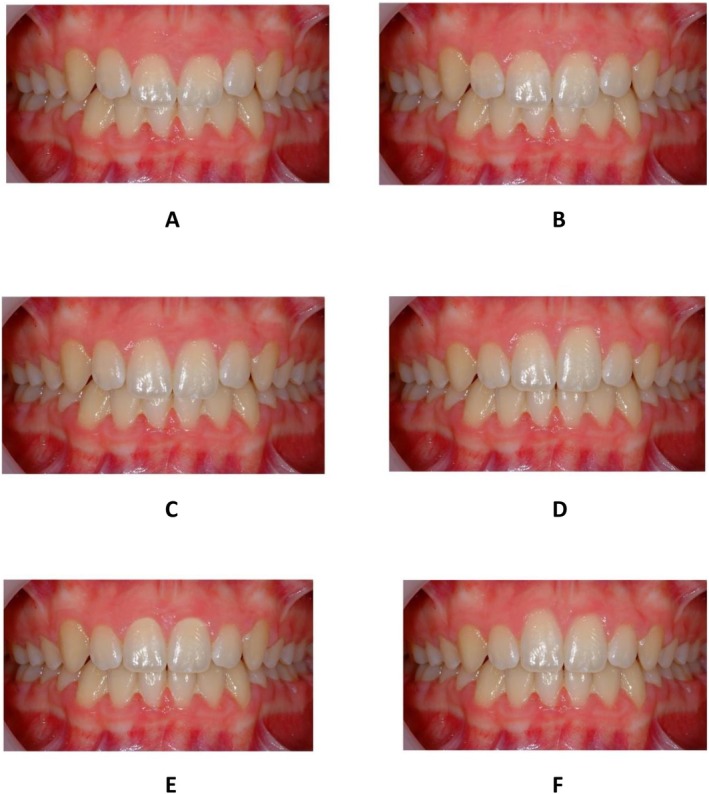 Figure 1
Peer Reviews
No public reviews on file for this paper yet. If you reviewed it on a platform where reviews are public (OpenReview, ICLR, NeurIPS, ICML), you can paste yours below so the community can read it here.
Videos
No videos yet. Explain this paper in a talk, walkthrough, or lecture? Add one.
Taxonomy
TopicsOrthodontics and Dentofacial Orthopedics · Evolutionary Psychology and Human Behavior · dental development and anomalies