Biallelic COL4A2 Variants Associated With Brain Small Vessel Disease and Brain Malformations
Anees Muhammad, Mohammad Sadegh Shams Nosrati, Alireza Dostmohammadi, Reihaneh Khorasanian, Mariasavina Severino, Morteza Doustmohammadi, Francesca Madia, Siddharth Srivastava, Aisling Quinlan, Dario Paladini, Federico Zara, Marcello Scala

TL;DR
Biallelic COL4A2 gene variants are linked to severe brain abnormalities, including small vessel disease and cortical malformations, as shown through two clinical cases.
Contribution
The paper expands the known recessive COL4A2-related phenotype to include cortical malformations and provides evidence of protein destabilization.
Findings
Biallelic COL4A2 variants are associated with brain small vessel disease and cortical malformations.
Protein modeling shows that the p.Arg179Cys variant destabilizes COL4A2, supporting its role in disease.
Two cases with rare, loss-of-function COL4A2 variants demonstrate a spectrum of severe brain abnormalities.
Abstract
Deleterious variants in COL4A2, encoding type IV collagen's alpha‐2 chain, cause heterogeneous cerebrovascular and developmental brain malformations. While many dominant variants are known, biallelic changes are rarely reported. We reported two severe cases: Case #1, an aborted fetus with cerebral calcifications, hemorrhages, periventricular leukomalacia, and cerebellar disruption; and Patient #2, a 2‐year‐old girl with neurodevelopmental impairment, cortical malformations (frontal schizencephaly, polymicrogyria), and reduced white matter volume. Exome sequencing identified a homozygous missense COL4A2 variant in case #1 and compound heterozygous loss‐of‐function variants (splicing and truncating) in case #2. All variants were rare and predicted to affect protein stability and function in silico. Our cases reinforce the association between biallelic COL4A2 variants and brain small…
Genes, proteins, chemicals, diseases, species, mutations and cell lines named across the full text — each resolved to its canonical identifier and authoritative record.
Click any figure to enlarge with its caption.
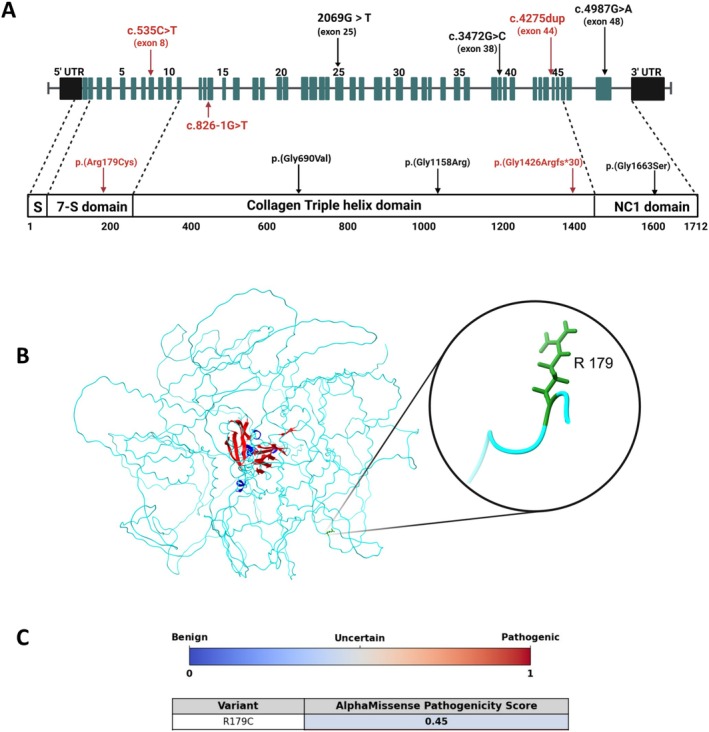 Figure 1
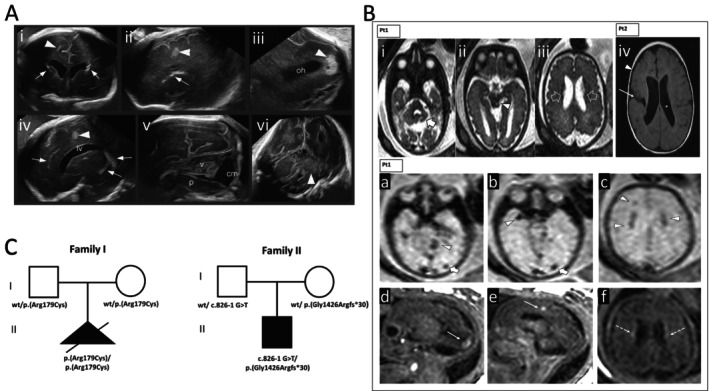 Figure 2
 Figure 3
Peer Reviews
No public reviews on file for this paper yet. If you reviewed it on a platform where reviews are public (OpenReview, ICLR, NeurIPS, ICML), you can paste yours below so the community can read it here.
Videos
No videos yet. Explain this paper in a talk, walkthrough, or lecture? Add one.
Taxonomy
TopicsCell Adhesion Molecules Research · Platelet Disorders and Treatments · Cerebrovascular and genetic disorders