Genetic Landscape of Robin Sequence: A Systematic Review
Shirley van de Velde, Aebele B. Mink van der Molen, Augusta M. A. Lachmeijer, Daan de Leijer, Jeroen J. Smits, Maarten P. G. Massink, Sarah L. Versnel, Marie‐José H. van den Boogaard, Emma C. Paes

TL;DR
This paper reviews the genetic causes of Robin sequence, a birth condition, and highlights the importance of modern genetic testing for accurate diagnosis and treatment.
Contribution
The paper systematically compiles and differentiates genetic variants associated with isolated and non-isolated Robin sequence.
Findings
Pathogenic variants in genes like SOX9, SNRPB, and COL11A1 are frequently linked to non-isolated Robin sequence.
Common chromosomal deletions in RS include 22q11.2 and 18q.
Whole genome sequencing requires phenotype-driven tools to maximize diagnostic potential in RS.
Abstract
Robin sequence (RS) is a congenital condition characterized by micrognathia, glossoptosis, and upper airway obstruction, often occurring with cleft palate and syndromic conditions. The genetic basis of RS is heterogeneous, including monogenic variants and chromosomal rearrangements. This systematic review synthesizes the current genetic landscape of RS, analyzing data from 107 studies that employed various genetic testing methods, including chromosomal microarray (CMA), targeted sequencing, and whole exome sequencing (WES). A distinction is made between genetic variants identified in isolated versus non‐isolated RS. Pathogenic variants in genes as SOX9, SNRPB, SATB2, TGDS, RBM10, COL11A1, and COL2A1 are frequently identified, many of which are linked to non‐isolated RS. The most common chromosomal aberrations are deletions of 22q11.2 and 18q. Up‐to‐date genetic testing is essential to…
Genes, proteins, chemicals, diseases, species, mutations and cell lines named across the full text — each resolved to its canonical identifier and authoritative record.
Click any figure to enlarge with its caption.
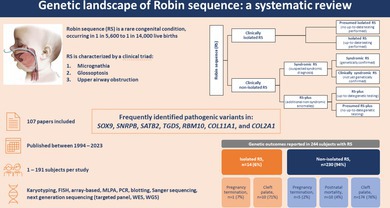 Figure 1
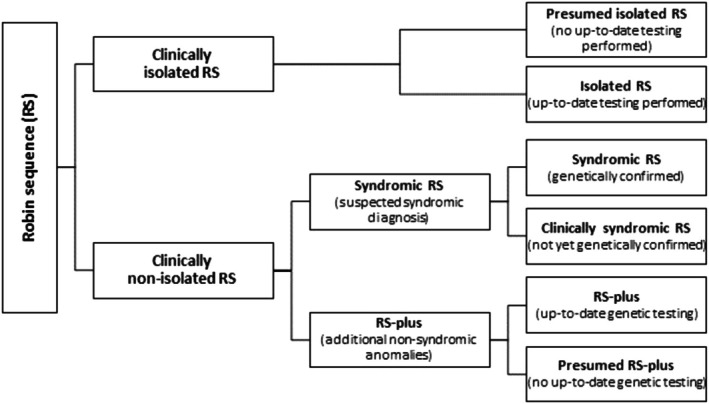 Figure 2
Peer Reviews
No public reviews on file for this paper yet. If you reviewed it on a platform where reviews are public (OpenReview, ICLR, NeurIPS, ICML), you can paste yours below so the community can read it here.
Videos
No videos yet. Explain this paper in a talk, walkthrough, or lecture? Add one.
Taxonomy
TopicsCraniofacial Disorders and Treatments · Cleft Lip and Palate Research · Genomic variations and chromosomal abnormalities