Pathogenic Variants in Mennonites From Southern Brazil: Implications for Preventive Measures in Public Health
Luiza Beatriz Mayer de Lima, Eduardo Delabio Auer, Isabela Dall’Oglio Bucco, Valéria Bumiller‐Bini Hoch, Priscila Ianzen dos Santos, Fabiana L. Lopes, Alan Shuldiner, Emilton Lima Júnior, Angelica Beate Winter Boldt

TL;DR
This study identifies harmful genetic variants in a Mennonite population in Brazil, highlighting the need for genetic screening and preventive health strategies.
Contribution
The study reveals unique pathogenic variant frequencies in a genetically isolated Mennonite population, emphasizing their distinct genetic risks.
Findings
23 pathogenic and 27 likely pathogenic variants were identified, with notable frequencies in endocrine, metabolic, and nervous system diseases.
Founder effects were observed for 96% of pathogenic variants, differing from non-Finnish Europeans, Amish, and Brazilian populations.
Genomic and genealogical analysis confirmed European origin and random selection during migration from Russia to Brazil in 1930.
Abstract
The Mennonite population has a unique history of 500 years of genetic isolation shaped by at least three demographic bottlenecks, founder effects, inbreeding, epidemics, and migrations. To evaluate their susceptibility for monogenic diseases (MD), we performed whole‐exome sequencing on 325 volunteers from two South Brazilian Mennonite settlements (one urban and another rural). We identified 23 pathogenic variants (P) and 27 likely P, with 22.8% accounting for endocrine, nutritional, and metabolic MDs, 17.5% for developmental anomalies, and 10.5% for nervous system MDs. HFE rs1800562 causing hereditary hemochromatosis presented the highest frequency (7.54%), followed by BTD rs13078881 for biotinidase deficiency (7.08%), FLG rs61816761 for ichthyosis vulgaris and atopic dermatitis (3.38%), and FANCM rs147021911 for Fanconi anemia (3.08%). Genomic and genealogical analysis confirmed their…
Genes, proteins, chemicals, diseases, species, mutations and cell lines named across the full text — each resolved to its canonical identifier and authoritative record.
Click any figure to enlarge with its caption.
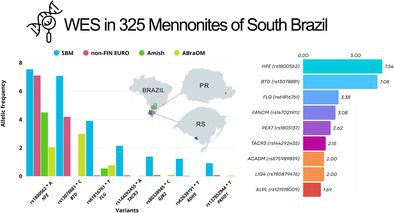 Figure 1
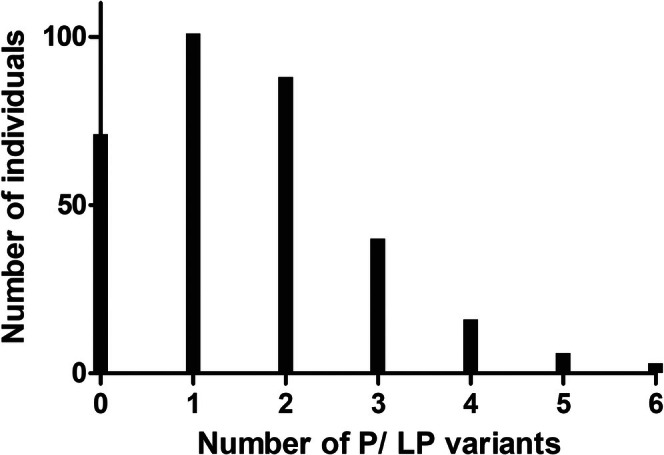 Figure 2
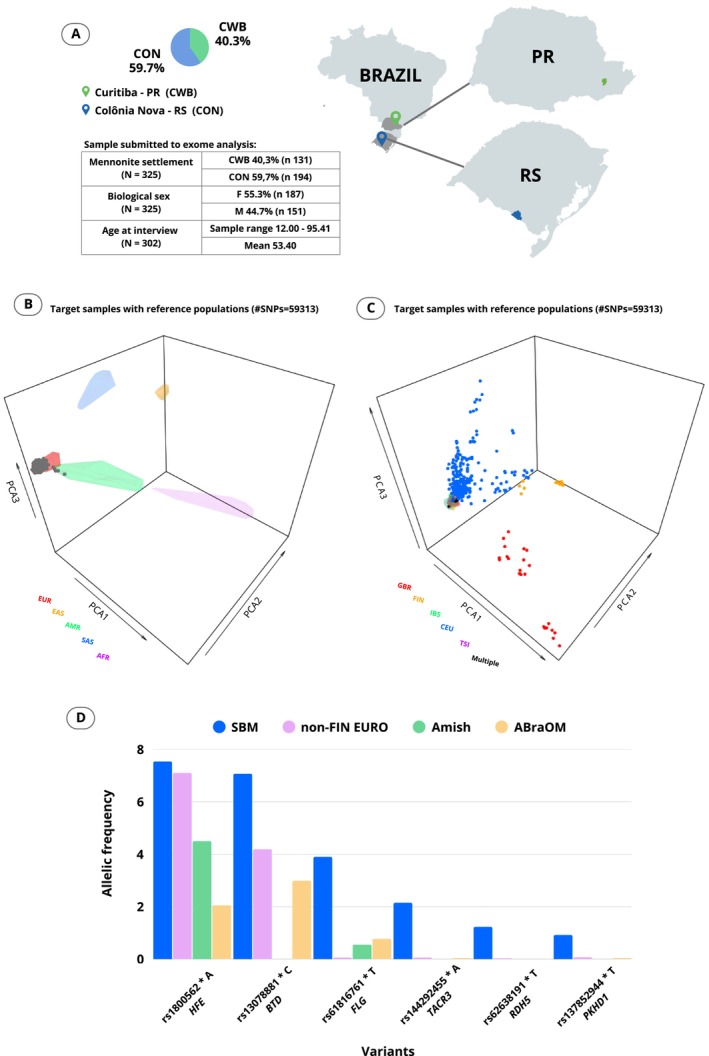 Figure 3
 Figure 4
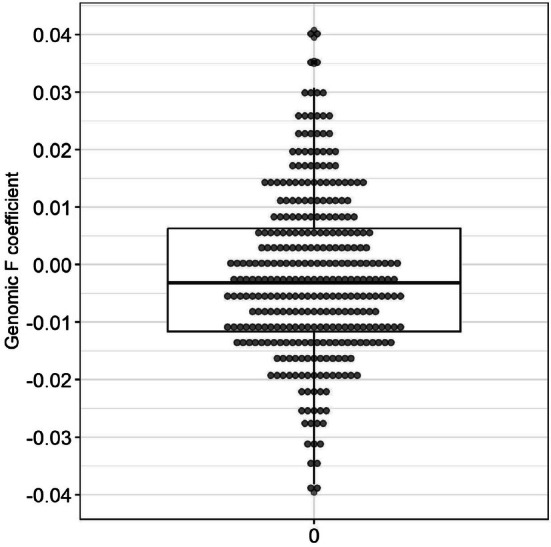 Figure 5
Peer Reviews
No public reviews on file for this paper yet. If you reviewed it on a platform where reviews are public (OpenReview, ICLR, NeurIPS, ICML), you can paste yours below so the community can read it here.
Videos
No videos yet. Explain this paper in a talk, walkthrough, or lecture? Add one.
Taxonomy
TopicsVector-Borne Animal Diseases · Agriculture and Farm Safety · T-cell and Retrovirus Studies