Pediatric Drug Adherence and Parental Attention: Evidence From Comprehensive Claims Data
Josh Feng, Matthew J. Higgins, Elena Patel

TL;DR
The study shows that children's asthma medication adherence dropped sharply during the pandemic, likely due to reduced parental attention.
Contribution
The novel contribution is linking changes in pediatric drug adherence during the pandemic to variations in parental attention.
Findings
Young children's adherence to asthma medication dropped by 40% by the end of 2020.
Adherence declines were less severe for older children and adults.
Parental attention influenced adherence, as shown by differences in mail order use and parental prescriptions.
Abstract
Using comprehensive U.S. drug claims data, we show that adherence to asthma control medication declined during the COVID‐19 pandemic. We find that young children exhibited a 40 percent decrease in adherence by the end of 2020. The responses were less negative for older children and positive for adults. We provide additional evidence that parental attention played a role in driving this decrease, based on heterogeneity by pre‐pandemic mail order usage and number of parental scripts. Policy implications for improving pediatric adherence are discussed.
Genes, proteins, chemicals, diseases, species, mutations and cell lines named across the full text — each resolved to its canonical identifier and authoritative record.
Click any figure to enlarge with its caption.
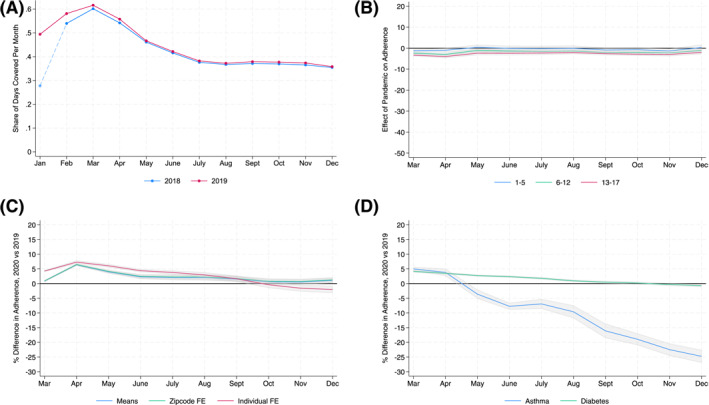 Figure 1
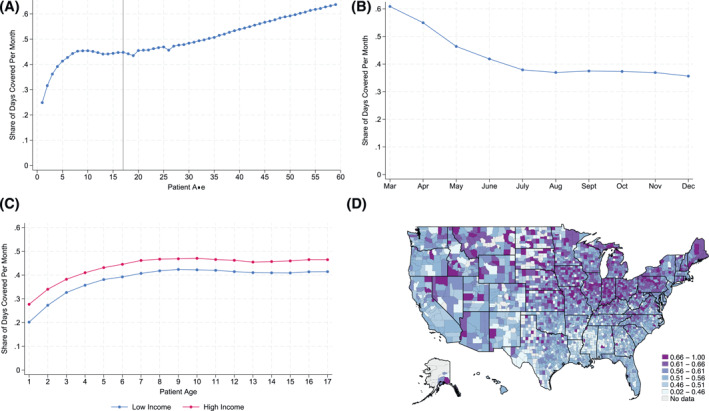 Figure 2
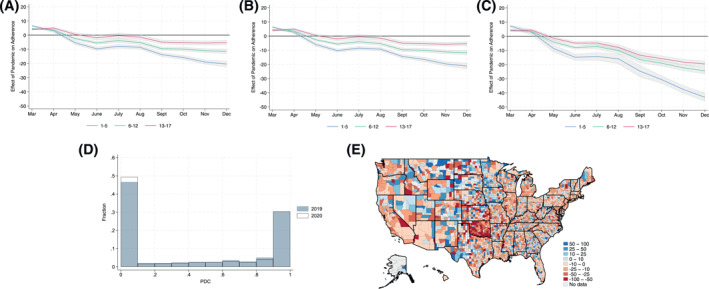 Figure 3
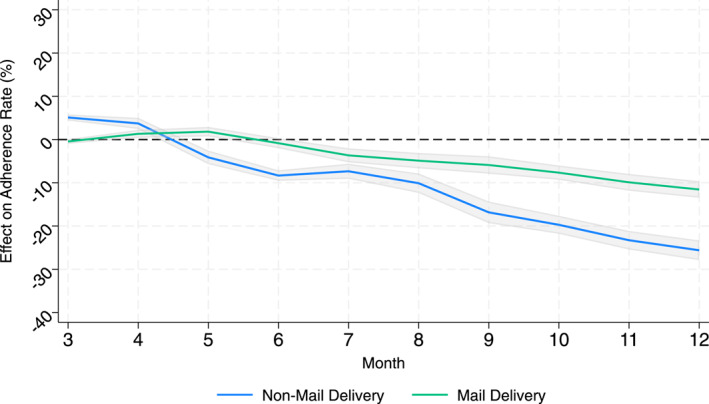 Figure 4
Peer Reviews
No public reviews on file for this paper yet. If you reviewed it on a platform where reviews are public (OpenReview, ICLR, NeurIPS, ICML), you can paste yours below so the community can read it here.
Videos
No videos yet. Explain this paper in a talk, walkthrough, or lecture? Add one.
Taxonomy
TopicsMedication Adherence and Compliance · Health Literacy and Information Accessibility · Vaccine Coverage and Hesitancy