Transcriptomic, proteomic and biochemical comparison of luminescent and non‐luminescent Keroplatinae larvae (Diptera: Keroplatidae)
Jaqueline R. Silva, Gabriel F. Pelentir, Danilo T. Amaral, Cassius Stevani, Vadim R. Viviani

TL;DR
This study compares the genes and proteins in glowing and non-glowing Keroplatinae larvae to understand the role of compounds involved in bioluminescence.
Contribution
The study identifies shared molecular components in bioluminescent and non-bioluminescent larvae, suggesting broader physiological roles for these compounds.
Findings
SBF contains hexamerins, flavin-dependent reductases, keroplatin, and riboflavin in both luminescent and non-luminescent larvae.
Neoditomyia sp. lacks luciferase activity despite similar luciferase protein patterns to O. fultoni.
SBF reductases may be involved in keroplatin synthesis or reduction in both species.
Abstract
Bioluminescence (BL) in the Keroplatinae subfamily (Diptera: Keroplatidae) is found in Keroplatus, Neoceroplatus and Orfelia fultoni larvae. In O. fultoni , BL involves an oligomeric luciferase, a luciferin called keroplatin, which is associated with a substrate binding fraction (SBF), whose molecular identity and function remain uncertain. Non‐luminescent web‐constructing predatory larvae of Neoditomyia sp. (Keroplatinae) also contain keroplatin and SBF in their bodies, suggesting additional unknown roles for this compound in this subfamily. To identify gene products differentially expressed between luminescent and non‐luminescent larvae, especially those associated with luciferase, SBF and keroplatin synthesis, here we compared the transcriptional and proteomic profiles of Neoditomyia sp., O. fultoni and Arachnocampa larvae and conducted biochemical assays. Similarly to O.…
Genes, proteins, chemicals, diseases, species, mutations and cell lines named across the full text — each resolved to its canonical identifier and authoritative record.
Click any figure to enlarge with its caption.
 Figure 1
 Figure 2
 Figure 3
 Figure 4
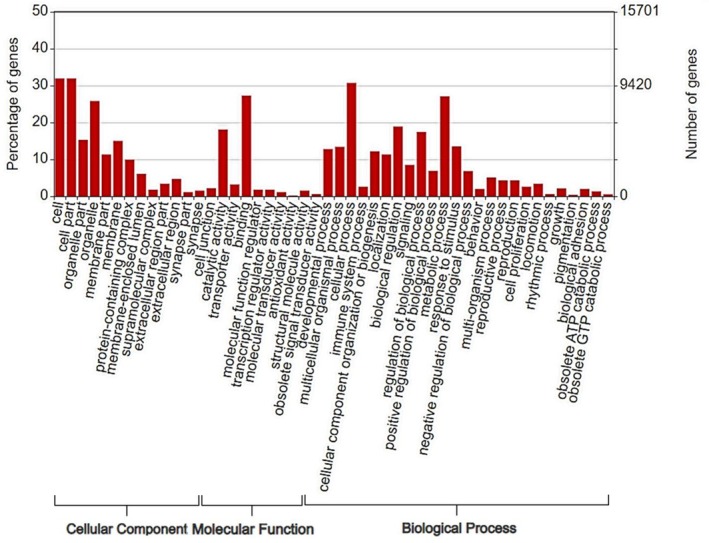 Figure 5
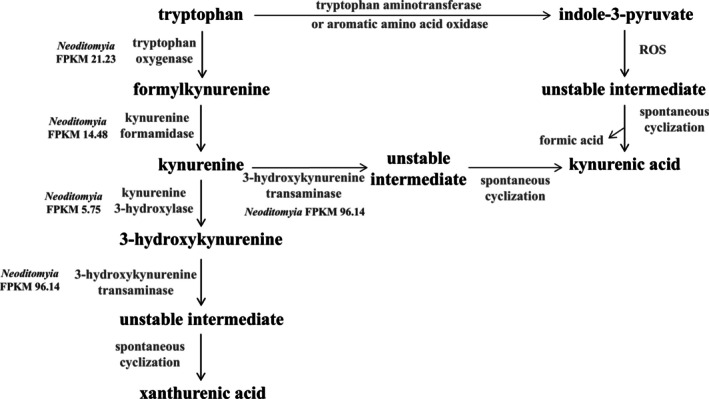 Figure 6
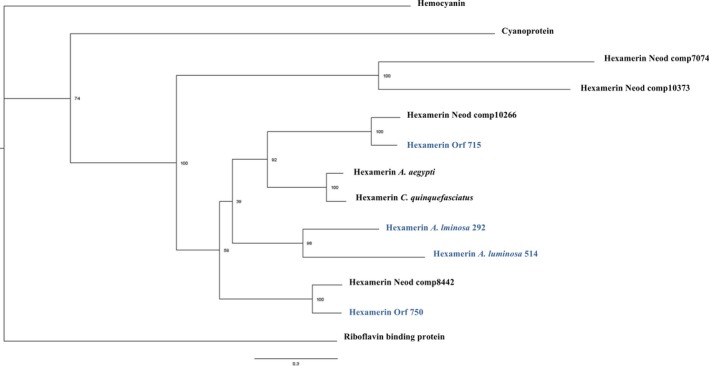 Figure 7
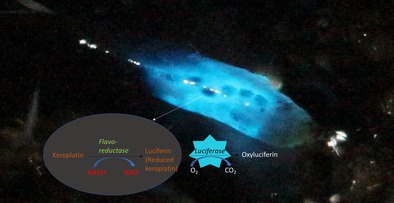 Figure 8
Peer Reviews
No public reviews on file for this paper yet. If you reviewed it on a platform where reviews are public (OpenReview, ICLR, NeurIPS, ICML), you can paste yours below so the community can read it here.
Videos
No videos yet. Explain this paper in a talk, walkthrough, or lecture? Add one.
Taxonomy
Topicsbioluminescence and chemiluminescence research · Insect Utilization and Effects · Insect and Pesticide Research