Comparative Analysis of HEK293 Genomic Variability
Georg Smesnik, Nikolaus Virgolini, Maria Toth, Astrid Dürauer, Nicole Borth

TL;DR
This paper studies how HEK293 cells change genetically under different culture conditions, finding a shared set of mutations linked to cell structure and gradual mutation accumulation over time.
Contribution
The study reveals a conserved genetic core in HEK293 cells and shows that mutations accumulate gradually rather than abruptly in response to environmental changes.
Findings
A conserved genetic core was identified across HEK293 lines regardless of cultivation history or phenotype.
Genomic alterations accumulate gradually over time in culture rather than abruptly in response to environmental changes.
Adenoviral genes remained highly conserved in copy number, integration site, and sequence integrity.
Abstract
Human embryonic kidney cells HEK293 are widely used in biopharmaceutical manufacturing, with a recent surge particularly in recombinant adeno‐associated virus production. Despite their industrial relevance, comprehensive data on their genomic background and stability remains limited. Here, we systematically analyze the genetic landscape of various HEK293 cell lines in response to cultivation conditions, clonal selection, genetic manipulation and over time in culture. Adherent HEK293 were adapted to suspension growth using different serum‐free media. Whole genome sequences from these cell lines were analyzed together with previously published data from additional variants in common use. All data sets were aligned against the human reference genome, enabling the assessment of genome stability by evaluation of variants and revealing a conserved genetic core across all lines, regardless of…
Genes, proteins, chemicals, diseases, species, mutations and cell lines named across the full text — each resolved to its canonical identifier and authoritative record.
Click any figure to enlarge with its caption.
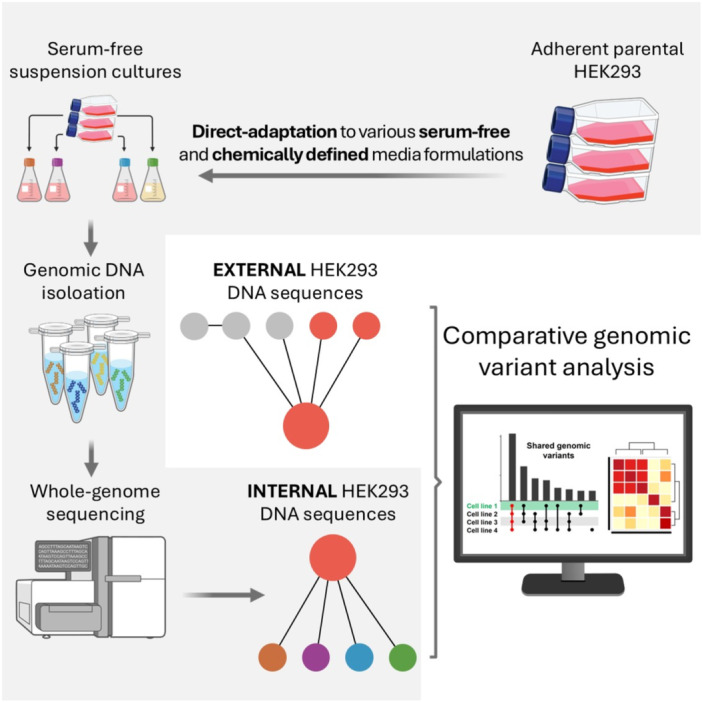 Figure 1
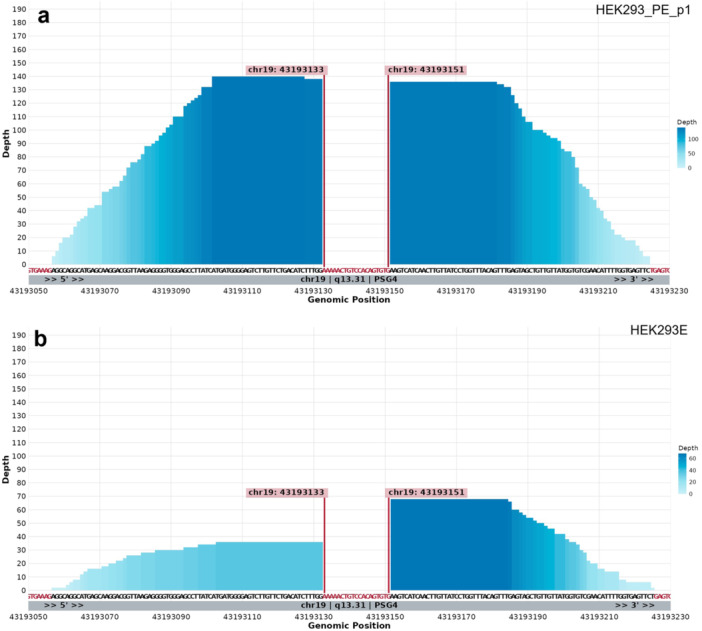 Figure 2
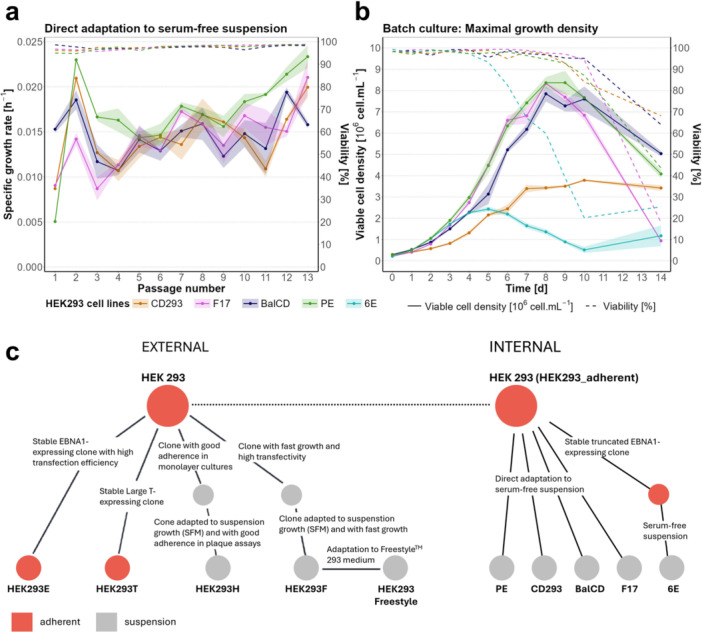 Figure 3
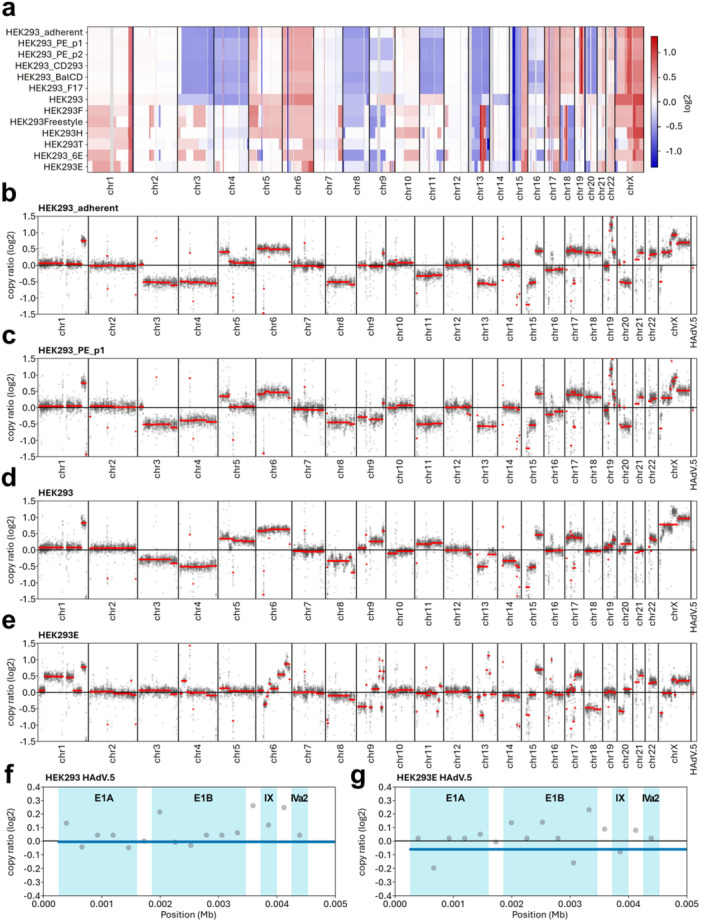 Figure 4
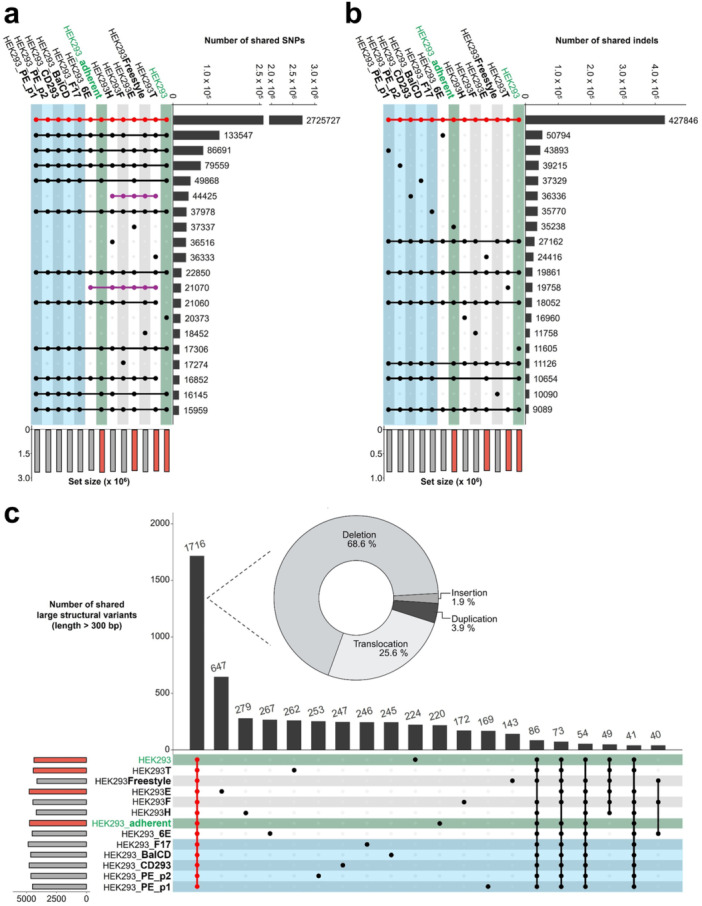 Figure 5
Peer Reviews
No public reviews on file for this paper yet. If you reviewed it on a platform where reviews are public (OpenReview, ICLR, NeurIPS, ICML), you can paste yours below so the community can read it here.
Videos
No videos yet. Explain this paper in a talk, walkthrough, or lecture? Add one.
Taxonomy
TopicsViral Infectious Diseases and Gene Expression in Insects · Pluripotent Stem Cells Research · CRISPR and Genetic Engineering