When predict can also explain: Few-shot prediction to select better neural latents
Kabir V. Dabholkar, Omri Barak, Hugues Berry, Yuanning Li, Hugues Berry, Yuanning Li, Hugues Berry, Yuanning Li, Hugues Berry, Yuanning Li

TL;DR
This paper introduces a new method to improve the accuracy of neural latent variable models by addressing the issue of extraneous dynamics in their predictions.
Contribution
A novel secondary metric, few-shot co-smoothing, is proposed to filter out models with extraneous dynamics.
Findings
Models with high co-smoothing scores can still contain arbitrary extraneous dynamics.
Few-shot co-smoothing identifies minimal models without extraneous dynamics.
The new metric correlates with a novel validation measure based on cross-decoding.
Abstract
Latent variable models serve as powerful tools to infer underlying dynamics from observed neural activity. Ideally, the inferred dynamics should align with true ones. However, due to the absence of ground truth data, prediction benchmarks are often employed as proxies. One widely-used method, co-smoothing, involves jointly estimating latent variables and predicting observations along held-out channels to assess model performance. In this study, we reveal the limitations of the co-smoothing prediction framework and propose a remedy. Using a student-teacher setup, we demonstrate that models with high co-smoothing can have arbitrary extraneous dynamics in their latent representations. To address this, we introduce a secondary metric—few-shot co-smoothing, performing regression from the latent variables to held-out neurons in the data using fewer trials. Our results indicate that among…
Genes, proteins, chemicals, diseases, species, mutations and cell lines named across the full text — each resolved to its canonical identifier and authoritative record.
Click any figure to enlarge with its caption.
 Figure 1
 Figure 2
 Figure 3
 Figure 4
 Figure 5
 Figure 6
 Figure 7
 Figure 8
 Figure 9
 Figure 10
 Figure 11
 Figure 12
 Figure 13
 Figure 14
 Figure 15
 Figure 16
 Figure 17
 Figure 18
 Figure 19
 Figure 20
 Figure 21
 Figure 22
 Figure 23
 Figure 24
 Figure 25
 Figure 26
 Figure 27
 Figure 28
 Figure 29
 Figure 30
 Figure 31
 Figure 32
 Figure 33
 Figure 34
 Figure 35
 Figure 36
 Figure 37
 Figure 38
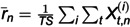 Figure 39
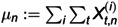 Figure 40
 Figure 41
 Figure 42
 Figure 43
 Figure 44
 Figure 45
 Figure 46
 Figure 47
 Figure 48
 Figure 49
 Figure 50
Peer Reviews
No public reviews on file for this paper yet. If you reviewed it on a platform where reviews are public (OpenReview, ICLR, NeurIPS, ICML), you can paste yours below so the community can read it here.
Videos
No videos yet. Explain this paper in a talk, walkthrough, or lecture? Add one.
Taxonomy
TopicsNeural dynamics and brain function · Generative Adversarial Networks and Image Synthesis · Functional Brain Connectivity Studies