Development and validation of an artificial intelligence model based on liver CSE-MRI fat maps for predicting dyslipidemia
Bo Jiang, Weijun Situ, Zhichao Feng, Jianmin Yuan, Yina Wang, Xiaofan Chen, Xiong Wu, Kai Deng, Haitao Yang, Xiao Xiao, Xi Guo, Junjiao Hu, Ismini Lourentzou, Alexander Wong, Alexander Wong

TL;DR
This paper introduces an AI model that uses liver MRI scans to predict dyslipidemia without blood tests, offering a non-invasive early warning tool.
Contribution
The novel contribution is an AI model using liver CSE-MRI fat maps to predict lipid abnormalities with high accuracy, enabling non-invasive dyslipidemia screening.
Findings
A ResNet18-based AI model achieved high accuracy in predicting lipid abnormalities from liver CSE-MRI fat maps.
The model showed strong performance for low-density and high-density lipoprotein cholesterol prediction.
The approach enables opportunistic screening for dyslipidemia using existing MRI scans without additional cost or time.
Abstract
This study aimed to develop and validate an artificial intelligence (AI) model for the non-invasive early detection of dyslipidemia using liver chemical shift-encoded MRI (CSE-MRI) fat maps. An automated AI pipeline was developed to predict abnormalities in four lipid indicators: triglyceride, total cholesterol, low-density lipoprotein cholesterol, and high-density lipoprotein cholesterol. The study utilized 1,757 liver CSE-MRI fat images from 89 patients who underwent MRI scans and contemporaneous blood lipid testing. Transfer learning was applied using several pre-trained networks, including ResNet18, MobileNet, DenseNet, AlexNet, and SqueezeNet. Model performance was evaluated via 8-fold cross-validation, with the optimal model further assessed on a held-out test set using confusion matrices and derived metrics. Significant performance differences were observed among models. The…
Genes, proteins, chemicals, diseases, species, mutations and cell lines named across the full text — each resolved to its canonical identifier and authoritative record.
Click any figure to enlarge with its caption.
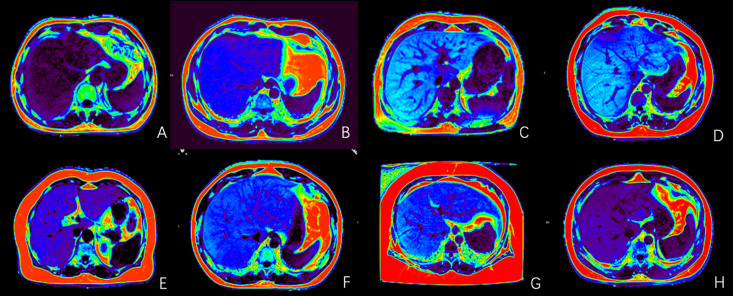 Figure 1
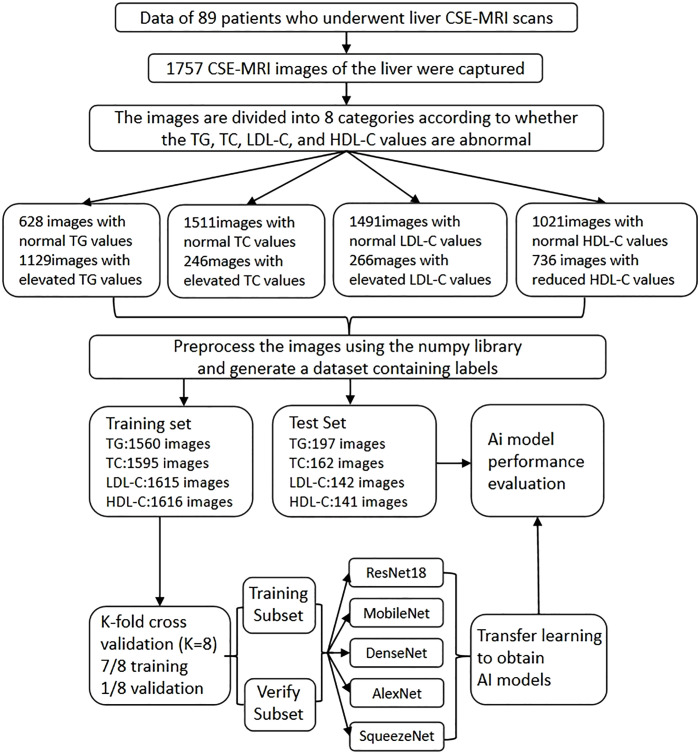 Figure 2
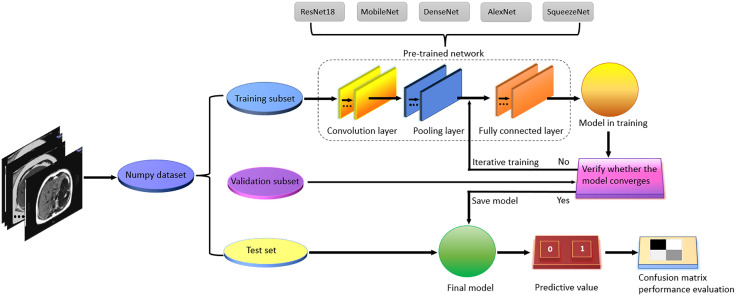 Figure 3
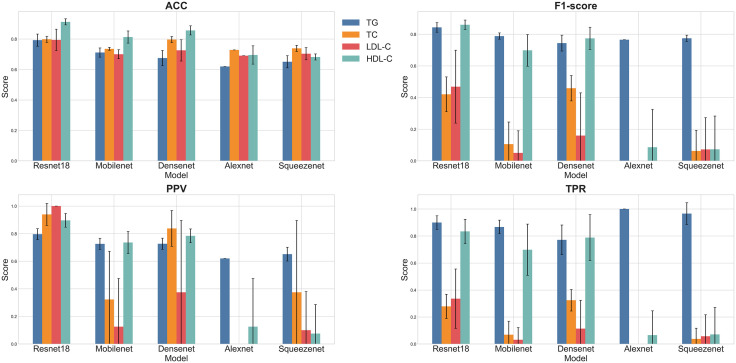 Figure 4
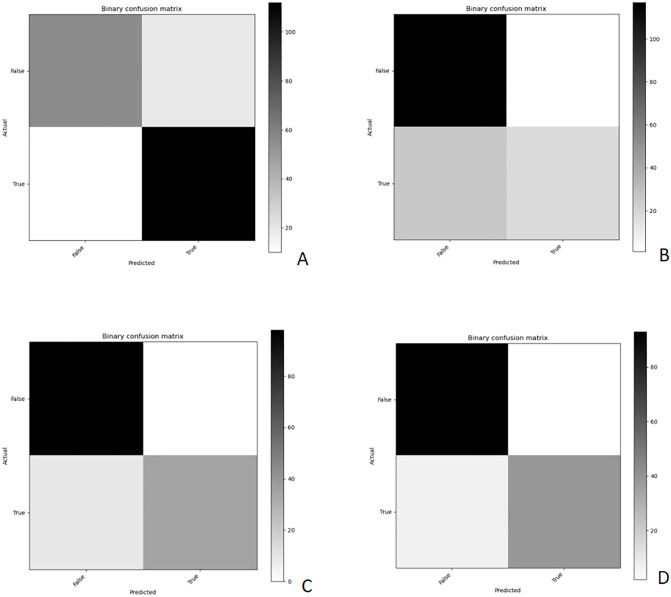 Figure 5
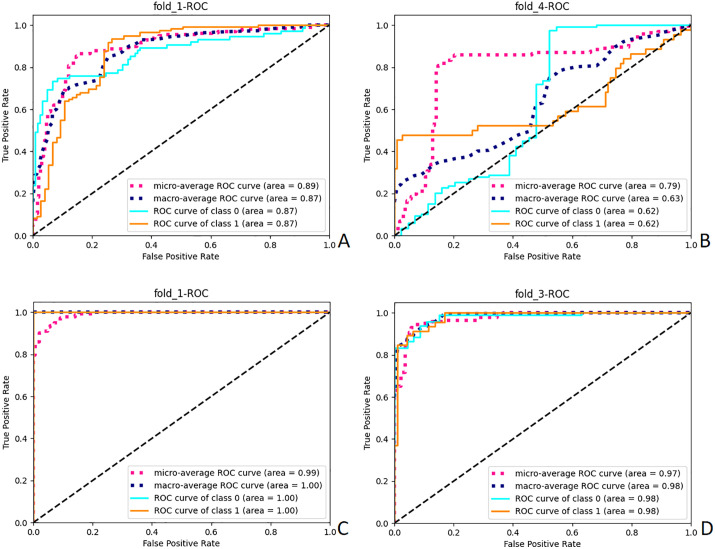 Figure 6
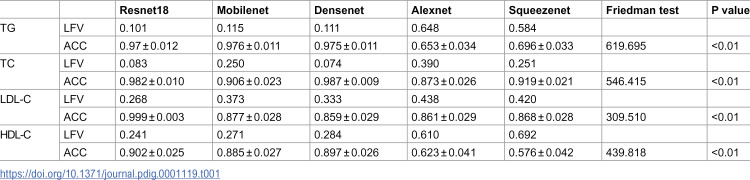 Figure 7
 Figure 8
 Figure 9
Peer Reviews
No public reviews on file for this paper yet. If you reviewed it on a platform where reviews are public (OpenReview, ICLR, NeurIPS, ICML), you can paste yours below so the community can read it here.
Videos
No videos yet. Explain this paper in a talk, walkthrough, or lecture? Add one.
Taxonomy
TopicsLiver Disease Diagnosis and Treatment · Diabetes, Cardiovascular Risks, and Lipoproteins · Cardiovascular Disease and Adiposity