The assessment of psychological richness, meaning, and happiness with social media text data: Predictive accuracy and distinct behavioral correlates
Cavan V. Bonner, Young-Min Cho, Fanyi Zhang, Louis Tay, Lyle Ungar, Sharath Chandra Guntuku

TL;DR
This paper explores how well social media text can predict different aspects of well-being, finding that psychological richness is uniquely linked to specific language patterns.
Contribution
The study introduces psychological richness as a new well-being dimension with distinct linguistic predictors compared to hedonic and eudaimonic well-being.
Findings
Language features improved prediction accuracy for psychological richness but not for hedonic or eudaimonic well-being.
Psychological richness had the lowest prediction accuracy (r = .21) compared to other well-being dimensions.
Linguistic features associated with psychological richness showed discriminant validity with unique content and direction.
Abstract
Assessing well-being with social media text data is a promising method, but besides hedonic well-being, little is known about whether additional well-being dimensions, such as psychological richness and eudaimonic well-being, can be predicted from such data. We compare the predictive accuracy for hedonic well-being, eudaimonic well-being, and the recently proposed construct of psychological richness in a large sample of Facebook users (n = 2,644), and find that the inclusion of language features incrementally improved model prediction accuracy beyond demographic features for psychological richness, but not for hedonic or eudaimonic well-being. Psychological richness had the lowest overall prediction accuracy (r = .21) followed by hedonic well-being (r = .27) and eudeomonic well-being (r = .29). The linguistic features associated with Psychological Richness were face valid, and in many…
Genes, proteins, chemicals, diseases, species, mutations and cell lines named across the full text — each resolved to its canonical identifier and authoritative record.
Click any figure to enlarge with its caption.
 Figure 1
 Figure 2
 Figure 3
 Figure 4
 Figure 5
 Figure 6
 Figure 7
 Figure 8
 Figure 9
 Figure 10
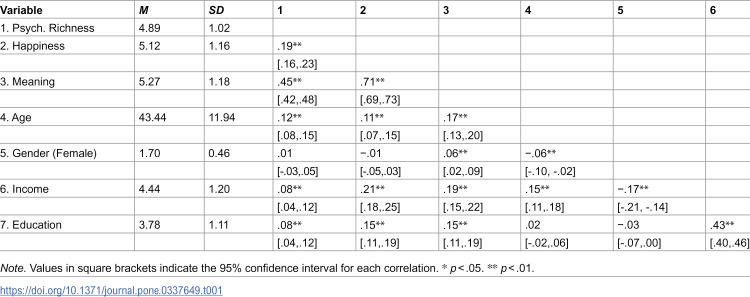 Figure 11
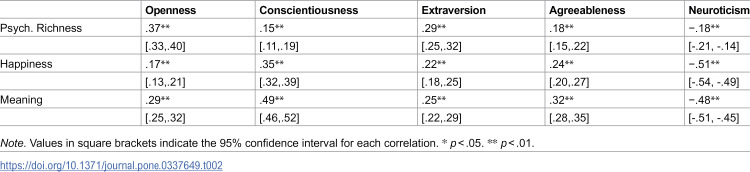 Figure 12
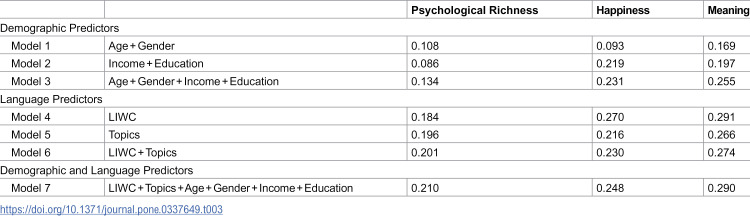 Figure 13
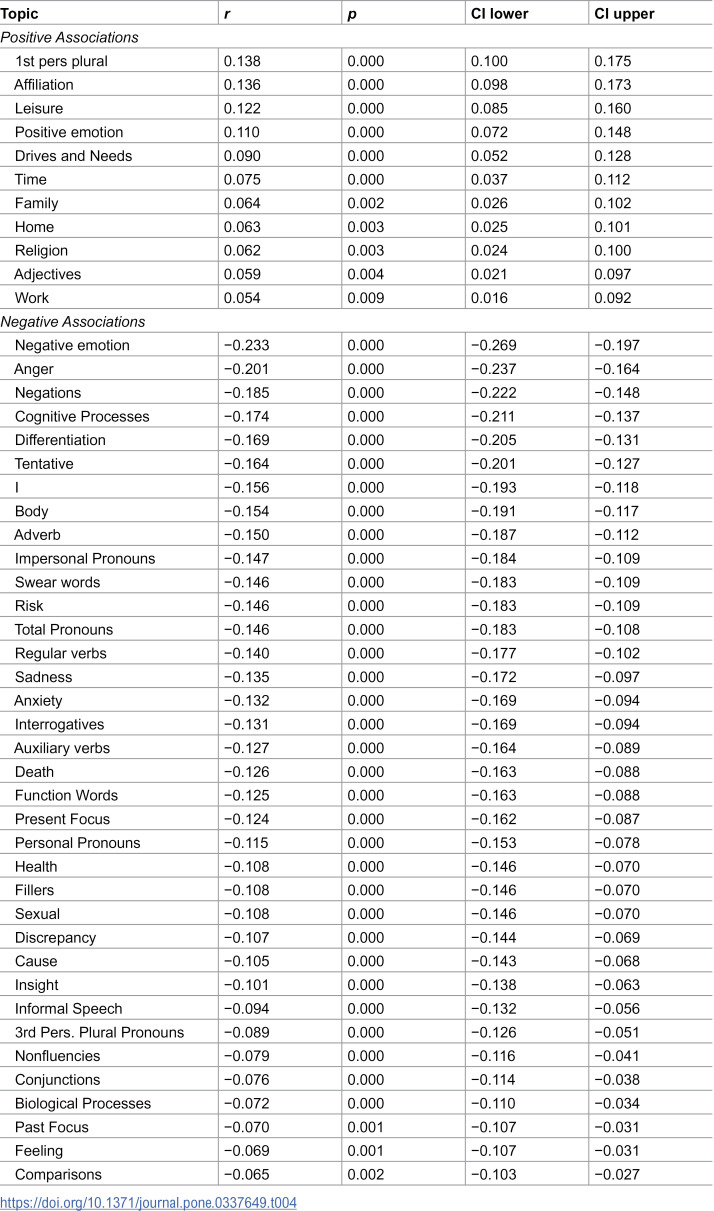 Figure 14
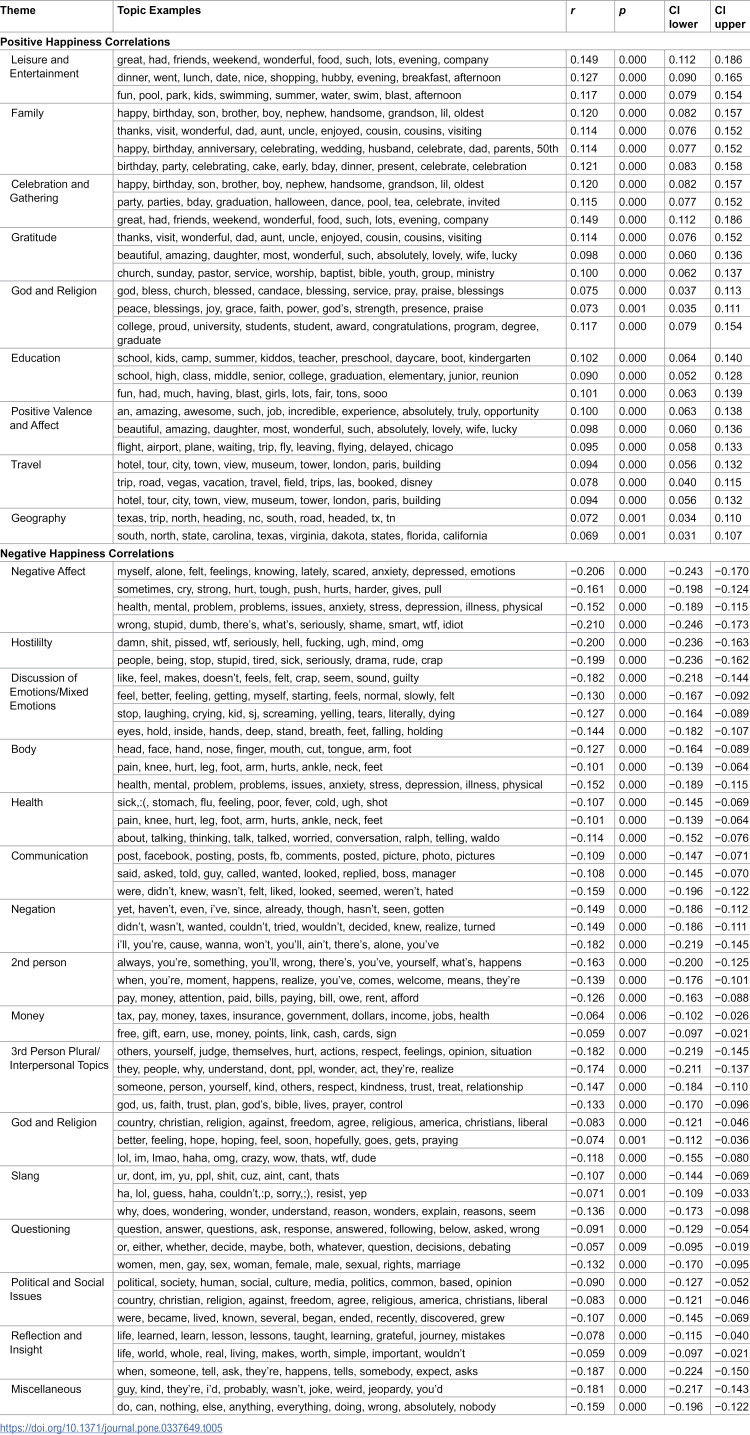 Figure 15
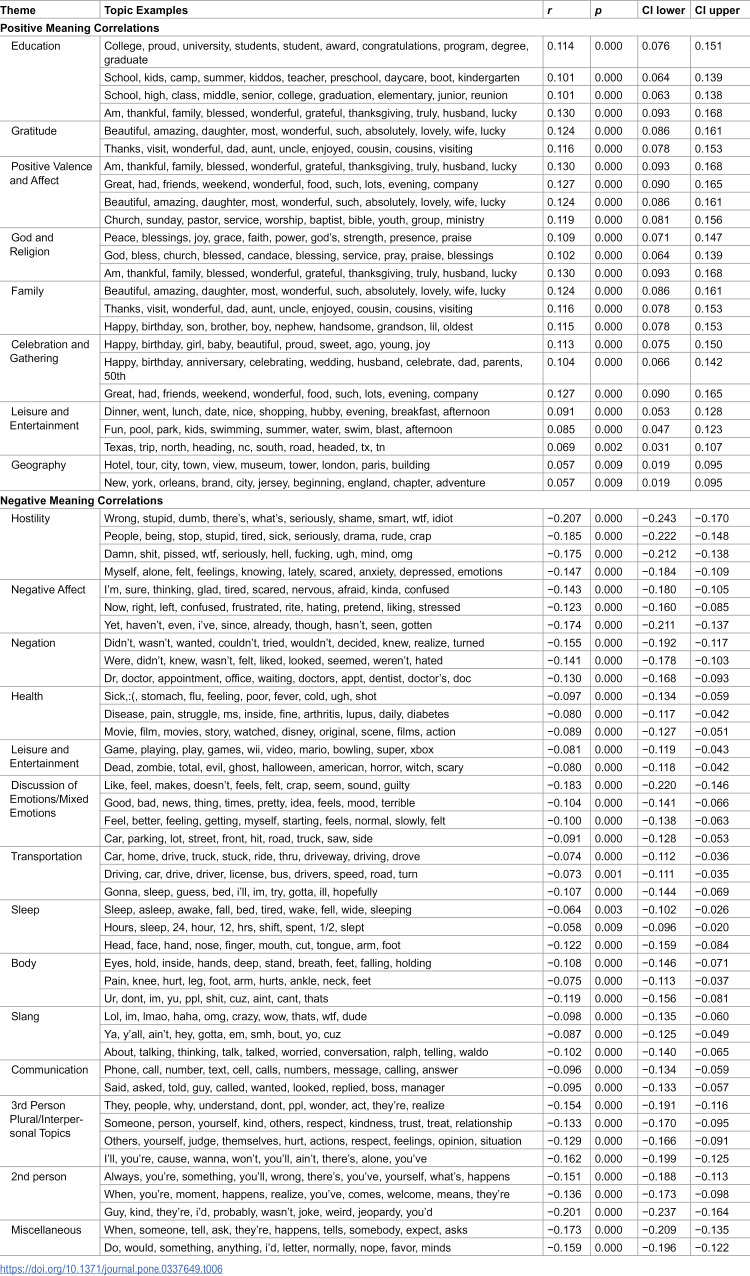 Figure 16
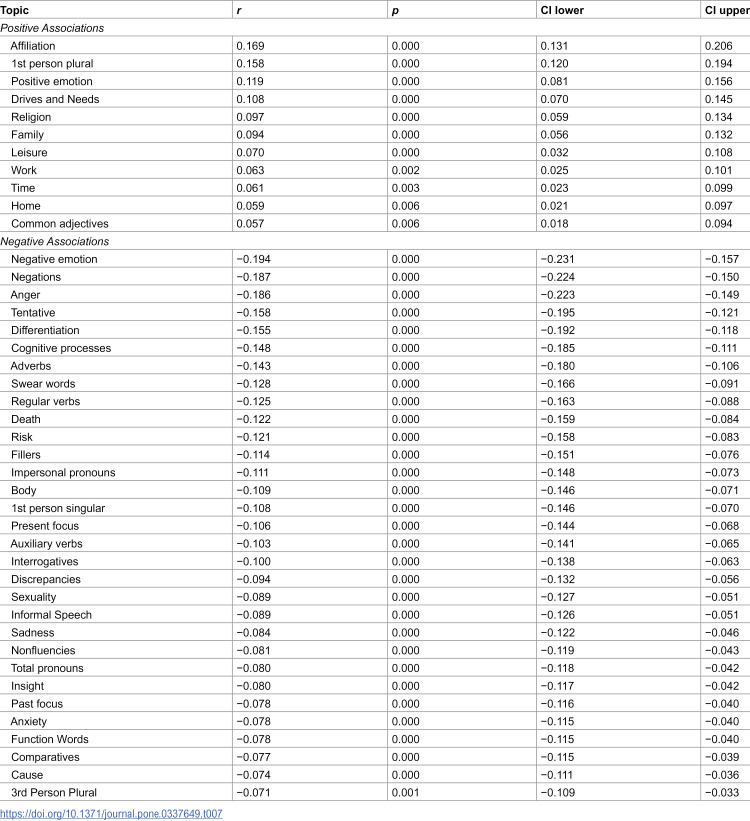 Figure 17
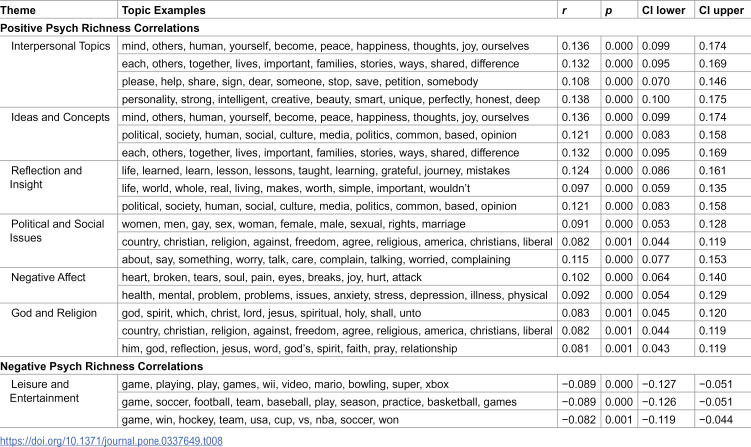 Figure 18
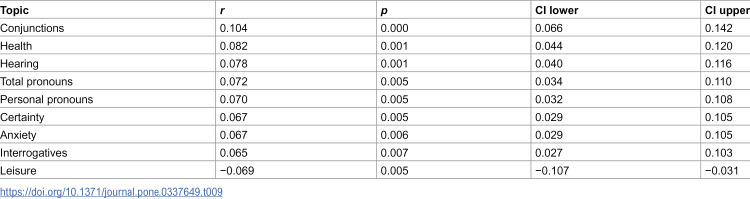 Figure 19
Peer Reviews
No public reviews on file for this paper yet. If you reviewed it on a platform where reviews are public (OpenReview, ICLR, NeurIPS, ICML), you can paste yours below so the community can read it here.
Videos
No videos yet. Explain this paper in a talk, walkthrough, or lecture? Add one.
Taxonomy
TopicsMental Health via Writing · Impact of Technology on Adolescents · Personality Traits and Psychology