Effect of exercise preconditioning on myocardial content of Sphingosine1-phosphate and its mechanism in rats after exhaustive exercise
Xinnuan Wei, Weiyuan Yang, Junxiang Zhou, Luoyuan Cao, Wenxing Jiang, Amirreza Khalaji, Amirreza Khalaji, Amirreza Khalaji, Amirreza Khalaji, Amirreza Khalaji

TL;DR
Exercise preconditioning protects rat hearts during exhaustive exercise by increasing S1P levels and activating the MAPK pathway.
Contribution
The study identifies the S1P→MAPK signaling axis as a novel mechanism for heart protection via exercise preconditioning.
Findings
Exercise preconditioning reduces myocardial injury and apoptosis after exhaustive exercise.
S1P levels increase with exercise preconditioning, and this effect is blocked by a S1PR1 antagonist.
MAPK pathway inhibition negates the protective effects of exercise preconditioning despite unchanged S1P levels.
Abstract
This study aimed to investigate the effects of exercise preconditioning on rat myocardial Sphingosine1-phosphate(S1P) content and its potential mechanisms of heart protection. A rat model of exercise preconditioning followed by exhaustive exercise was established. Rats were randomized to four groups: control (C), exercise preconditioning (EP), EP plus the S1PR1-selective antagonist W146 (EP + W146), and EP plus the MEK1/2 inhibitor PD98059 (EP + PD98059). Following a final exhaustive swim, comparisons across groups revealed that EP attenuated myocardial injury and apoptosis, an effect which was abolished by both W146 and PD98059. 1. Exercise preconditioning (EP) significantly attenuated exhaustive exercise-induced myocardial injury and apoptosis (P < 0.001); 2. EP significantly elevated myocardial S1P levels (P = 0.002), and S1PR1-selective antagonist (W146) abolished this…
Genes, proteins, chemicals, diseases, species, mutations and cell lines named across the full text — each resolved to its canonical identifier and authoritative record.
Click any figure to enlarge with its caption.
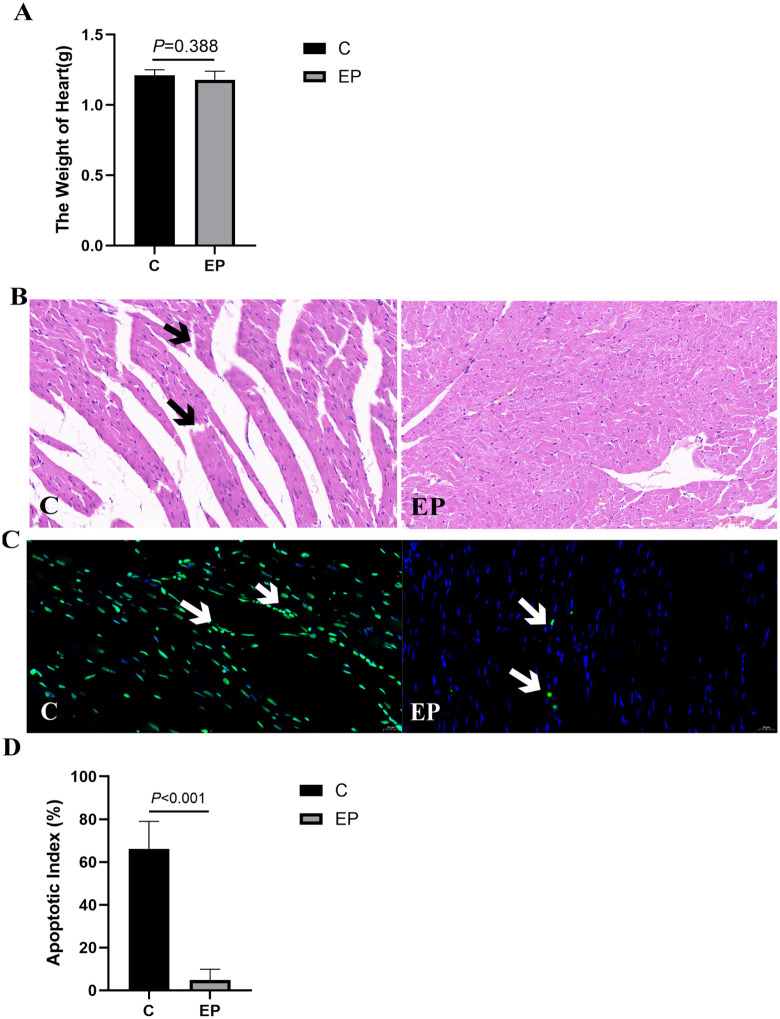 Figure 1
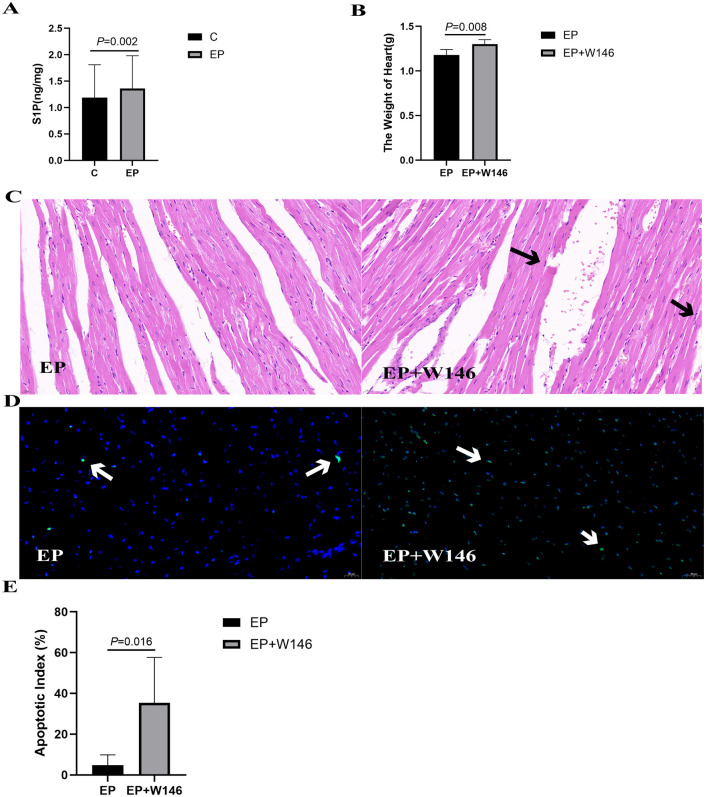 Figure 2
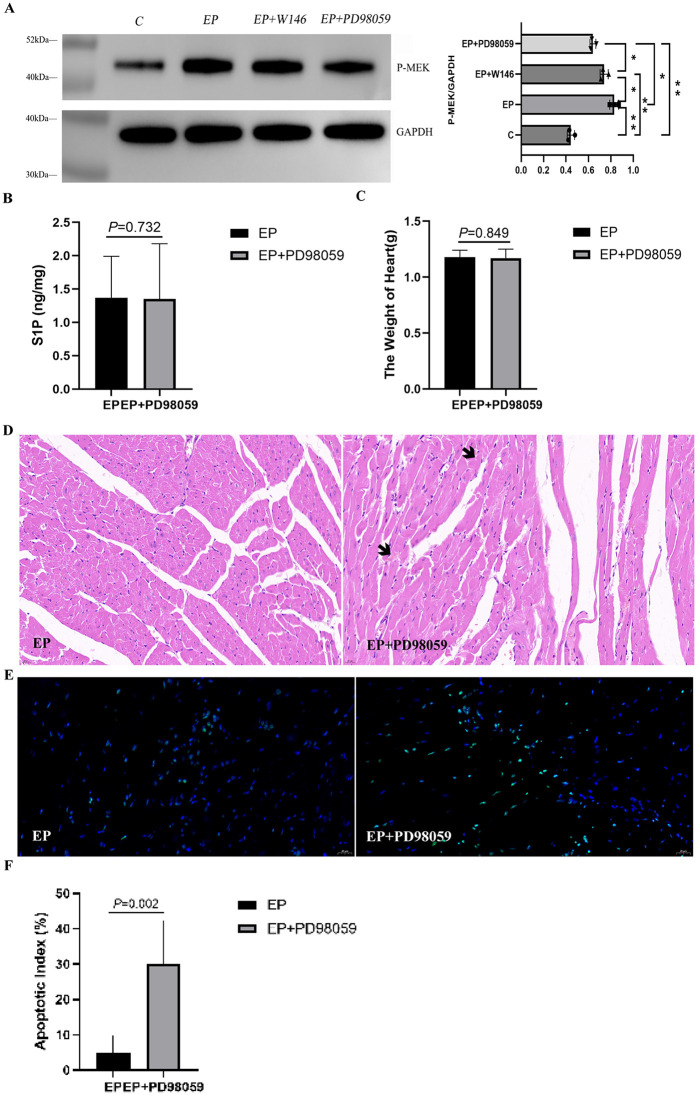 Figure 3
 Figure 4
 Figure 5
 Figure 6
 Figure 7
 Figure 8
 Figure 9
 Figure 10
 Figure 11
Peer Reviews
No public reviews on file for this paper yet. If you reviewed it on a platform where reviews are public (OpenReview, ICLR, NeurIPS, ICML), you can paste yours below so the community can read it here.
Videos
No videos yet. Explain this paper in a talk, walkthrough, or lecture? Add one.
Taxonomy
TopicsCardiac Ischemia and Reperfusion · Exercise and Physiological Responses · Sphingolipid Metabolism and Signaling