Segmentation of medial temporal lobe subregions in a nearly isotropic space using T2‐weighted MRI with anisotropic resolution
Yue Li, Pulkit Khandelwal, Long Xie, Laura E.M. Wisse, Nidhi S. Mundada, Christopher A Brown, Emily McGrew, Amanda E Denning, Sandhitsu R. Das, David A. Wolk, Paul A. Yushkevich

TL;DR
This paper introduces a new method to improve the accuracy of brain region measurements in MRI scans by using a nearly isotropic segmentation approach for the medial temporal lobe.
Contribution
The novel contribution is a nearly isotropic segmentation pipeline for T2-weighted MRI that enhances subregion thickness measurements.
Findings
The isotropic T2w segmentation showed larger effect sizes in group differences between A+MCI and A-CN.
Isotropic T2w segmentation demonstrated better longitudinal consistency compared to anisotropic T2w segmentation.
The new method provides smoother segmentation surfaces and improved imaging biomarker accuracy for neurodegeneration.
Abstract
Morphometry of medial temporal lobe (MTL) subregions in brain MRI is sensitive biomarker to Alzheimer's Disease and other related conditions. While T2‐weighted (T2w) MRI with high in‐plane resolution is widely used to segment hippocampal subfields due to its higher contrast in hippocampus, its lower out‐of‐plane resolution reduces the accuracy of subregion thickness measurements. To address this issue, we developed a nearly isotropic segmentation pipeline that incorporates image and label upsampling and high‐resolution segmentation in T2w MRI. First, a high‐resolution atlas was created based on an existing anisotropic atlas derived from 29 individuals. Both T1‐weighted and T2w images in the atlas were upsampled from their original resolution to a nearly isotropic resolution using a non‐local means approach. Manual segmentations within the atlas were also upsampled to match this…
Genes, proteins, chemicals, diseases, species, mutations and cell lines named across the full text — each resolved to its canonical identifier and authoritative record.
Click any figure to enlarge with its caption.
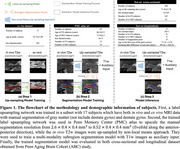 Figure 1
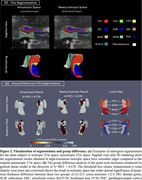 Figure 2
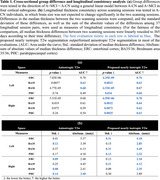 Figure 3
Peer Reviews
No public reviews on file for this paper yet. If you reviewed it on a platform where reviews are public (OpenReview, ICLR, NeurIPS, ICML), you can paste yours below so the community can read it here.
Videos
No videos yet. Explain this paper in a talk, walkthrough, or lecture? Add one.
Taxonomy
TopicsAdvanced Neuroimaging Techniques and Applications · Memory and Neural Mechanisms · Functional Brain Connectivity Studies