Exploring Associations Between Longitudinal [18F]RO‐948 Tau PET, Baseline Fluid tau Biomarkers, and memory in the Early Alzheimer's Disease continuum
Mahnaz Shekari, Armand González Escalante, David López‐Martos, Marta Milà‐Alomà, Gonzalo Sánchez‐Benavides, Anna Brugulat‐Serrat, Aida Niñerola‐Baizán, Carles Falcon, Nicholas J. Ashton, Thomas Karikari, Juan Lantero Rodriguez, Anniina Snellman, Theresa A. Day, Jeffrey L. Dage

TL;DR
This study explores how tau biomarkers in blood and spinal fluid relate to brain tau accumulation and memory in people at risk for early Alzheimer's disease.
Contribution
The study identifies associations between baseline fluid tau biomarkers and early tau PET changes in cognitively unimpaired individuals.
Findings
Higher plasma ptau181 and ptau217 levels are linked to higher baseline BraakI/II tau PET SUVR.
CSF ptau217 and ptau181/Aβ42 ratio are significantly associated with baseline tau PET SUVR in early and later Braak stages.
Lower memory scores correlate with higher tau PET SUVR in BraakI/II and BraakIII/IV regions.
Abstract
The relationship between longitudinal tau‐PET trajectories and fluid tau biomarkers in early Braak stages is crucial for understanding Alzheimer's disease (AD) progression and identifying predictive biomarkers for early diagnosis and intervention. This study examines how baseline plasma and cerebrospinal fluid (CSF) tau biomarkers, amyloid plaques, and cognitive performance interact with longitudinal tau‐PET trajectories in cognitively unimpaired (CU) individuals. Forty‐six CU individuals from ALFA+ cohort were included, each with two [18F]RO‐948 tau‐PET scans (∆t=2.31±0.34 years), two T1‐weighted MRIs, and baseline [18F]flutemetamol amyloid‐PET (Figure 1). Baseline fluid tau biomarkers, measured using RocheNTK, RocheElecsys, Simoa, and Lilly assays, as well as memory, were also available. [18F]RO‐948 uptake was measured in entorhinal (BraakI/II), limbic (BraakIII/IV), and neocortical…
Genes, proteins, chemicals, diseases, species, mutations and cell lines named across the full text — each resolved to its canonical identifier and authoritative record.
Click any figure to enlarge with its caption.
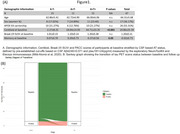 Figure 1
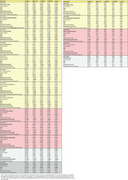 Figure 2
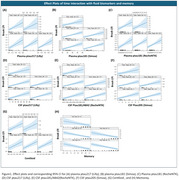 Figure 3
Peer Reviews
No public reviews on file for this paper yet. If you reviewed it on a platform where reviews are public (OpenReview, ICLR, NeurIPS, ICML), you can paste yours below so the community can read it here.
Videos
No videos yet. Explain this paper in a talk, walkthrough, or lecture? Add one.
Taxonomy
TopicsDementia and Cognitive Impairment Research · Alzheimer's disease research and treatments · Cerebrospinal fluid and hydrocephalus