Smartphone-Based Digital Eczema Education Program for Atopic Dermatitis in Children Aged 0 to 6 Years: Multicenter, Randomized, Parallel Controlled Clinical Study
Huan Yang, Hong Shu, Liu-hui Wang, Ping Li, Yun-ling Li, Qin-feng Li, Xiu-ping Han, Jing Tian, Jing Chang, Hua Qian, Jing-ping Chen, Xin-qiang Ding, Pan-qian Wu, Li-min Dou, Zhen Luo, Wei Li, Yang-yang Lin, Lin Li, Shu-zhen Yue, Yang Gu, Li Yang, Xiao-hong Sun, Xiao-yan Luo

TL;DR
A smartphone-based education program for children with eczema reduced short-term relapse rates compared to traditional consultations, showing digital tools can help manage the condition effectively.
Contribution
This study provides empirical evidence that a digital education program can reduce short-term relapse rates in young children with atopic dermatitis.
Findings
The digital education group had a significantly lower 12-week relapse rate (16.6%) compared to the control group (24.0%).
Engagement tracking showed 58.0% of caregivers maintained regular weekly use of the digital platform.
Relapse-free survival was superior in the digital group over the first 100 days.
Abstract
Atopic dermatitis (AD) is a chronic, relapsing inflammatory skin condition that affects approximately 10% to 20% of children, imposing substantial health and economic burdens. Although education for patients and caregivers is acknowledged as a crucial element in the management of AD, conventional approaches, such as workshops or in-person consultations, are often resource intensive and face challenges related to scalability, personalization, and relapse prevention. Digital tools present promising alternatives; however, empirical evidence supporting their effectiveness in young children is currently limited. This study aimed to evaluate whether a smartphone-based patient-caregiver educational program could reduce relapse rates in children aged 0 to 6 years with moderate-to-severe AD, compared with conventional outpatient consultation alone. In this multicenter, randomized,…
Genes, proteins, chemicals, diseases, species, mutations and cell lines named across the full text — each resolved to its canonical identifier and authoritative record.
Click any figure to enlarge with its caption.
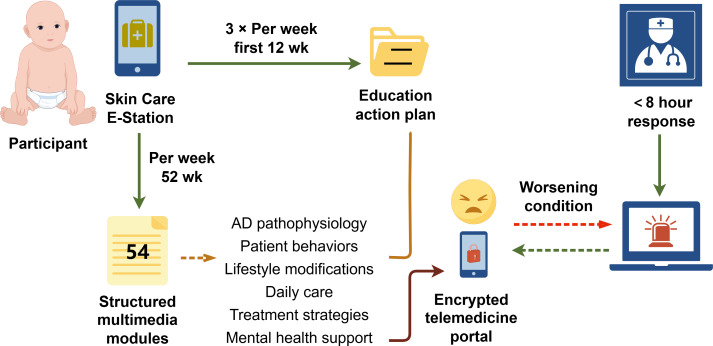 Figure 1
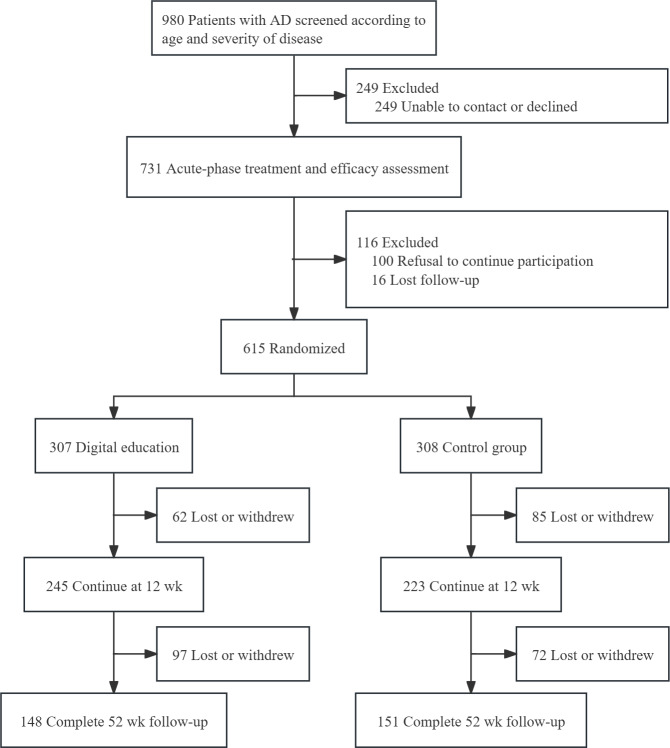 Figure 2
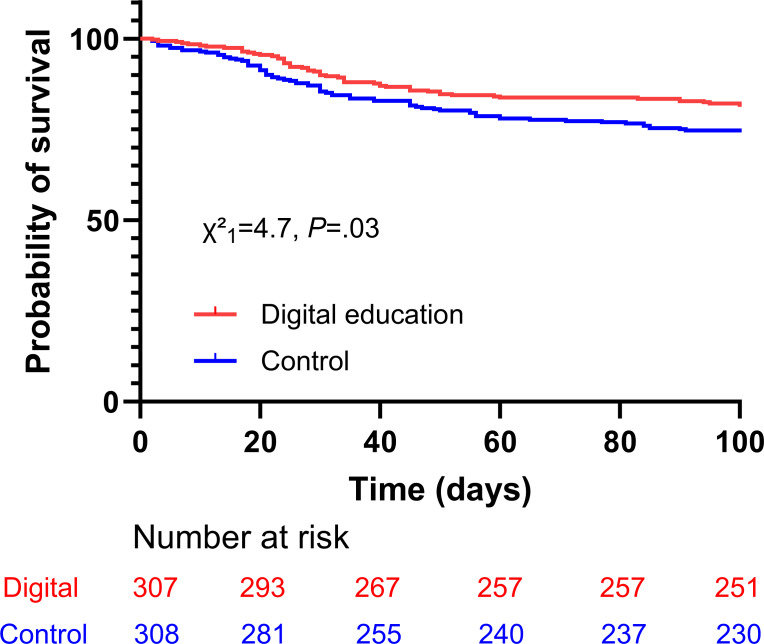 Figure 3
Peer Reviews
No public reviews on file for this paper yet. If you reviewed it on a platform where reviews are public (OpenReview, ICLR, NeurIPS, ICML), you can paste yours below so the community can read it here.
Videos
No videos yet. Explain this paper in a talk, walkthrough, or lecture? Add one.
Taxonomy
TopicsDermatology and Skin Diseases · Dermatological diseases and infestations · Food Allergy and Anaphylaxis Research