Comparative efficacy of cisternal drainage versus external ventricular drainage in severe aneurysmal subarachnoid hemorrhage
Mahamat Hamid Mahamat, Tuo Li, Jun Liu, Shusheng Zhang, Ye Miao, Zhongzhen Li, Yadan Li, Hua Yan, Guobin Zhang, Xiaoguang Tong, Eric Sribnick, Eric Sribnick, Eric Sribnick, Eric Sribnick, Eric Sribnick

TL;DR
This study compares two methods for managing brain pressure in severe aneurysmal subarachnoid hemorrhage patients and finds that combining both methods may improve recovery.
Contribution
The study introduces cisternal drainage as a supplementary strategy to external ventricular drainage for better inflammatory clearance and reduced hospitalization.
Findings
Combining EVD and CD reduced hospitalization duration by 22.8% compared to EVD alone.
The EVD+CD group showed significantly lower levels of inflammatory markers and vascular injury factors by day 7.
ICP monitoring accuracy was similar between the two groups.
Abstract
The cerebrovascular emergency known as aneurysmal subarachnoid hemorrhage (aSAH) is potentially fatal. Although external ventricular drainage (EVD) is the gold standard for monitoring intracranial pressure (ICP), cisternal drainage (CD) should be considered as a supplementary strategy due to the limited effectiveness of EVD in removing inflammatory mediators and preventing vascular damage. To compare ICP monitoring accuracy, cerebrospinal fluid (CSF) clearance, and clinical outcomes between EVD and CD in severe aSAH patients. A retrospective study enrolled 47 Hunt-Hess IV–V grade aSAH patients, divided into EVD (n = 23) and EVD + CD (n = 24) groups. Daily ICP values (days 1/3/5/7), CSF biomarkers (cell count, protein, Interleukin-6, Interleukin-8, Tumor Necrosis Factor-α, Endothelin-1, Monocyte Chemoattractant Protein-1, Vascular Cell Adhesion Molecule-1), hospitalization duration,…
Genes, proteins, chemicals, diseases, species, mutations and cell lines named across the full text — each resolved to its canonical identifier and authoritative record.
Click any figure to enlarge with its caption.
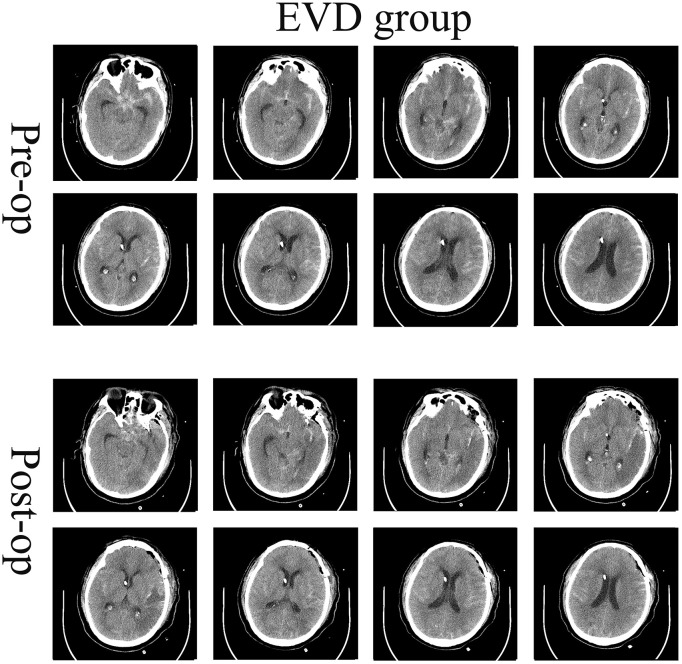 Figure 1
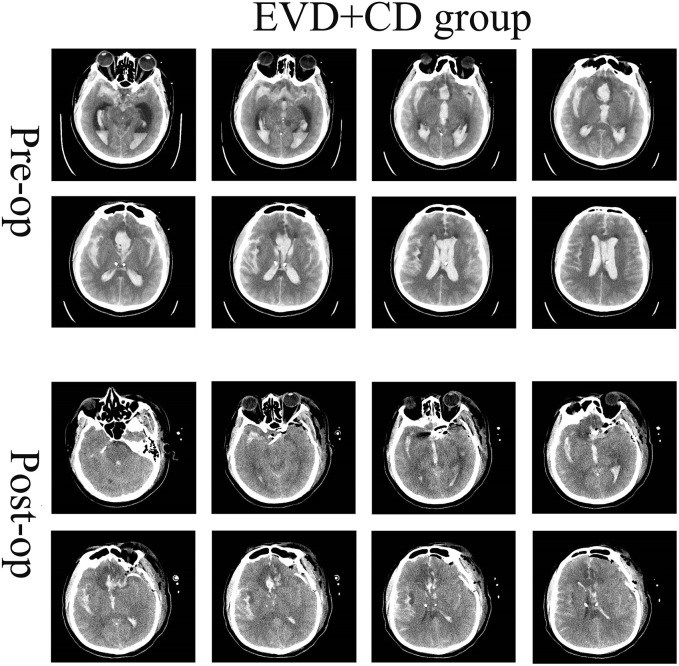 Figure 2
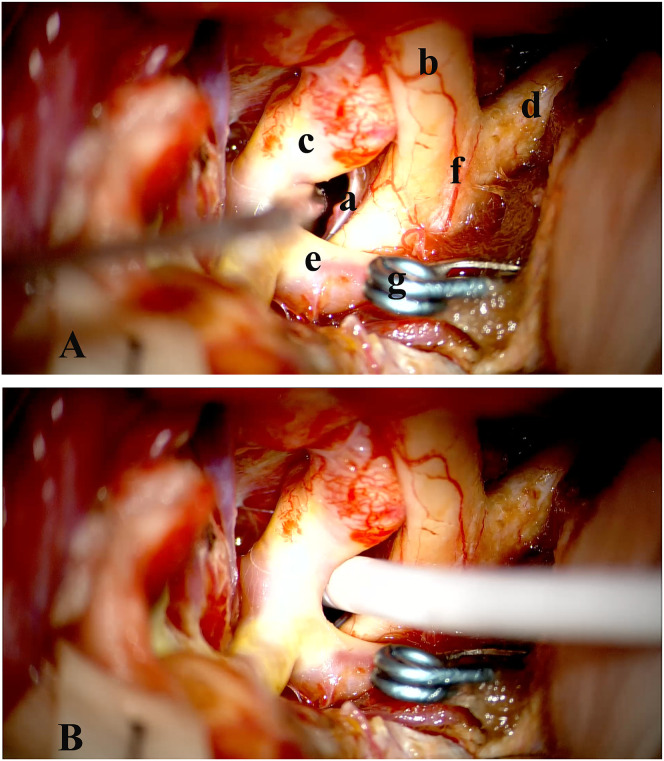 Figure 3
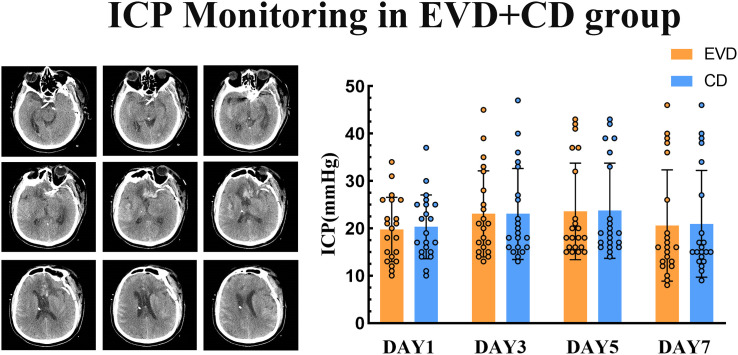 Figure 4
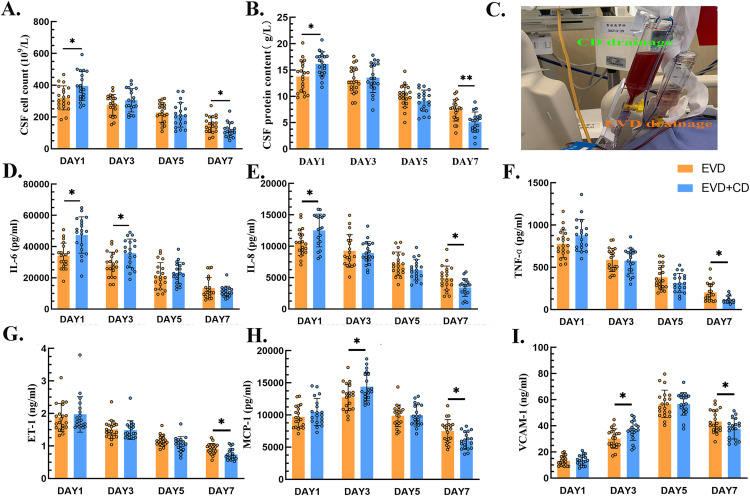 Figure 5
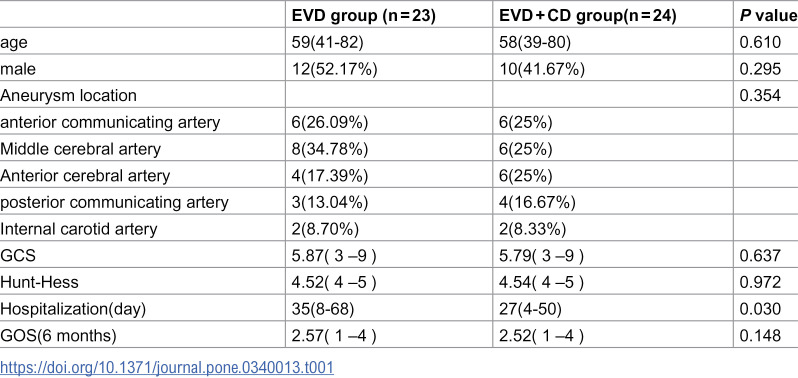 Figure 6
Peer Reviews
No public reviews on file for this paper yet. If you reviewed it on a platform where reviews are public (OpenReview, ICLR, NeurIPS, ICML), you can paste yours below so the community can read it here.
Videos
No videos yet. Explain this paper in a talk, walkthrough, or lecture? Add one.
Taxonomy
TopicsIntracranial Aneurysms: Treatment and Complications · Intracerebral and Subarachnoid Hemorrhage Research · Cerebrospinal fluid and hydrocephalus