Extended-spectrum beta-lactamase-producing Escherichia coli and Klebsiella pneumoniae from human carriage, the human-polluted environment, and food: Molecular epidemiology of two prospective cohorts in five European metropolitan areas
Tess D. Verschuuren, Julia Guther, Maria Eugenia Riccio, Daniel Martak, Elena Salamanca, Siri Göpel, Nadine Conzelmann, Jelle Scharringa, Patrick Musicha, Ingo B. Autenrieth, Ben S. Cooper, Didier Hocquet, Evelina Tacconelli, Jesús Rodríguez-Baño, Stephan Harbarth, Ad C. Fluit

TL;DR
This study examines antibiotic resistance genes in bacteria from humans, polluted environments, and food in Europe, finding significant overlap and human-to-human transmission as a key driver.
Contribution
The study provides new insights into the molecular epidemiology of ESBL-producing bacteria across human, environmental, and food sources in Europe.
Findings
ESBL-Ec and ESBL-Kp from humans and polluted environments showed high clonal relationships.
Overlapping antibiotic resistance genes were more common between human and environmental isolates than with food isolates.
Human-to-human transmission appears to be a major factor in the spread of antibiotic resistance genes.
Abstract
For 475 ESBL-producing Escherichia coli (ESBL-Ec), and 171 ESBL-producing Klebsiella pneumoniae (ESBL-Kp) collected from human carriers, the human-polluted (hp)-environment, and food: (i) to compare the antimicrobial resistance gene (ARG) content, and (ii) to assess clonal relationships between human and non-human isolates. Two prospective multicenter cohorts were assessed: colonized hospitalized index-subjects and household contacts, and long-term care facility (LTCF) residents. Additionally, linked hp-environment and food samples were collected. Presence of ARGs were assessed using pairwise comparisons and proportional similarity index (PSI). Clonal relationships were assessed using cgMLST distance visualizations and maximum likelihood phylogeny. ESBL-Ec and ESBL-Kp co-occurred in 14/65 households, 3/6 LTCFs, and in 33/202 of ESBL-positive participants. Thirty-nine percent of…
Genes, proteins, chemicals, diseases, species, mutations and cell lines named across the full text — each resolved to its canonical identifier and authoritative record.
Click any figure to enlarge with its caption.
 Figure 1
 Figure 2
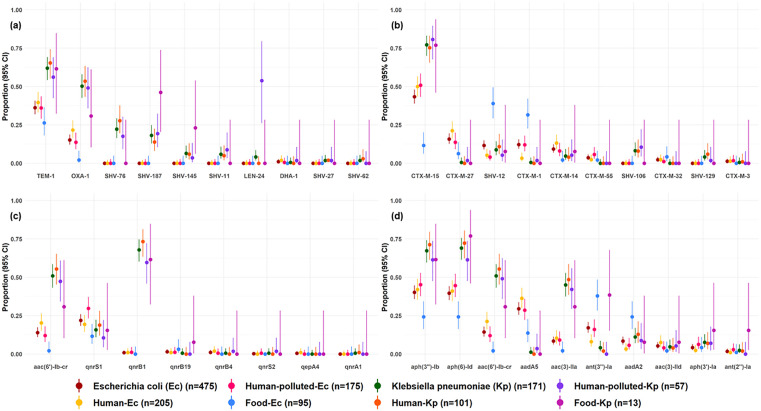 Figure 3
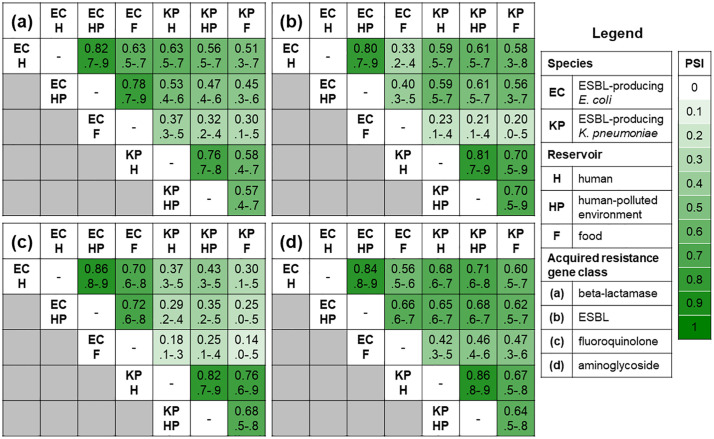 Figure 4
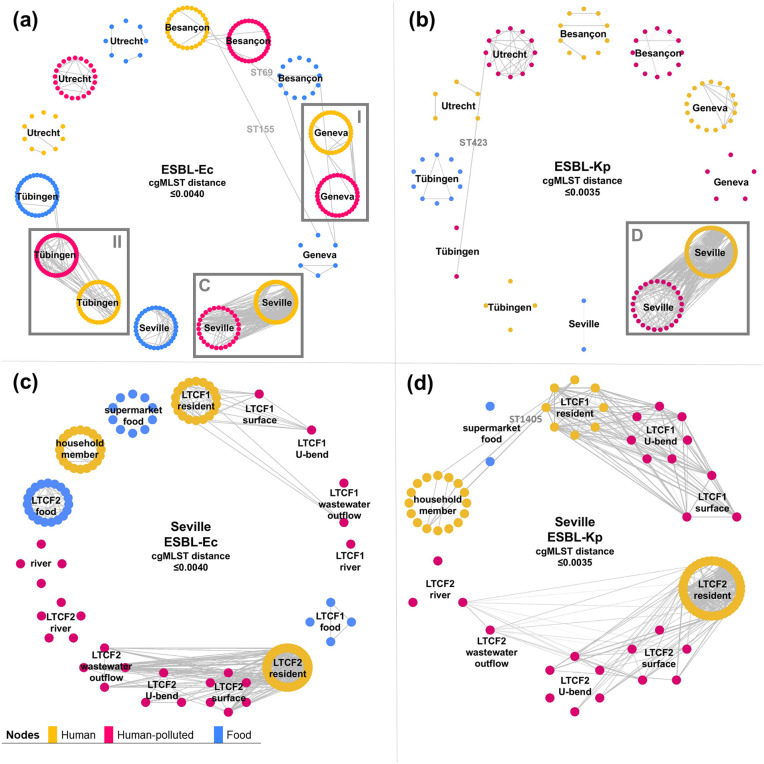 Figure 5
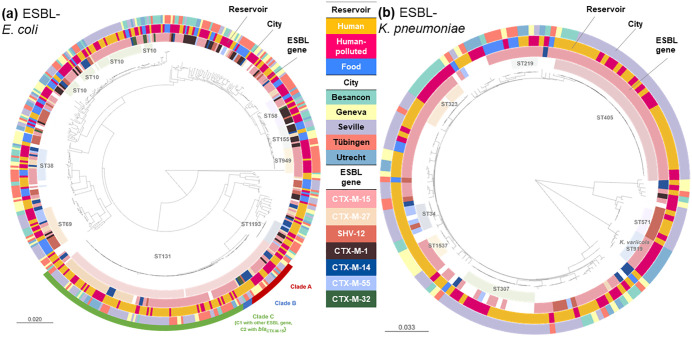 Figure 6
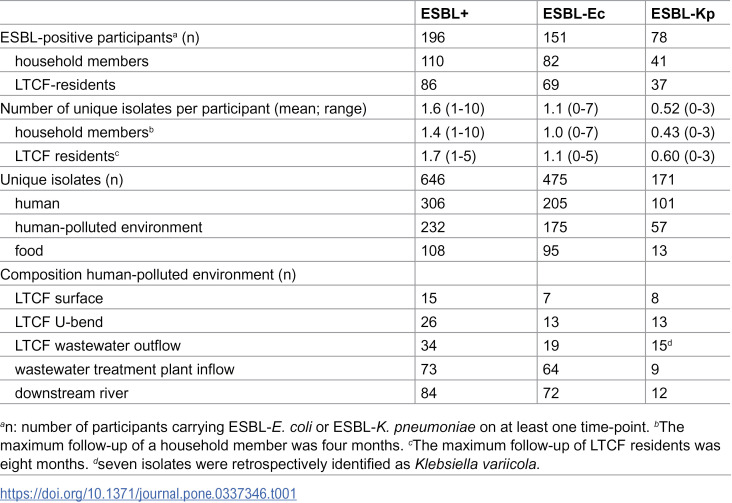 Figure 7
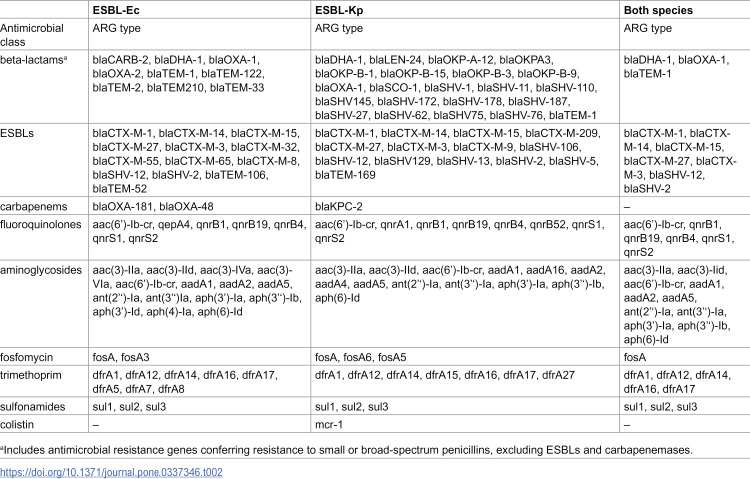 Figure 8
Peer Reviews
No public reviews on file for this paper yet. If you reviewed it on a platform where reviews are public (OpenReview, ICLR, NeurIPS, ICML), you can paste yours below so the community can read it here.
Videos
No videos yet. Explain this paper in a talk, walkthrough, or lecture? Add one.
Taxonomy
TopicsAntibiotic Resistance in Bacteria · Antimicrobial agents and applications · Escherichia coli research studies