Predictive impact of PI-RADS 3 lesion volume/total prostate volume ratio in prostate cancer diagnosis in biopsy-naïve patients
Emrah ÖZSOY, Musab Ali KUTLUHAN, Emre TOKUÇ, Rıdvan KAYAR, Samet DEMİR, Kaan MERİÇ, Metin İshak ÖZTÜRK

TL;DR
This study explores how the ratio of PI-RADS 3 lesion volume to total prostate volume can help decide if a biopsy is needed for prostate cancer in patients who haven't had one before.
Contribution
The study introduces the PI-RADS 3 ratio as a novel parameter to improve biopsy decision-making in prostate cancer diagnosis.
Findings
The PI-RADS 3 ratio showed a statistically significant difference between benign and malignant groups.
The optimal cut-off for the PI-RADS 3 ratio was 0.026 with 58.97% sensitivity and 66.96% specificity.
A weak but significant relationship was found between PI-RADS 3 ratios and PSA density.
Abstract
To assess the potential of the ratio between PI-RADS 3 lesion volume and total prostate volume as a predictive parameter for guiding the decision to perform a biopsy in patients presenting with PI-RADS 3 lesions on multiparametric prostate magnetic resonance imaging (mpMRI). A total of 749 patients who underwent mpMRI due to suspected prostate cancer between January 2014 and August 2023 were scanned. Based on predefined inclusion and exclusion criteria, 308 patients were included. Age, total prostate-specific antigen (PSA) value, prostate volume measured in mpMRI, mpMRI result, PI-RADS 3 lesion volume, and biopsy results were collected. The PI-RADS 3 ratio was calculated as PI-RADS 3 lesion volume/total prostate volume. PSA density (dPSA) was calculated. The patients were categorized according to their biopsy results as benign or malignant (subclassified by Gleason group grade), and…
Genes, proteins, chemicals, diseases, species, mutations and cell lines named across the full text — each resolved to its canonical identifier and authoritative record.
Click any figure to enlarge with its caption.
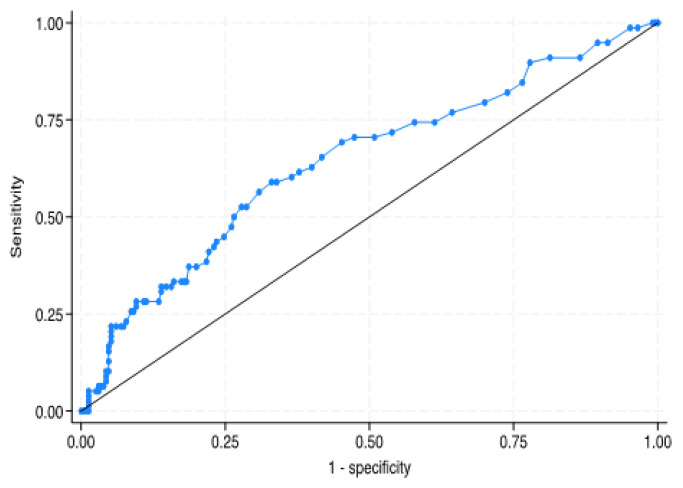 Figure 1
Peer Reviews
No public reviews on file for this paper yet. If you reviewed it on a platform where reviews are public (OpenReview, ICLR, NeurIPS, ICML), you can paste yours below so the community can read it here.
Videos
No videos yet. Explain this paper in a talk, walkthrough, or lecture? Add one.
Taxonomy
TopicsProstate Cancer Diagnosis and Treatment · Prostate Cancer Treatment and Research · Urinary Bladder and Prostate Research