Synthesis, characterization, antimicrobial, antioxidant, and antiinflammatory evaluation and molecular docking studies of N-((2-hydroxy-3-(2-(substitutedbenzylidene)hydrazine-1-carbonyl)naphthalen-1-yl)(3-nitrophenyl/3,4-dimethoxyphenyl)methyl)acetamide derivatives
Shikha KAMBOJ, Alka YADAV, Samridhi THAKRAL, Rekha TANWAR, Sunil KUMAR, Vikramjeet SINGH

TL;DR
This paper reports the synthesis and evaluation of new acetamide derivatives with potential antimicrobial, antioxidant, and anti-inflammatory properties.
Contribution
The study introduces novel acetamide derivatives with promising biological activities and evaluates their pharmacokinetic behavior through in silico methods.
Findings
Compound 3i showed the highest antimicrobial activity among the tested derivatives.
Compound 3j exhibited the strongest antioxidant potential.
Compounds 3f and 3h demonstrated superior antiinflammatory activity.
Abstract
Hydrazone chemistry has become important and plays a key role in the development of organic compounds. Hydrazones can be useful pharmacophores for creating novel derivatives, owing to their broad range of activities. In this study, a series of N-((2-hydroxy-3-(2-(substitutedbenzylidene)hydrazine-1-carbonyl)naphthalen-1-yl)(3-nitro-phenyl/3,4-dimethoxyphenyl)methyl)acetamide derivatives were prepared, characterized by FTIR, 1H-NMR, 13C-NMR, and mass spectroscopy, and evaluated for their antimicrobial, antiinflammatory, and antioxidant activities along with in silico studies. The substituted derivatives were synthesized by the reaction of acetonitrile, chlorosulphonic acid, and substituted benzaldehyde with the hydrazones. The antimicrobial evaluation showed that compound 3i had more antimicrobial potential than the other tested molecules. Compound 3j had more antioxidant potential than…
Genes, proteins, chemicals, diseases, species, mutations and cell lines named across the full text — each resolved to its canonical identifier and authoritative record.
Click any figure to enlarge with its caption.
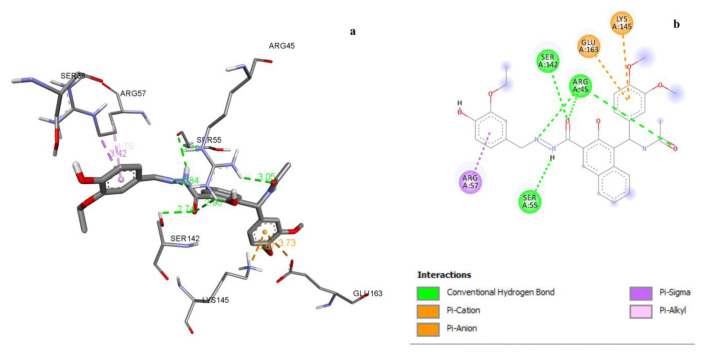 Figure 1
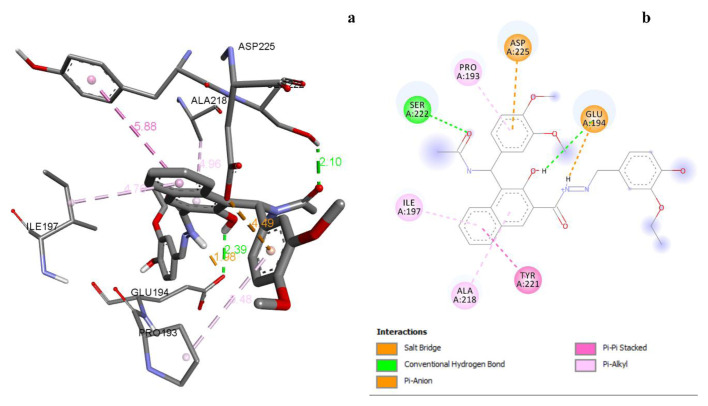 Figure 2
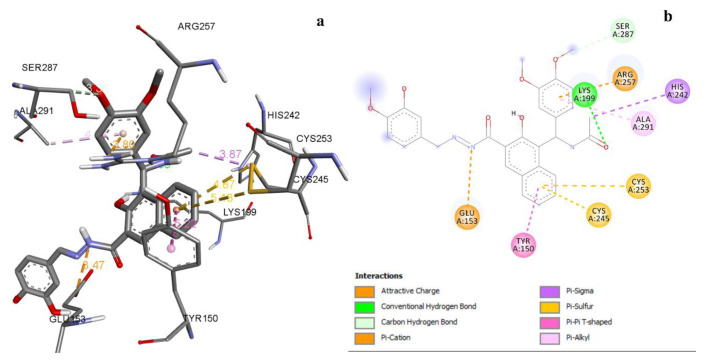 Figure 3
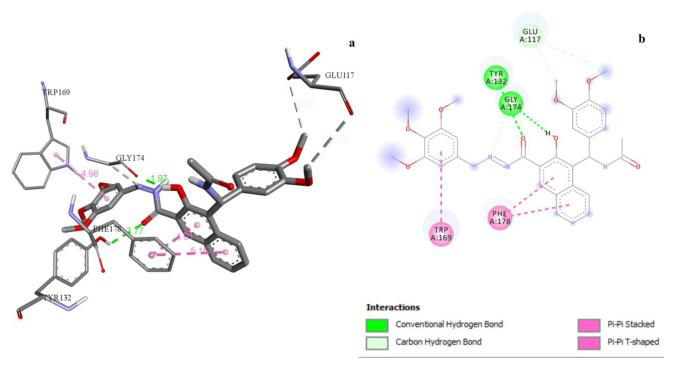 Figure 4
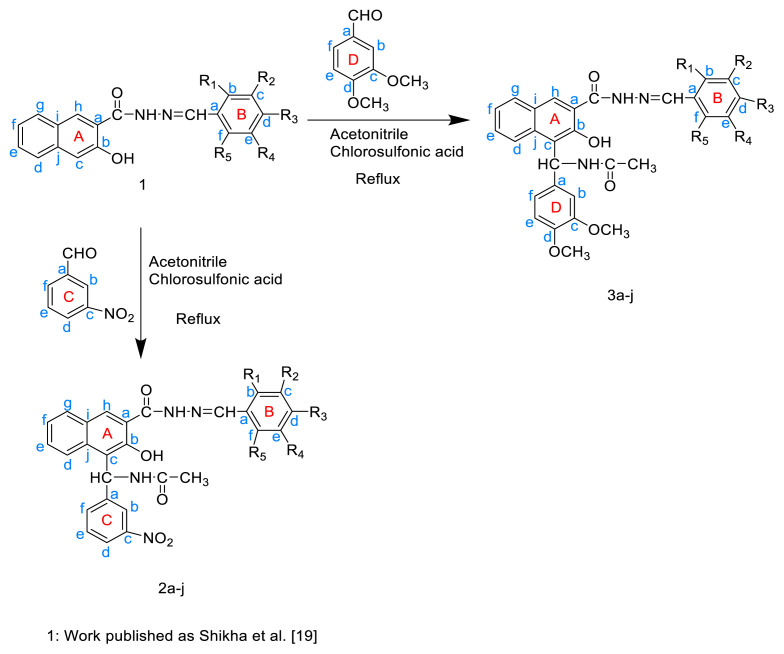 Figure 5
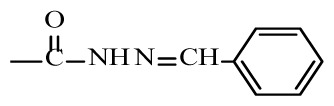 Figure 6
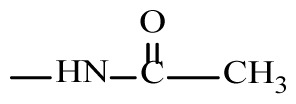 Figure 7
Peer Reviews
No public reviews on file for this paper yet. If you reviewed it on a platform where reviews are public (OpenReview, ICLR, NeurIPS, ICML), you can paste yours below so the community can read it here.
Videos
No videos yet. Explain this paper in a talk, walkthrough, or lecture? Add one.
Taxonomy
TopicsSynthesis and biological activity · Computational Drug Discovery Methods · Free Radicals and Antioxidants