Circulating PUFAs and their associations with abdominal obesity and hyperglycaemia among vegetarians and non-vegetarians: Insights for personalised nutrition from a cross-sectional study
Yuan Kei Ching, Yit Siew Chin, Mahenderan Appukutty, Yoke Mun Chan

TL;DR
This study finds that vegetarians and non-vegetarians have different fatty acid levels linked to obesity and high blood sugar, suggesting personalized nutrition approaches.
Contribution
The study reveals distinct associations between PUFA profiles and metabolic risks in vegetarians versus non-vegetarians, supporting personalized dietary strategies.
Findings
Vegetarians had higher LA and ALA but lower EPA, DPA, and DHA compared to non-vegetarians.
Higher ARA was linked to hyperglycaemia in vegetarians and abdominal obesity in non-vegetarians.
A high n-6:n-3 ratio was associated with lower hyperglycaemia risk in non-vegetarians.
Abstract
This study explores the associations between circulating polyunsaturated fatty acids (PUFAs), abdominal obesity and hyperglycaemia among vegetarians and non-vegetarians with distinct dietary PUFA intakes, as limited evidence exists on how circulating PUFA concentrations differ between these dietary groups and relate to metabolic risks. In this cross-sectional study, serum PUFA profiles and their associations with abdominal obesity and hyperglycaemia were examined. A total of 127 vegetarians and 132 non-vegetarians from Malaysia participated in the present study. Vegetarians had higher circulating concentrations of linoleic acid (LA), alpha-linolenic acid (ALA), and the n-6:n-3 PUFA ratio. They had lower concentrations of eicosapentaenoic acid (EPA), docosapentaenoic acid (DPA), and docosahexaenoic acid (DHA) than non-vegetarians. Among vegetarians, higher circulating arachidonic acid…
Genes, proteins, chemicals, diseases, species, mutations and cell lines named across the full text — each resolved to its canonical identifier and authoritative record.
Click any figure to enlarge with its caption.
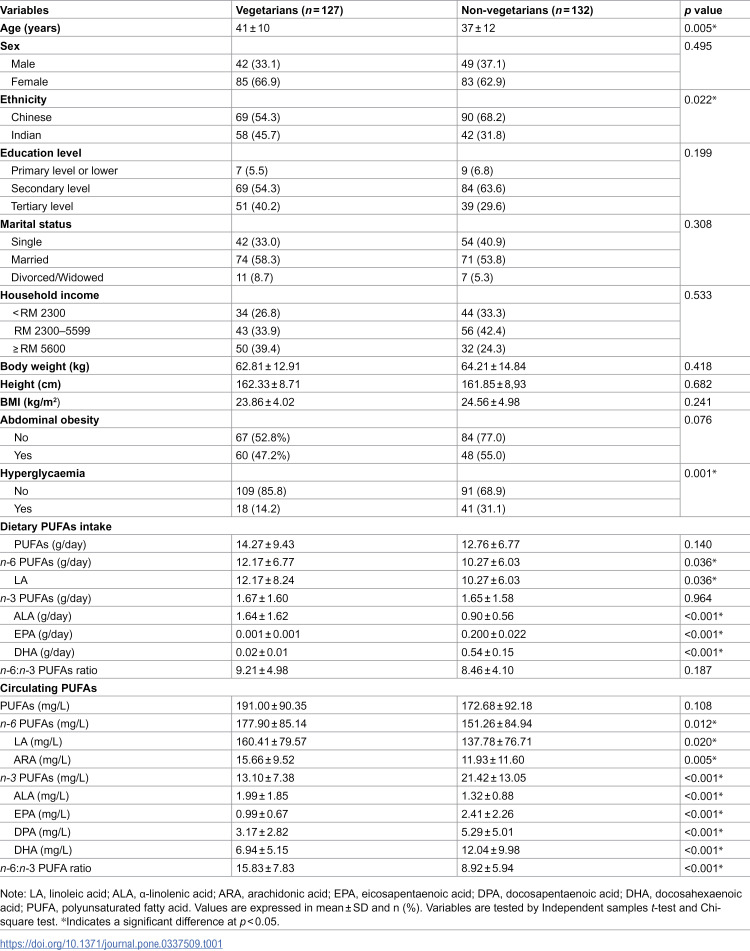 Figure 1
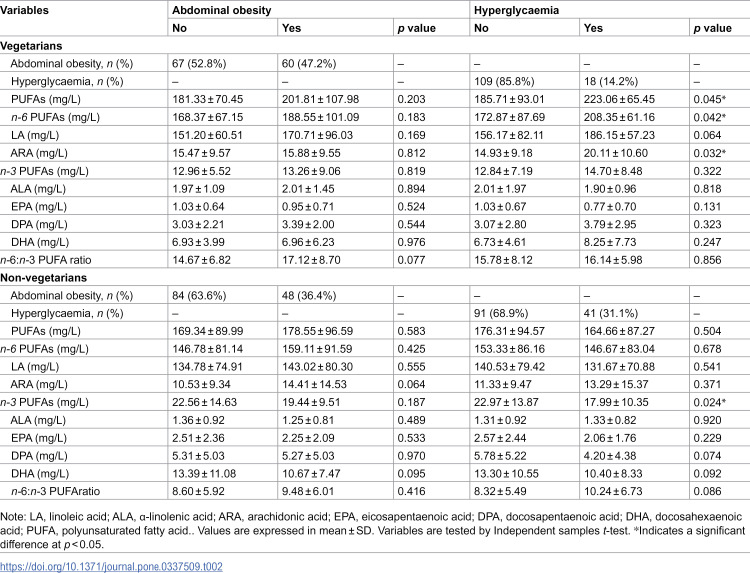 Figure 2
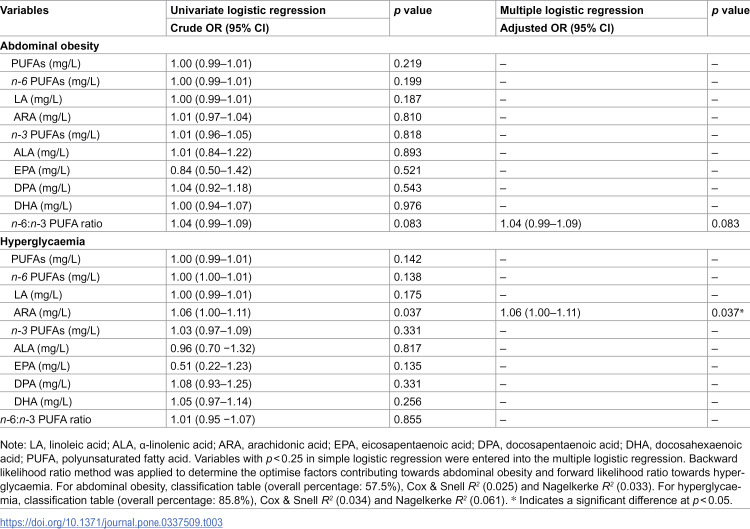 Figure 3
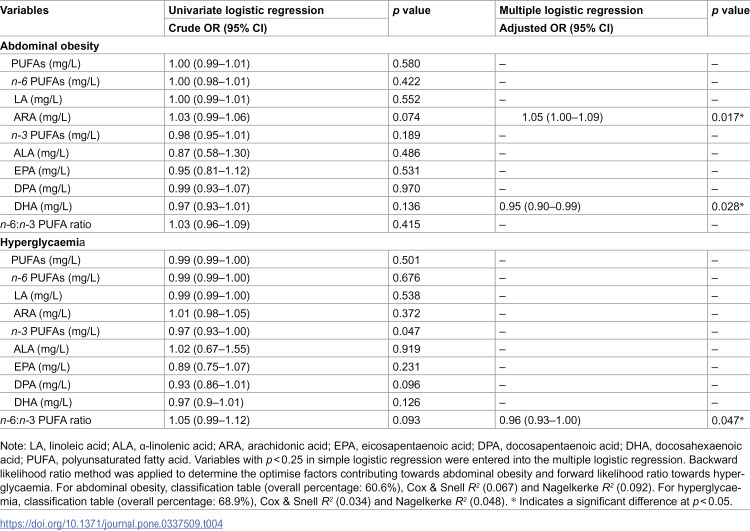 Figure 4
Peer Reviews
No public reviews on file for this paper yet. If you reviewed it on a platform where reviews are public (OpenReview, ICLR, NeurIPS, ICML), you can paste yours below so the community can read it here.
Videos
No videos yet. Explain this paper in a talk, walkthrough, or lecture? Add one.
Taxonomy
TopicsFatty Acid Research and Health · Peroxisome Proliferator-Activated Receptors · Eicosanoids and Hypertension Pharmacology