α-Glycosidase activity of novel coumarin–triazole–coumarin dyads
Ersin ŞİRİN, Esra SEVİMLİ, Gökçe SEYHAN, Burak BARUT, Yunus KAYA, Baybars KÖKSOY

TL;DR
Researchers synthesized new coumarin-based compounds and found one with strong α-glycosidase inhibitory activity, which could be useful for treating diabetes.
Contribution
A new class of coumarin–triazole–coumarin dyads was developed with notable α-glycosidase inhibition.
Findings
Compound 4e showed the strongest α-glycosidase inhibition with an IC50 of 38.98 ± 0.77 μM.
Compound 4e exhibited mixed-type inhibition as shown by the Lineweaver–Burk plot.
The Ki value for 4e was determined to be 19.95 ± 0.15 μM using the Dixon plot.
Abstract
Novel coumarin–triazole–coumarin dyads were synthesized and characterized, and their α-glycosidase inhibitory activities were evaluated spectrophotometrically. Compound 4e exhibited the most pronounced inhibitory effect, with an IC50 value of 38.98 ± 0.77 μM. The IC50 values for 4d and 4a were 93.55 ± 1.70 μM and 95.04 ± 3.55 μM, respectively. The Lineweaver–Burk plot showed that 4e inhibited α-glycosidase in a mixed type. In addition, the Ki value obtained from the Dixon plot was 19.95 ± 0.15 μM for α-glycosidase.
Genes, proteins, chemicals, diseases, species, mutations and cell lines named across the full text — each resolved to its canonical identifier and authoritative record.
Click any figure to enlarge with its caption.
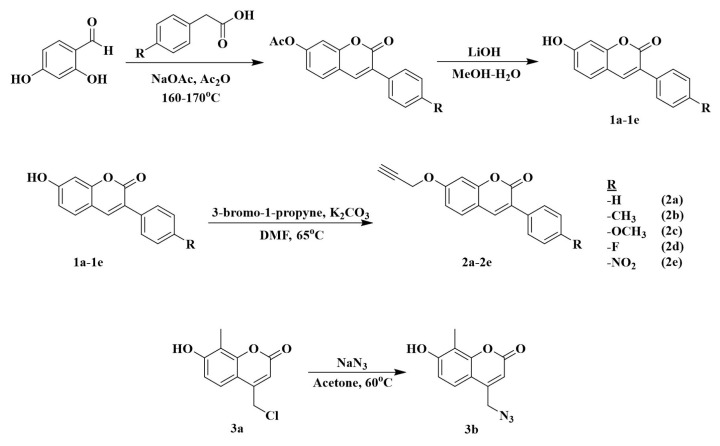 Figure 1
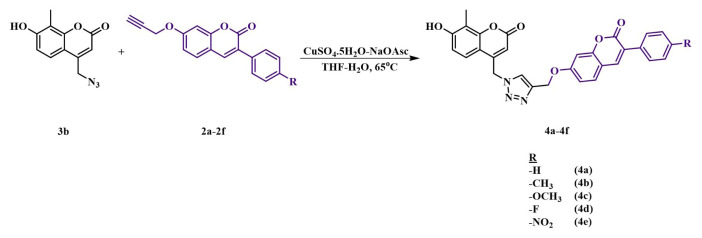 Figure 2
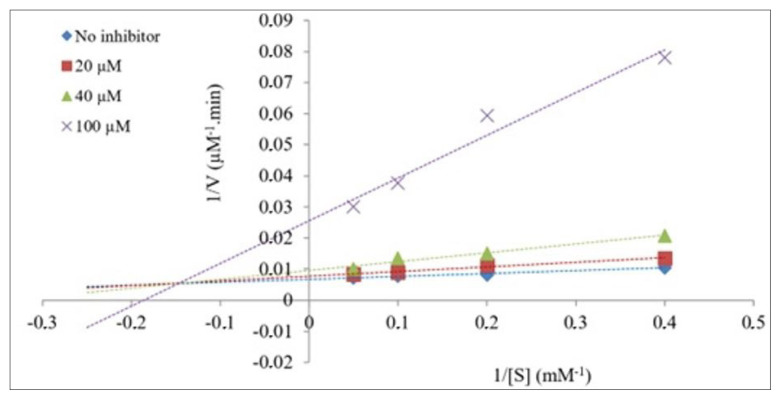 Figure 3
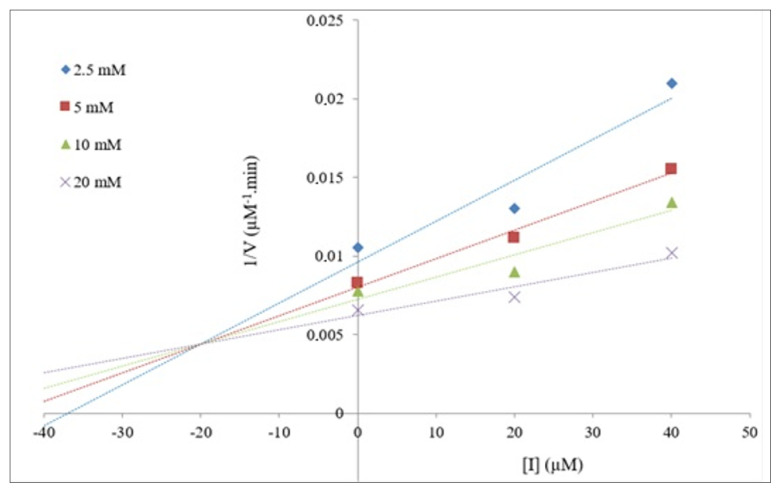 Figure 4
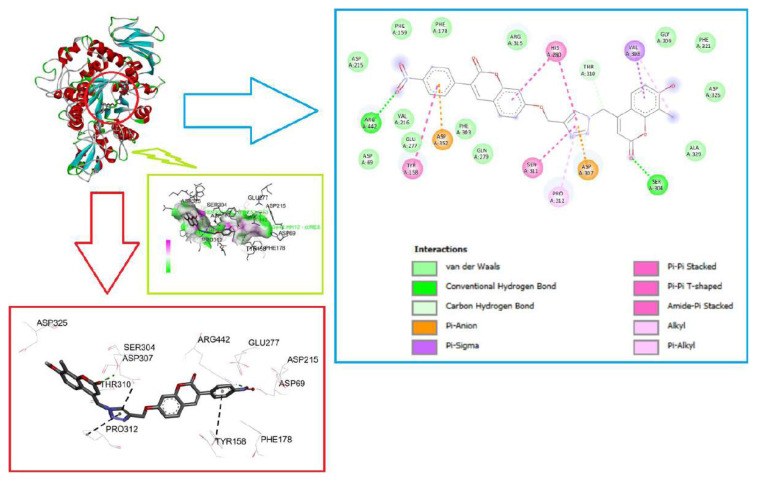 Figure 5
Peer Reviews
No public reviews on file for this paper yet. If you reviewed it on a platform where reviews are public (OpenReview, ICLR, NeurIPS, ICML), you can paste yours below so the community can read it here.
Videos
No videos yet. Explain this paper in a talk, walkthrough, or lecture? Add one.
Taxonomy
TopicsCarbohydrate Chemistry and Synthesis · Click Chemistry and Applications · Natural Antidiabetic Agents Studies