Alterations in cortical excitability and plasticity are associated with amyloid accumulation in cognitively unimpaired elderly
Giacomo Bertazzoli, Brice Passera, Recep Ozdemir, Stephanie S. Buss, Mouhsin Shafi, Peter J. Fried

TL;DR
This study finds that brain activity changes linked to Alzheimer's amyloid buildup can be detected in elderly people who still think clearly.
Contribution
It shows that cortical excitability and plasticity changes are associated with amyloid risk in cognitively unimpaired individuals, offering early neurophysiological markers.
Findings
Higher amyloid risk is linked to lower resting motor threshold and increased corticomotor recruitment slope.
Amyloid risk group showed smaller decreases in motor evoked potential amplitude after TMS stimulation.
These changes mirror those seen in early Alzheimer's disease despite normal cognition.
Abstract
Alzheimer's disease (AD) is a progressive neurodegenerative disorder characterized by early amyloid‐beta (Aβ) accumulation, which can precede clinical symptoms by years. Plasma Aβ42/Aβ40 oligomers have emerged as a surrogate biomarker for brain amyloid, providing a non‐invasive method to identify individuals at high risk. Cortical excitability and long‐term potentiation (LTP)‐like plasticity, assessed via transcranial magnetic stimulation (TMS), are impaired in early symptomatic stages of AD. Aβ disrupts normal glutamatergic activity, increasing cortical excitability and reducing LTP‐like plasticity. This study tests the hypothesis that cortical excitability and plasticity are associated with plasma Aβ42/Aβ40 levels in cognitively unimpaired individuals to develop neurophysiological markers for early Aβ‐related dysfunction. Plasma Aβ42/Aβ40 levels were obtained in 58 cognitively normal…
Genes, proteins, chemicals, diseases, species, mutations and cell lines named across the full text — each resolved to its canonical identifier and authoritative record.
Click any figure to enlarge with its caption.
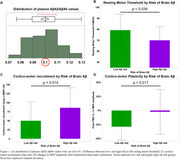 Figure 1
Peer Reviews
No public reviews on file for this paper yet. If you reviewed it on a platform where reviews are public (OpenReview, ICLR, NeurIPS, ICML), you can paste yours below so the community can read it here.
Videos
No videos yet. Explain this paper in a talk, walkthrough, or lecture? Add one.
Taxonomy
TopicsTranscranial Magnetic Stimulation Studies · Dementia and Cognitive Impairment Research · Functional Brain Connectivity Studies