Silent yet impaired: Hidden memory processing deficits in asymptomatic individuals with moderate‐to‐severe white matter hyperintensities
Aonan Li, Lei Liu, Yueyan Bian, Yuanyuan Lu, Xiuqin Jia, Yuanyuan Chen, Yi Tang, Yi Xing

TL;DR
People with moderate-to-severe white matter hyperintensities show hidden memory issues even if they seem cognitively normal.
Contribution
This study reveals hidden visual short-term memory deficits in asymptomatic individuals with white matter hyperintensities.
Findings
Individuals with msWMH showed deficits in face-memory processing and altered neural oscillations.
Microstructural damage in specific brain tracts mediates the impact on cognition via theta oscillations.
Theta oscillations may serve as a preclinical target for intervention in white matter disease.
Abstract
White matter hyperintensities (WMHs) are strongly associated with cognitive decline and dementia, but whether asymptomatic individuals with moderate‐to‐severe WMHs (msWMHs) are truly cognitively intact, particularly in visual short‐term memory (VSTM), remains unclear. Electroencephalography and diffusion tensor imaging (DTI) was obtained from 45 msWMH patients and 38 normal controls during an occluded‐face delay‐matching task. Individuals with msWMH showed systematic deficits in face‐memory processing across encoding, maintenance, and retrieval, accompanied by reduced theta power and synchronization, altered alpha power, and disrupted theta–gamma coupling. DTI further revealed microstructural damage, particularly in the inferior fronto‐occipital fasciculus (IFOF), superior longitudinal fasciculus (SLF), and inferior longitudinal fasciculus (ILF), which mediated the effects on global…
Genes, proteins, chemicals, diseases, species, mutations and cell lines named across the full text — each resolved to its canonical identifier and authoritative record.
Click any figure to enlarge with its caption.
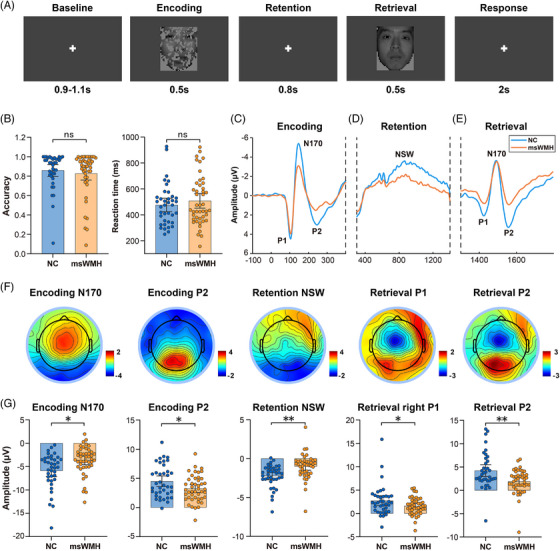 Figure 1
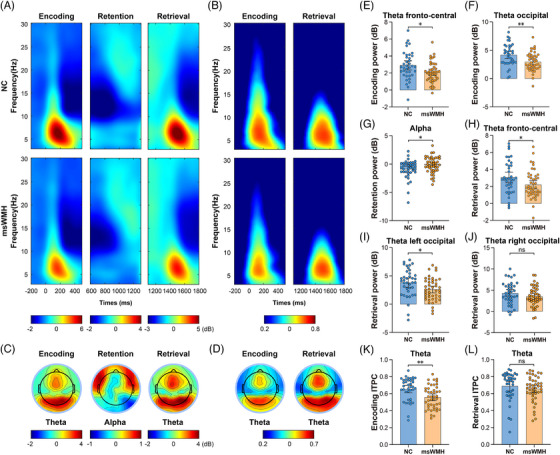 Figure 2
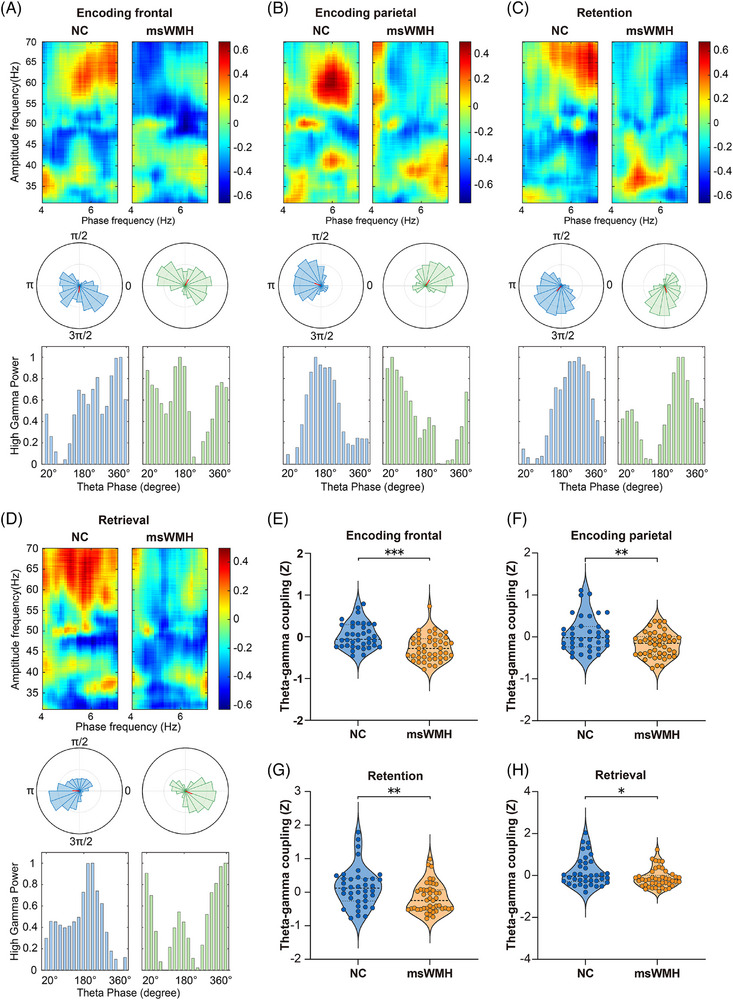 Figure 3
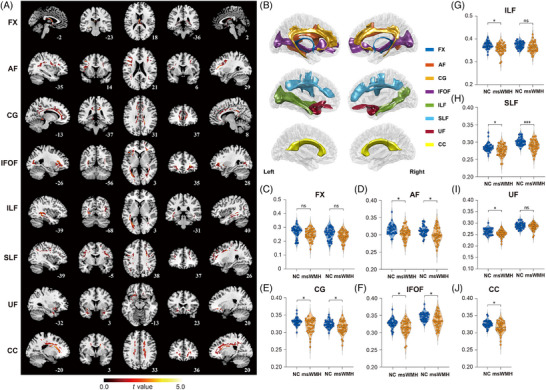 Figure 4
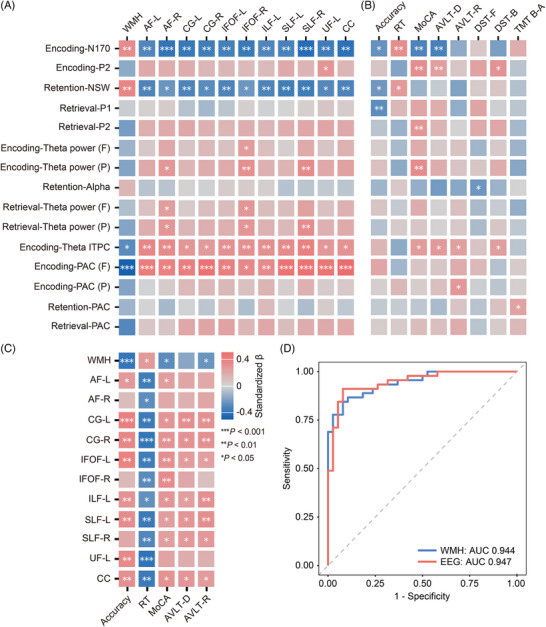 Figure 5
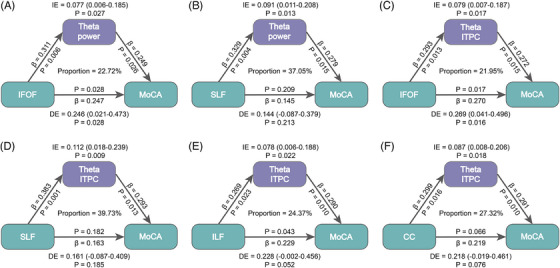 Figure 6
Peer Reviews
No public reviews on file for this paper yet. If you reviewed it on a platform where reviews are public (OpenReview, ICLR, NeurIPS, ICML), you can paste yours below so the community can read it here.
Videos
No videos yet. Explain this paper in a talk, walkthrough, or lecture? Add one.
Taxonomy
TopicsAdvanced Neuroimaging Techniques and Applications · Dementia and Cognitive Impairment Research · Epilepsy research and treatment