Impact of Climate Change and Human Activities on Suitable Distribution of Rhodiola Species in the Qinghai‐Tibet Plateau: Modeling Insights for Conservation Prioritization
Xiao‐xue Li, Bo Liu, Lu Wang, Jing‐kai Zhang, Ao‐jie Zuo, Xiu‐Ming Li, Yang‐Jing Peng, Kun Jin, Ai‐Li Qin

TL;DR
This study uses modeling to predict habitats for eight Rhodiola species in the Qinghai-Tibet Plateau and identifies conservation gaps influenced by climate and human activities.
Contribution
The study introduces a novel integration of climate, topography, soil, and human activity factors to model habitat suitability and conservation gaps for Rhodiola species.
Findings
Human activities are the main driver of habitat suitability for most Rhodiola species, except R. atsaensis.
Current nature reserves protect only 33.42% of suitable habitats, with significant gaps in ecologically sensitive zones.
Future climate scenarios predict habitat expansion for most species, but protection of high and medium habitats remains low.
Abstract
Using the MaxEnt model with climatic, topographical, soil, and human activity factors, this study predicted suitable habitats for eight Rhodiola species in the Qinghai‐Tibet Plateau (QTP) and analyzed conservation gaps via ArcGIS overlay analysis. Models demonstrated high accuracy, with area under the receiver operating characteristic curve (AUC) values ranging from 0.88 to 0.99. Human activities dominated habitat suitability for most species (contribution: 37.0%–76.4%), except R. atsaensis (RA), driven by climate (38.9%) and topography (32.8%). Current suitable habitats varied widely, with RA occupying the largest area (1.69 × 10⁶ km2), and R. sacra (RS) the smallest (5.61 × 10⁴ km2). Future climate scenarios show seven Rhodiola species (except RS) will expand, and all have increasing highly suitable areas. R. smithii and R. tibetica expand most; RS only expands under SSP1‐2.6 in…
Genes, proteins, chemicals, diseases, species, mutations and cell lines named across the full text — each resolved to its canonical identifier and authoritative record.
Click any figure to enlarge with its caption.
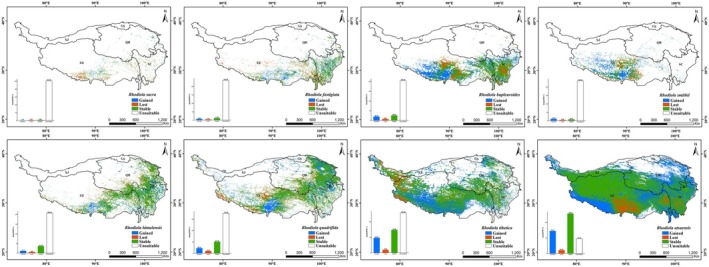 Figure 1
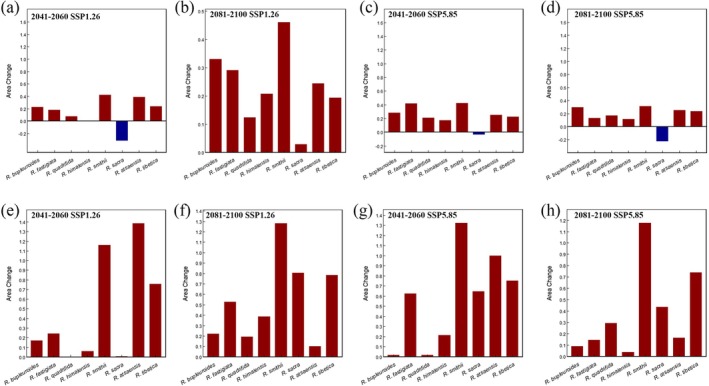 Figure 2
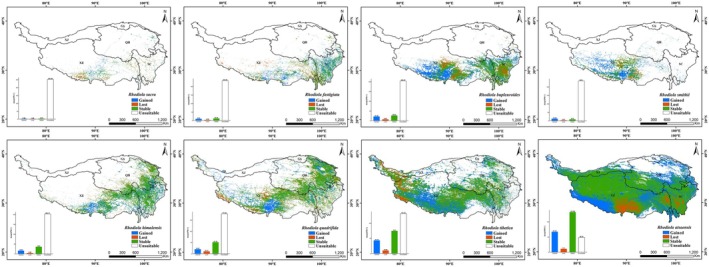 Figure 3
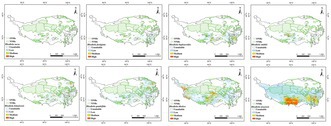 Figure 4
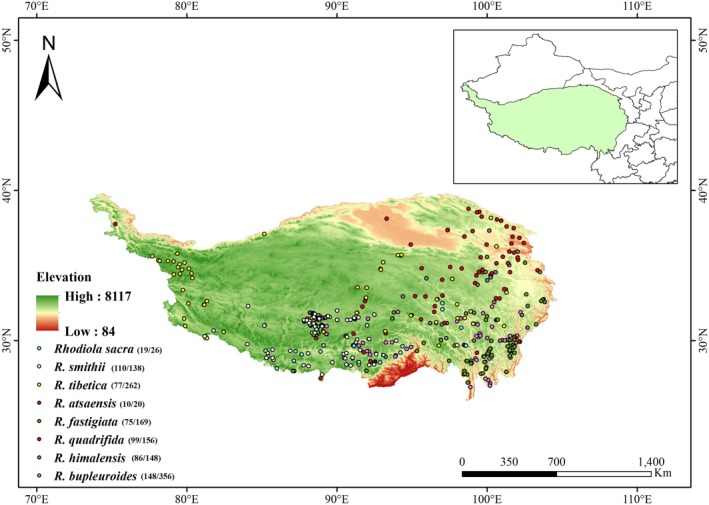 Figure 5
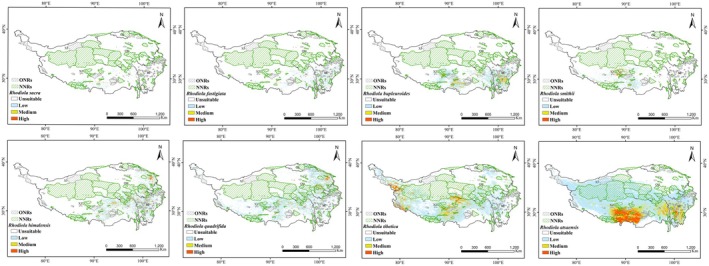 Figure 6
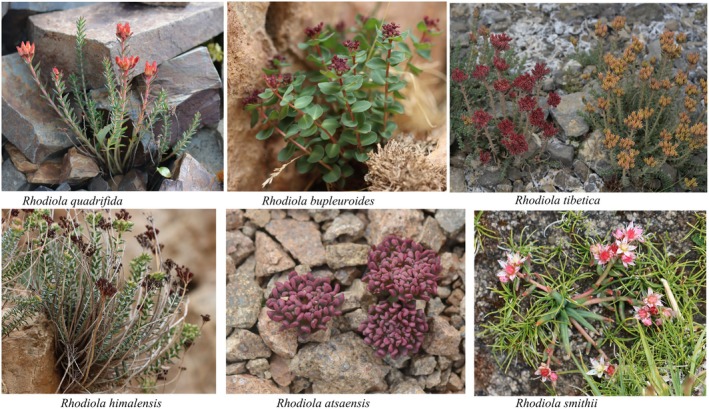 Figure 7
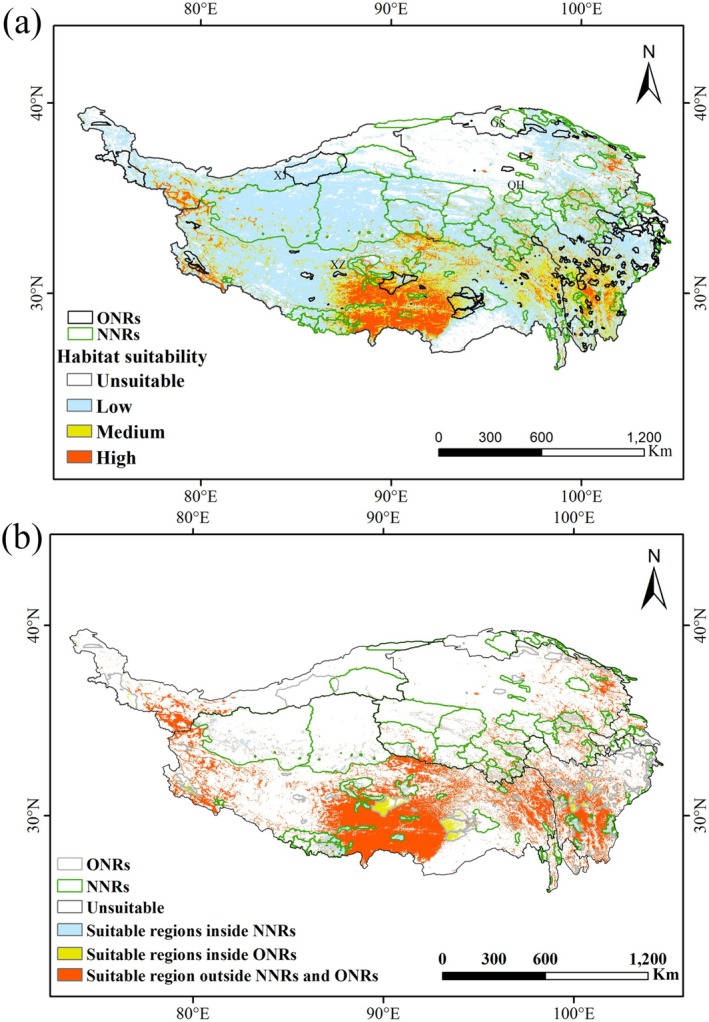 Figure 8
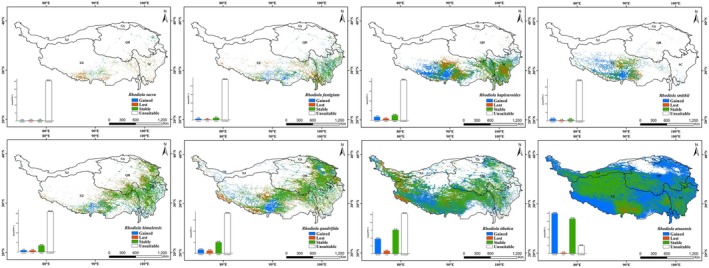 Figure 9
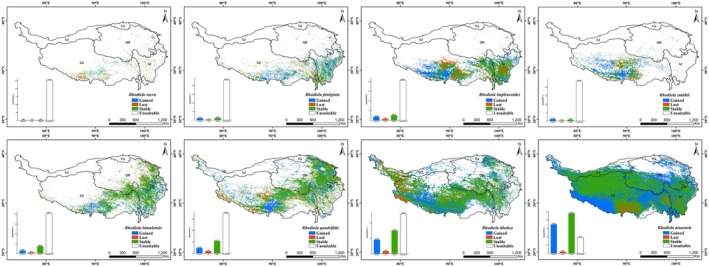 Figure 10
Peer Reviews
No public reviews on file for this paper yet. If you reviewed it on a platform where reviews are public (OpenReview, ICLR, NeurIPS, ICML), you can paste yours below so the community can read it here.
Videos
No videos yet. Explain this paper in a talk, walkthrough, or lecture? Add one.
Taxonomy
TopicsMedicinal Plants and Bioactive Compounds · Species Distribution and Climate Change · Piperaceae Chemical and Biological Studies