Effects of Dexmedetomidine on the Behavioral Outcomes in Streptozotocin‐Induced Alzheimer's Disease Rats
Mina Mohasel‐Roodi, Masoumeh Nozari, Ali Shamsara, Mohsen Basiri, Vida Mirzaie, Masoumeh Baghalishahi

TL;DR
Dexmedetomidine at 25 µg/kg improves memory in rats with Alzheimer's disease induced by streptozotocin, suggesting it could be a potential treatment.
Contribution
The study identifies a specific dose of dexmedetomidine that reverses cognitive deficits in an Alzheimer's rat model.
Findings
Dexmedetomidine at 25 µg/kg reversed STZ-induced memory impairment in Y-maze and Morris Water Maze tests.
Higher doses of dexmedetomidine did not provide additional cognitive benefits.
Dexmedetomidine's effects are likely due to neuroprotective and anti-inflammatory mechanisms.
Abstract
Alzheimer's disease (AD) is a progressive and prevalent neurodegenerative disorder characterized by progressive cognitive decline and memory impairment. Intracerebroventricular (ICV) administration of streptozotocin (STZ) in rodents recapitulates key features of sporadic AD, including brain insulin resistance and oxidative stress. Dexmedetomidine (Dex), a highly selective α2‐adrenergic receptor agonist, has demonstrated neuroprotective and anti‐inflammatory properties, suggesting its potential utility as a therapeutic approach for AD. Seventy adult male Wistar rats were randomly allocated to seven experimental groups: Control, Sham, STZ, Sham + Dex (25 µg/kg), and STZ + Dex (25, 50, 100 µg/kg). Cognitive performance and anxiety‐like behaviors were evaluated using the open‐field test (OFT), elevated plus maze (EPM), Y‐maze test, and Morris water maze (MWM). In the Y‐maze, STZ‐treated…
Genes, proteins, chemicals, diseases, species, mutations and cell lines named across the full text — each resolved to its canonical identifier and authoritative record.
Click any figure to enlarge with its caption.
 Figure 1
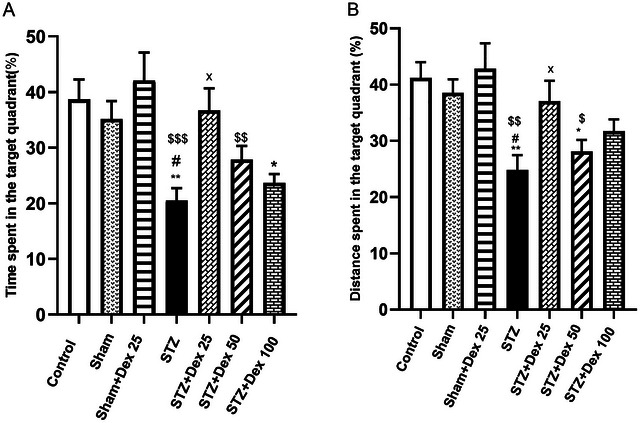 Figure 2
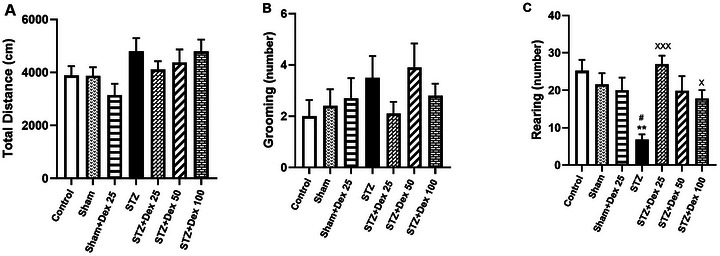 Figure 3
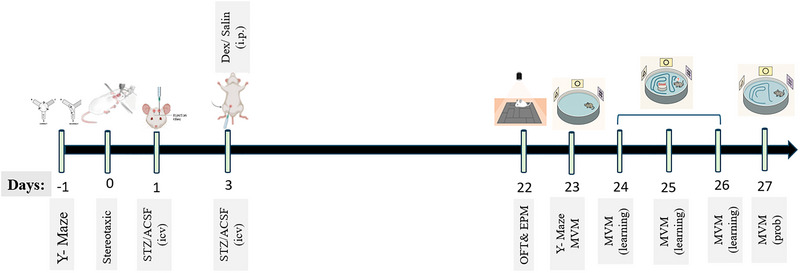 Figure 4
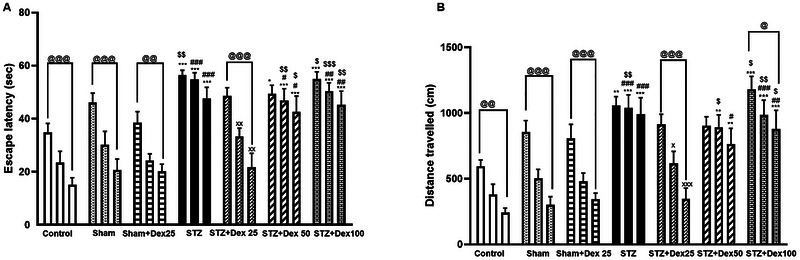 Figure 5
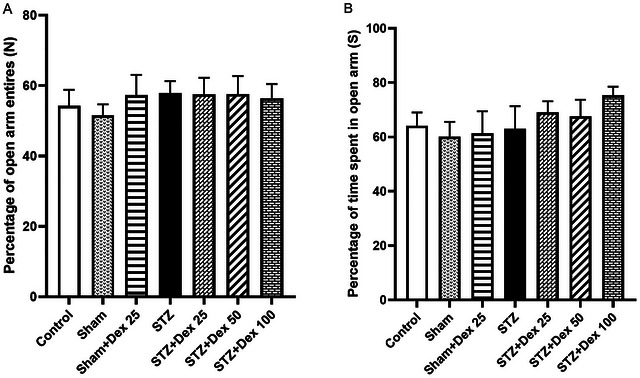 Figure 6
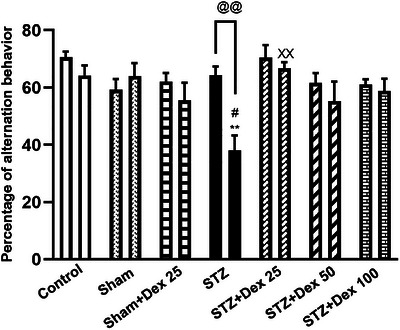 Figure 7
Peer Reviews
No public reviews on file for this paper yet. If you reviewed it on a platform where reviews are public (OpenReview, ICLR, NeurIPS, ICML), you can paste yours below so the community can read it here.
Videos
No videos yet. Explain this paper in a talk, walkthrough, or lecture? Add one.
Taxonomy
TopicsNicotinic Acetylcholine Receptors Study · Pharmacological Receptor Mechanisms and Effects · Alzheimer's disease research and treatments