Male‐Biased Adult Mortality in the Great Bustard Is Consistent With High Reproductive Costs and Aggravated by Anthropogenic Impact
Juan C. Alonso, Beatriz Martín, Carlos Palacín, Carlos A. Martín, Javier A. Alonso

TL;DR
Male great bustards have lower survival than females, likely due to higher reproductive costs and human-related threats like power line collisions.
Contribution
The study provides empirical evidence linking male-biased mortality to reproductive costs and anthropogenic factors in great bustards.
Findings
Annual survival was lower in males (0.874) than females (0.931) in Madrid, a human-impacted region.
Anthropogenic mortality, especially power line collisions, disproportionately affected males.
Maximum recorded age was higher in females (17.3 years) than in males (13.8 years).
Abstract
Sex differences in adult mortality have usually been explained as a result of differences between males and females in the costs associated with their reproductive investment. Investigating sex‐biased mortality is important because it shapes mating opportunities, reproductive strategies and parental care. Here, using known fate models implemented in the RMark package, we estimate annual and monthly or seasonal adult survival rates in a sample of 339 great bustards ( Otis tarda ) radio‐tagged in 1985–2013 and monitored up to 2020. We found that annual survival was lower in males than in females, and lower in Madrid, a highly anthropized region (males: 0.874, females: 0.931), than in Villafáfila, where very good habitat conditions still exist (males: 0.948, females: 0.973). The maximum ages reached by marked individuals were also higher in females (17.3 years) than in males (13.8 years).…
Genes, proteins, chemicals, diseases, species, mutations and cell lines named across the full text — each resolved to its canonical identifier and authoritative record.
Click any figure to enlarge with its caption.
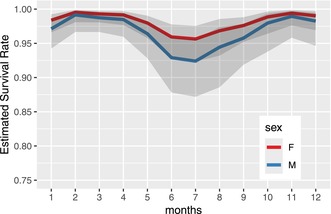 Figure 1
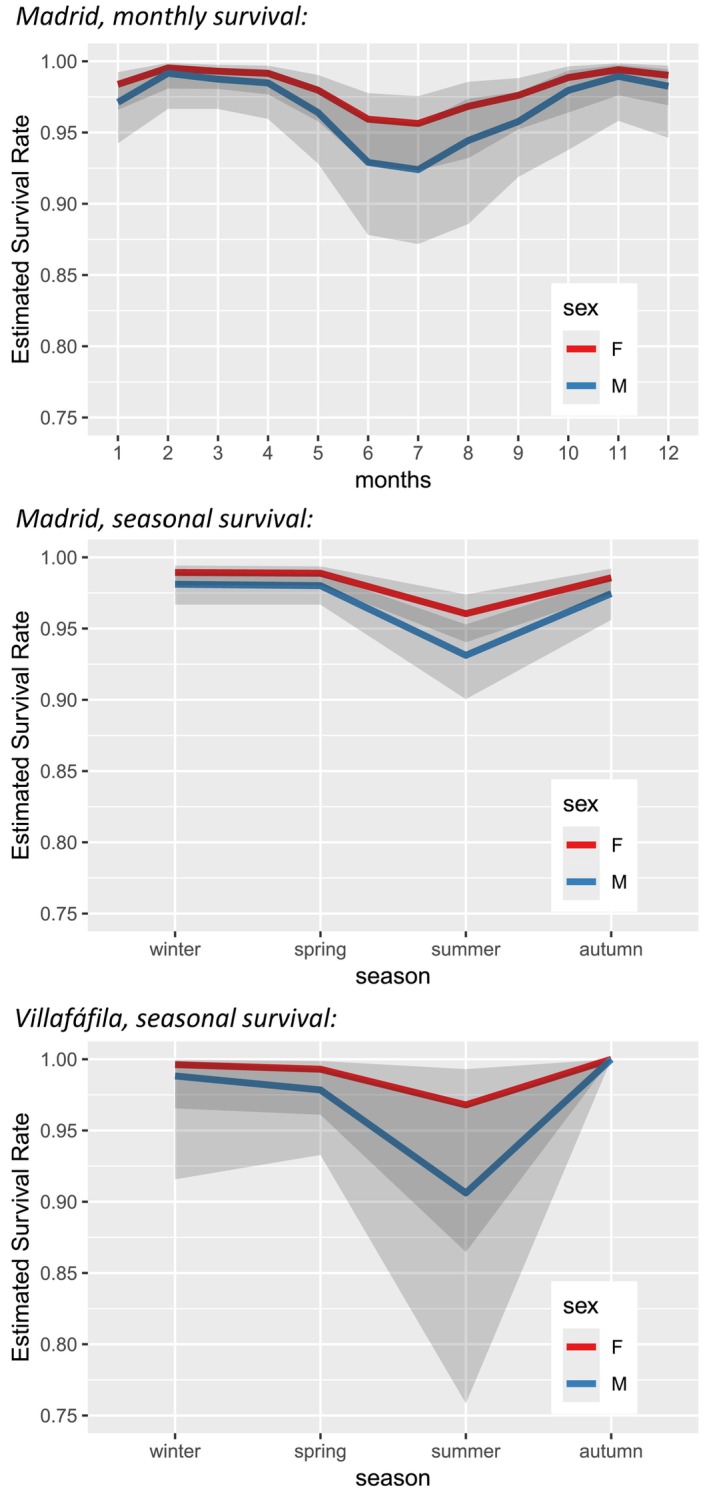 Figure 2
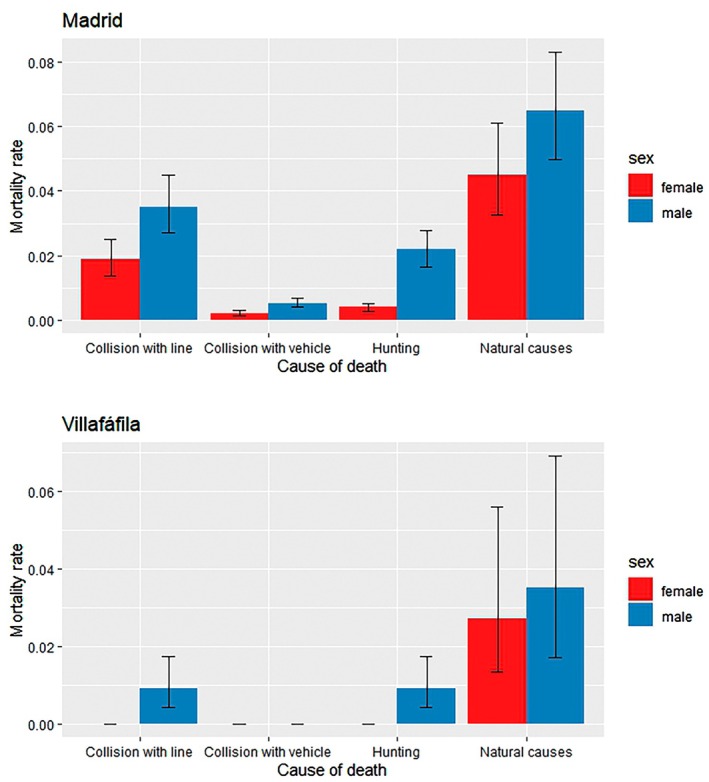 Figure 3
Peer Reviews
No public reviews on file for this paper yet. If you reviewed it on a platform where reviews are public (OpenReview, ICLR, NeurIPS, ICML), you can paste yours below so the community can read it here.
Videos
No videos yet. Explain this paper in a talk, walkthrough, or lecture? Add one.
Taxonomy
TopicsAnimal Behavior and Reproduction · Avian ecology and behavior · Amphibian and Reptile Biology