RouterSense: A Passive, Network‐Based Health Monitoring System for In‐Home Patients
Rameen Mahmood, Danny Yuxing Huang

TL;DR
RouterSense is a passive, network-based system that detects early signs of Alzheimer's disease by analyzing digital biomarkers from home network activity.
Contribution
RouterSense introduces a scalable, hardware-free method for continuous, passive health monitoring using encrypted network traffic.
Findings
RouterSense successfully detected nighttime awakenings and app usage patterns linked to ADRD.
The system inferred out-of-home activity from network changes, a key behavior affected in ADRD patients.
Preliminary results show RouterSense can identify digital biomarkers without requiring user compliance or additional sensors.
Abstract
Digital biomarkers—sleep disruptions, reduced out‐of‐home activity, and changes in online engagement—serve as early indicators of ADRD, which is characterized by a prolonged preclinical phase. Detecting these subtle changes early can enable timely intervention and slow disease progression. As shown in Table 1, existing monitoring solutions are costly, intrusive, and require user compliance, making them impractical for long‐term use. Traditional assessments, though valuable, are episodic and may overlook early‐stage changes. These challenges underscore the need for a scalable, passive solution for continuous monitoring and early ADRD detection. RouterSense is a software‐only, plug‐and‐play tool that leverages existing commodity hardware—requiring no additional sensors or specialized hardware. It transforms connected home devices into ambient health sensors by continuously analyzing…
Click any figure to enlarge with its caption.
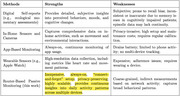 Figure 1
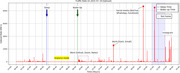 Figure 2
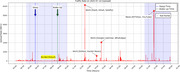 Figure 3
Peer Reviews
No public reviews on file for this paper yet. If you reviewed it on a platform where reviews are public (OpenReview, ICLR, NeurIPS, ICML), you can paste yours below so the community can read it here.
Videos
No videos yet. Explain this paper in a talk, walkthrough, or lecture? Add one.
Taxonomy
TopicsSleep and related disorders · Digital Mental Health Interventions · Obstructive Sleep Apnea Research