CXCR5 identifies stem-like resident memory CD8⁺ T cells enriched for latent EBV specificity in tonsils
Olga Rivera Ballesteros, Lisa Rieble, Curtis Cai, Takuya Sekine, Vera Nilsén, Sarah Adamo, Thomas R. Müller, Christian Constantz, Julia Niessl, Eoghann White, YouBeen Ko, Tobias Kammann, Elli Mouchtaridi, Yu Gao, Akhirunnesa Mily, Elisa J. M. Raineri, Christopher Stamper

TL;DR
CXCR5+ CD8+ T cells in tonsils have stem-like features and are especially good at targeting EBV, a common virus.
Contribution
Identifies a CXCR5+ tissue-resident memory CD8+ T cell subset in tonsils with EBV-specific immune surveillance potential.
Findings
Tonsils have the highest frequency of CXCR5+ CD8+ T cells compared to other tissues.
CXCR5+ CD8+ T cells in tonsils show a PD-1+ resident stem-like phenotype and target EBV latent antigens.
CXCR5 expression is more common in tonsil CD8+ T cells than in circulating cells, regardless of clonal identity.
Abstract
CXCR5+ CD8+ T cells emerged as key mediators of antiviral immunity in the context of chronic infection. However, their functional attributes and tissue distribution remain incompletely defined, especially in relation to antigen specificity. Here, we investigated the anatomical localization and antiviral properties of CXCR5+ CD8+ T cells across multiple sites throughout the human body, with an emphasis on oropharyngeal lymphoid tissues. Tonsils harbored the highest frequencies of CXCR5+ CD8+ T cells compared to other tissues, many of which expressed Granzyme K and concurrently displayed tissue residency features, as demonstrated by single cell profiling. Irrespective of clonal identity and virus specificity, CD8+ T cells expressed CXCR5 more commonly in tonsils compared to vascular circulation. CXCR5 expression was particularly prominent among tonsil-localized CD8+ T cells targeting…
Genes, proteins, chemicals, diseases, species, mutations and cell lines named across the full text — each resolved to its canonical identifier and authoritative record.
Click any figure to enlarge with its caption.
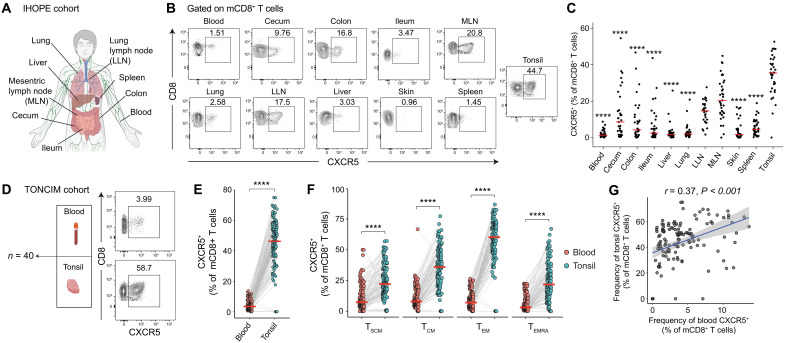 Figure 1
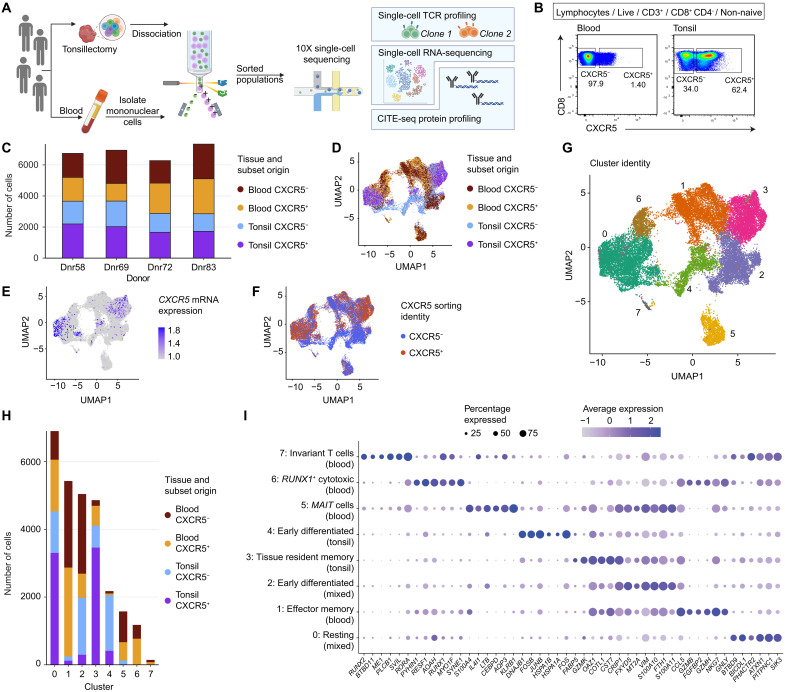 Figure 2
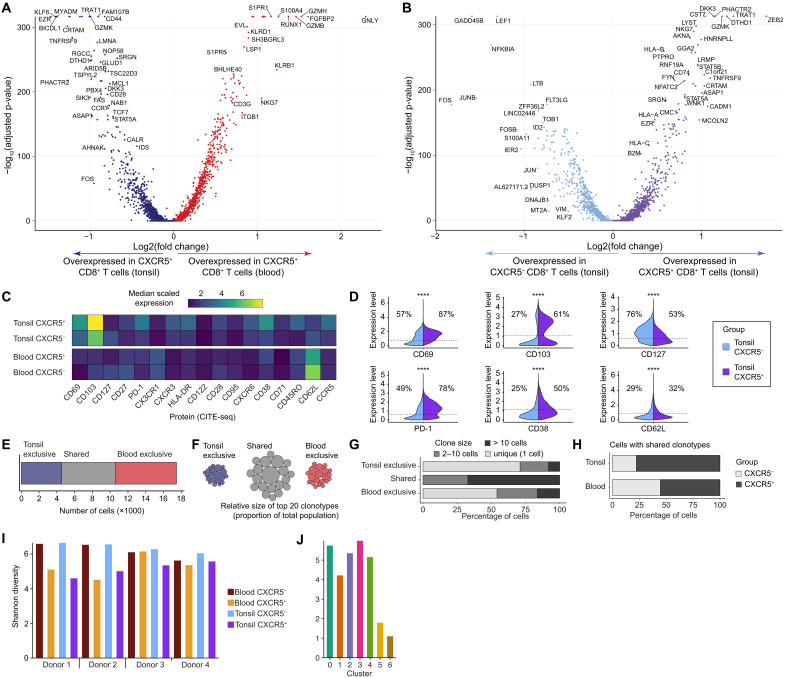 Figure 3
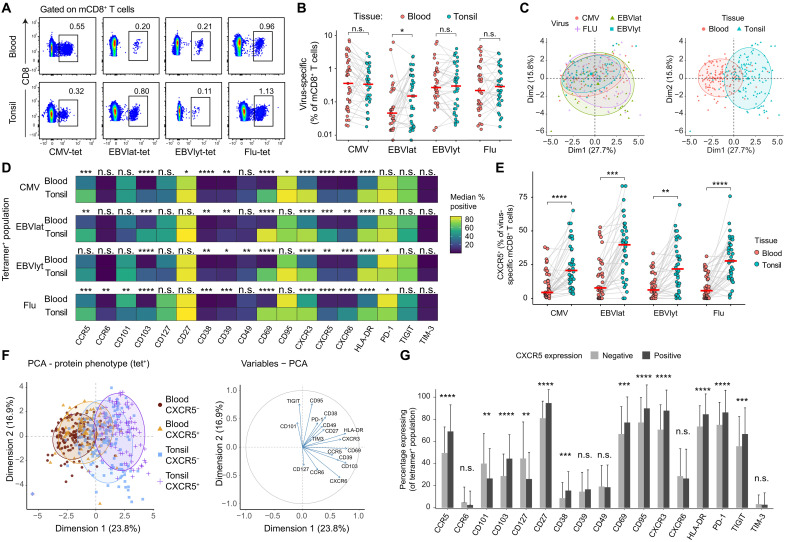 Figure 4
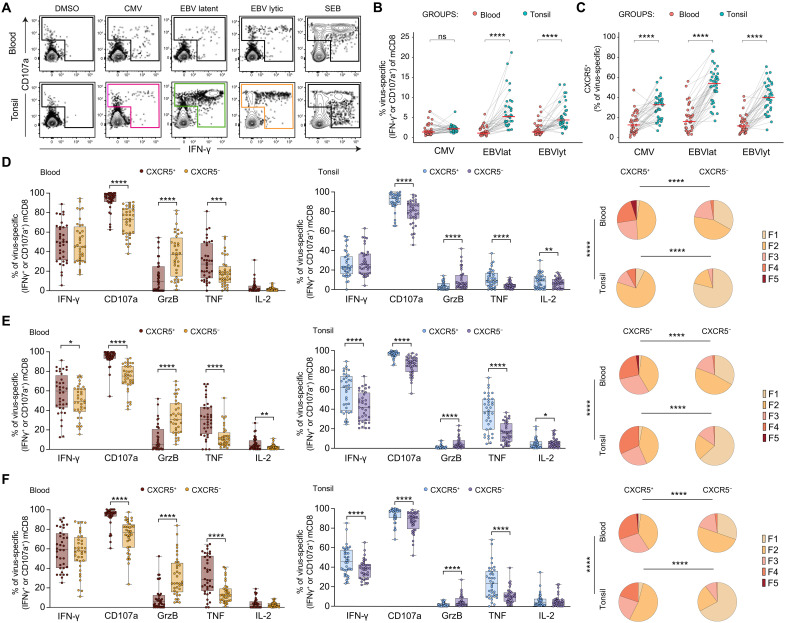 Figure 5
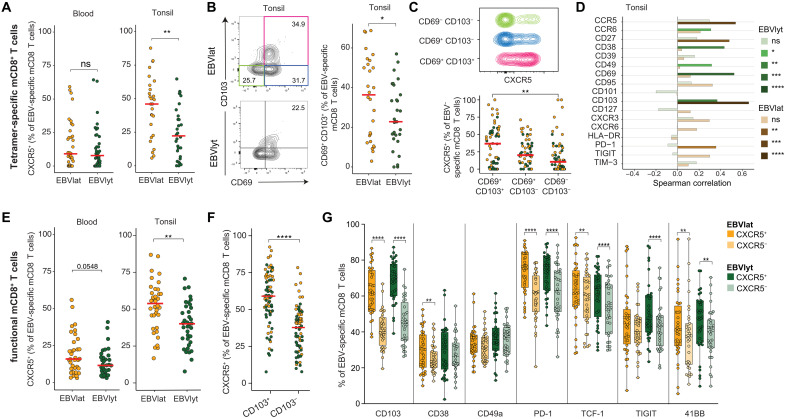 Figure 6
Peer Reviews
No public reviews on file for this paper yet. If you reviewed it on a platform where reviews are public (OpenReview, ICLR, NeurIPS, ICML), you can paste yours below so the community can read it here.
Videos
No videos yet. Explain this paper in a talk, walkthrough, or lecture? Add one.
Taxonomy
TopicsChemokine receptors and signaling · T-cell and B-cell Immunology · Viral-associated cancers and disorders