Mapping life’s disparity and evolutionary constraints in a geometric complexity space
Guillaume Dera, Elise Nardin, Laurent Risser, Marius Albino, Quentin Garnier, Marion Kardacz, Léa Monge-Waleryszak

TL;DR
This paper explores how life on Earth is limited to a few basic shapes due to physical and evolutionary constraints, using a new geometric approach.
Contribution
The study introduces a geometric complexity space to quantify and compare the structural diversity of life forms.
Findings
Life forms cluster around simple shapes like linear and rounded structures.
Complex heteromorphic forms are consistently avoided due to physical and evolutionary constraints.
The restriction in form is shaped by geological time and ecological lifestyle.
Abstract
The Earth’s biosphere exhibits a notable diversity of forms, yet the full morphological extent and limits of life remain largely unexplored. Here, we develop a geometric complexity space for comparing all known unicellular and multicellular phyla using fractal descriptors of the density and heterogeneity of body mass and structure. By applying this approach to a large set of extant biological shapes, we show that life exploits a tiny portion of structural possibilities, clustering around linear, rounded, and densely structured forms, while consistently avoiding complex heteromorphic ones. We show that this restriction results from deep physical, metabolic, and developmental limitations, shaped over geological time by the evolution of body size and ecological lifestyle. Our findings provide a global, quantitative perspective on the long-standing interplay between chance and necessity in…
Genes, proteins, chemicals, diseases, species, mutations and cell lines named across the full text — each resolved to its canonical identifier and authoritative record.
Click any figure to enlarge with its caption.
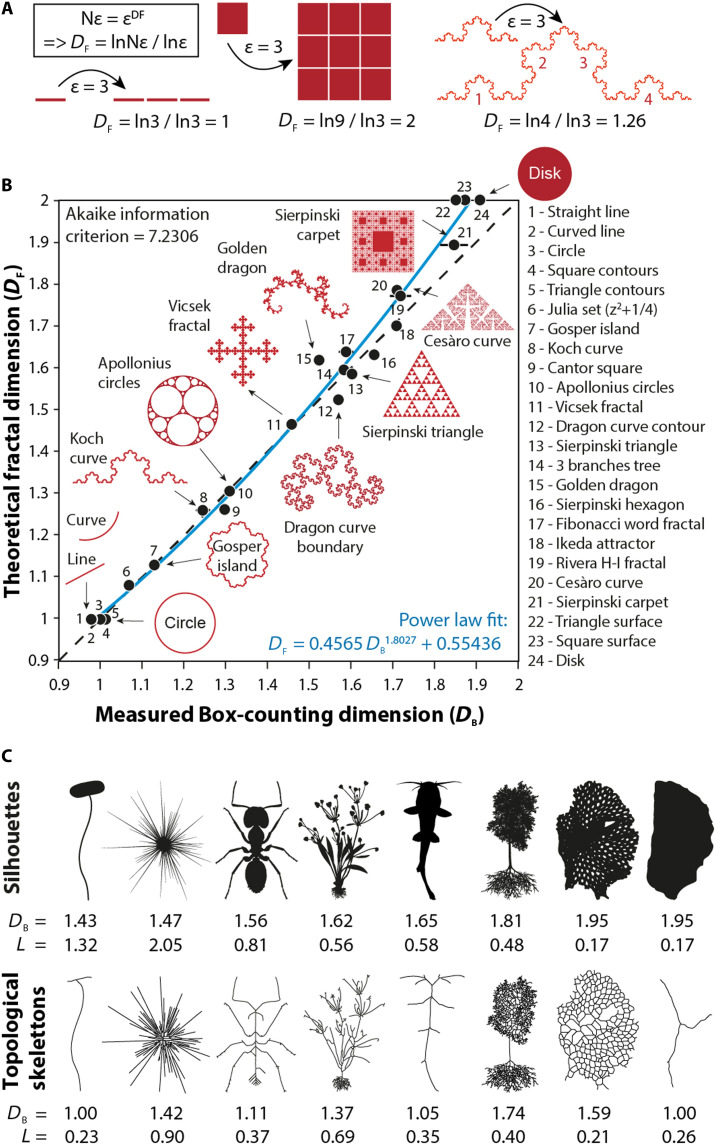 Figure 1
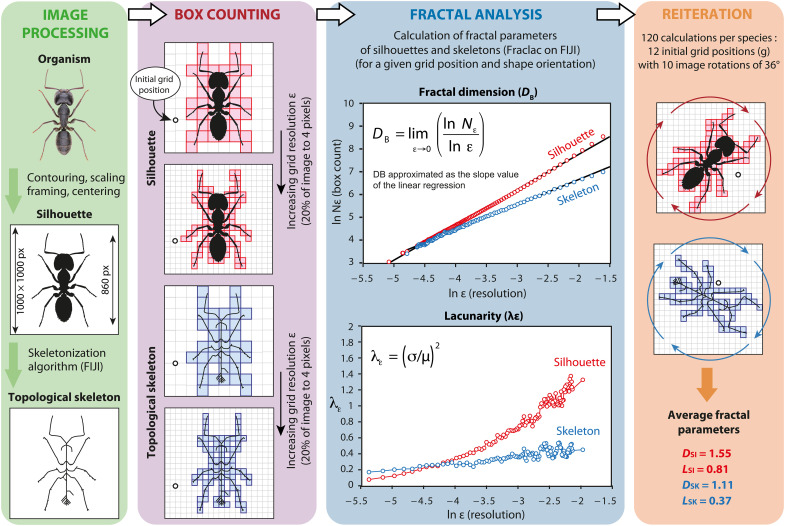 Figure 2
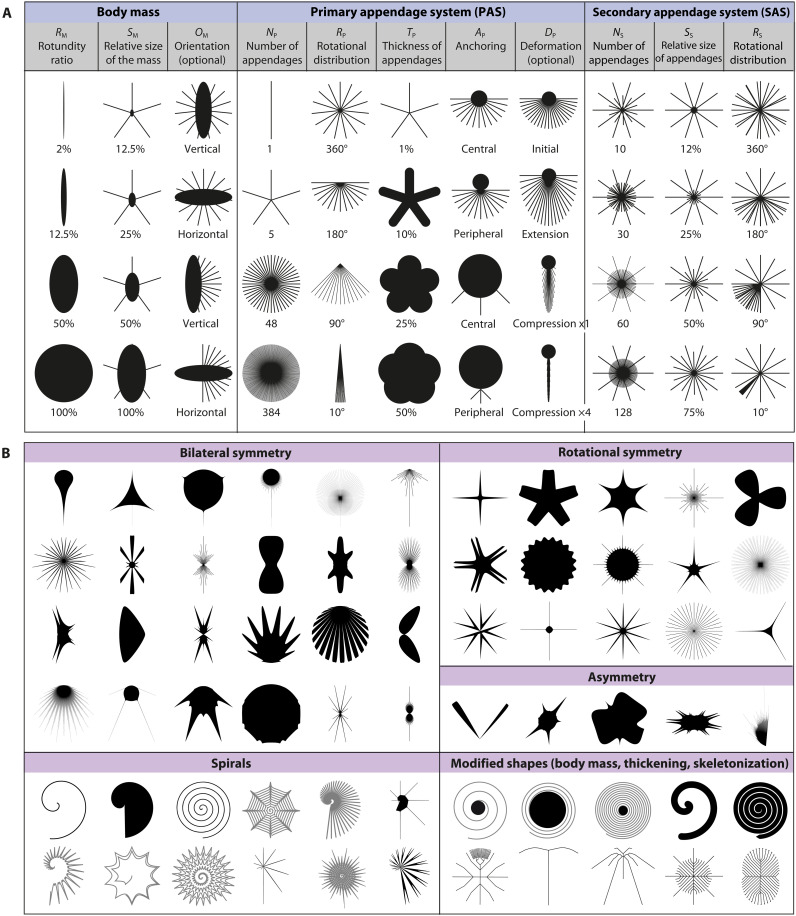 Figure 3
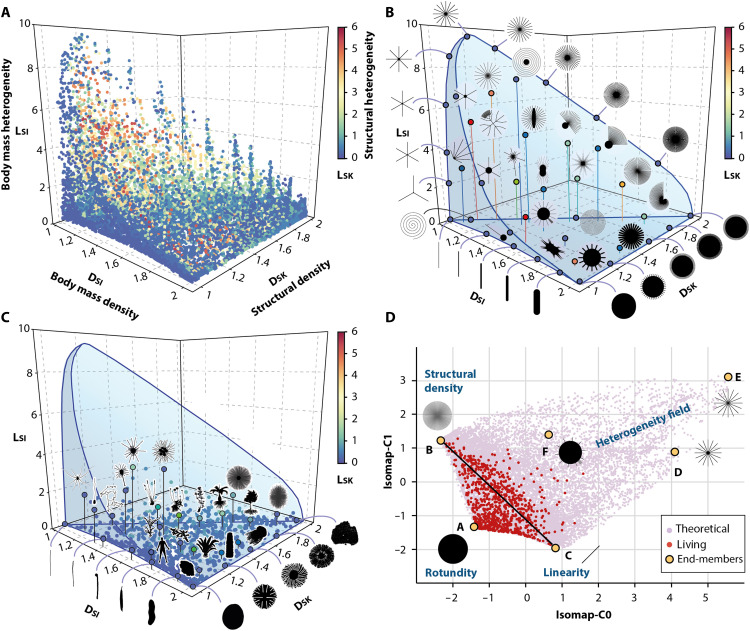 Figure 4
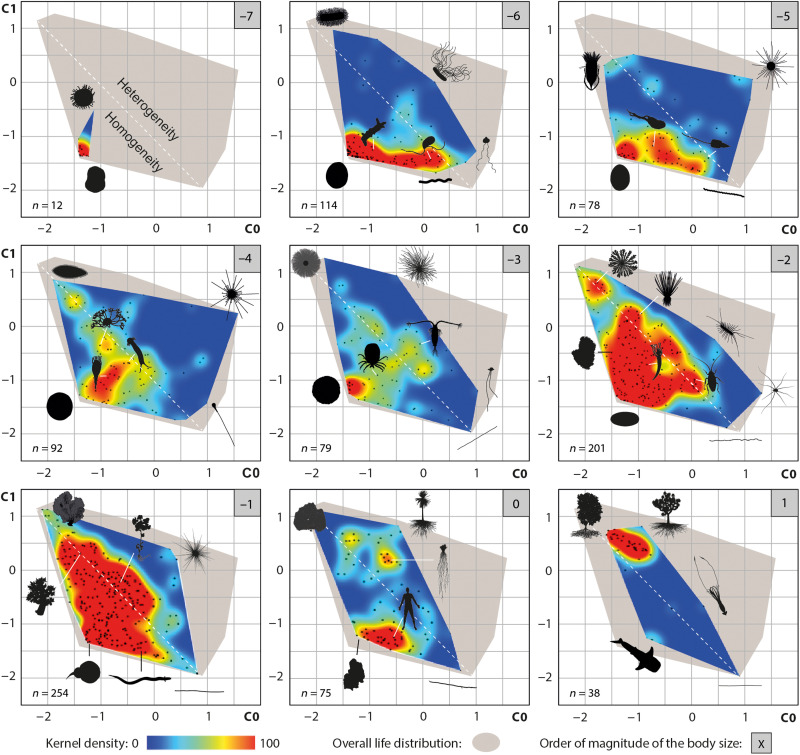 Figure 5
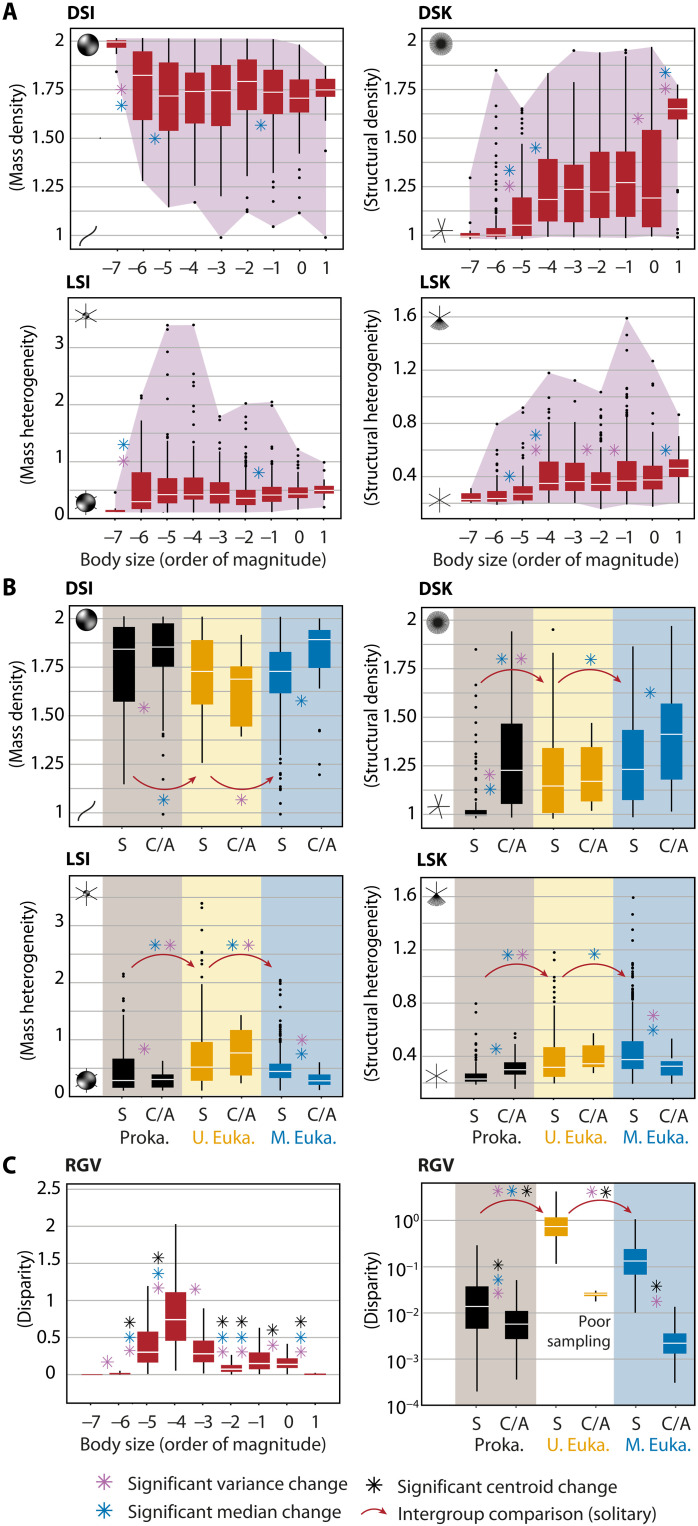 Figure 6
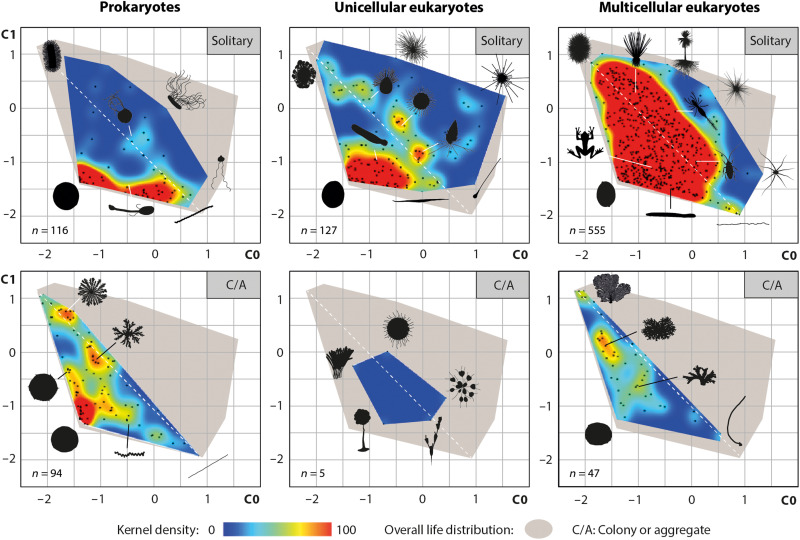 Figure 7
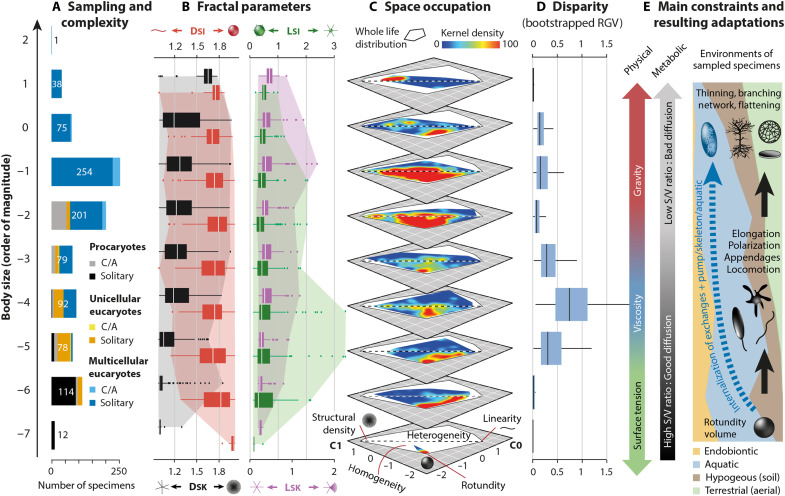 Figure 8
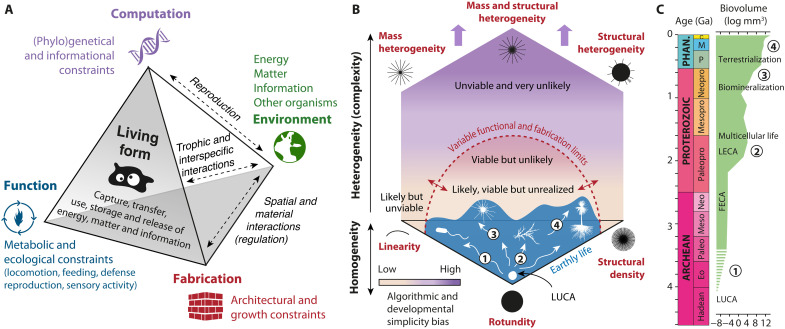 Figure 9
Peer Reviews
No public reviews on file for this paper yet. If you reviewed it on a platform where reviews are public (OpenReview, ICLR, NeurIPS, ICML), you can paste yours below so the community can read it here.
Videos
No videos yet. Explain this paper in a talk, walkthrough, or lecture? Add one.
Taxonomy
TopicsEvolution and Paleontology Studies · Morphological variations and asymmetry · Paleontology and Stratigraphy of Fossils