Impact of prehabilitation on patient-perceived quality of recovery after surgery: prospective cohort study
Fernando Dana, Rubèn González-Colom, Beatriz Tena, David Capitán, Dulce Momblan, Betina Campero, Laura García Lopez, Marta Ubré, Raquel Sebio-García, Adelaida Zabalegui, Graciela Martinez-Palli, Graciela Martínez-Pallí, Graciela Martínez-Pallí, Marta Ubré, Raquel Risco

TL;DR
A study found that prehabilitation before surgery improves patients' recovery experience and reduces complications.
Contribution
This study demonstrates that multimodal prehabilitation enhances patient-reported recovery and reduces complications after surgery.
Findings
Patients who completed prehabilitation had fewer postoperative complications than those who did not.
Prehabilitation patients had significantly higher Quality of Recovery-15 scores at baseline, discharge, and 30 days post-discharge.
At 30 days after discharge, 66% of prehabilitation patients recovered essential activities compared to 35% in the control group.
Abstract
Multimodal prehabilitation has the potential to reduce complications, shorten hospital stays, and decrease healthcare resource utilization. However, its impact on patient-centred outcomes, such as patient reported-outcomes, has been less extensively studied. This study assessed the effect of multimodal prehabilitation on patient-perceived quality of recovery following elective surgery. This was a prospective cohort study of patients undergoing elective gastrointestinal surgery between 1 February 2024 and 28 February 2025 who met institutional criteria for prehabilitation. Outcomes, including comparing postoperative complications, length of hospital stay, and perceived recovery, were compared between patients who completed the prehabilitation program and those who did not (control cohort). The primary outcome measure was the Quality of Recovery-15 (QoR-15) questionnaire score. In all,…
Genes, proteins, chemicals, diseases, species, mutations and cell lines named across the full text — each resolved to its canonical identifier and authoritative record.
Click any figure to enlarge with its caption.
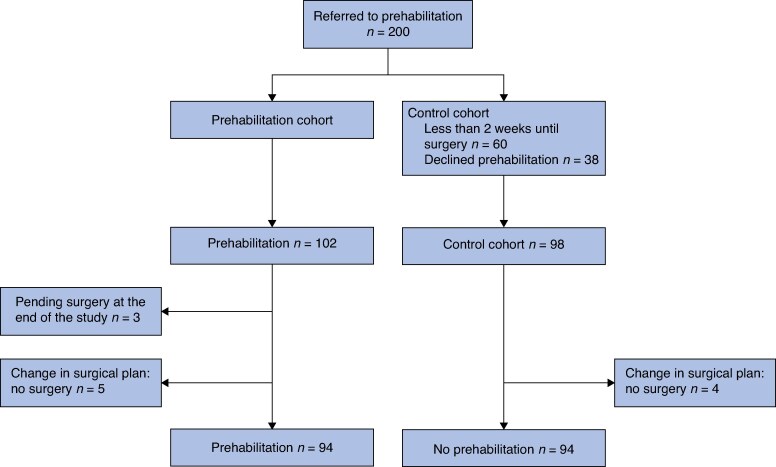 Figure 1
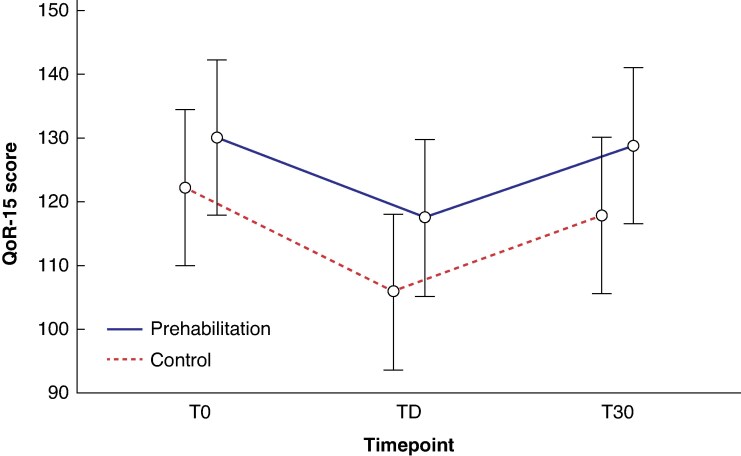 Figure 2
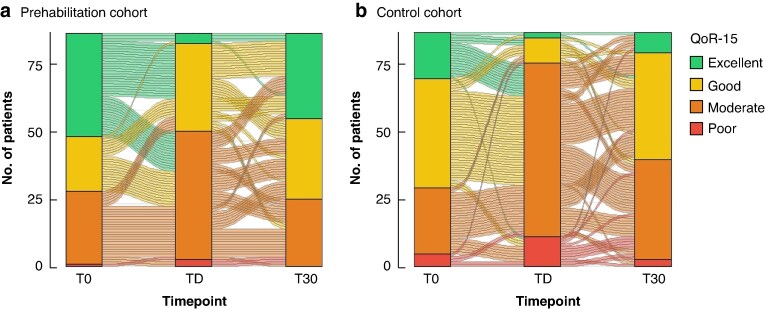 Figure 3
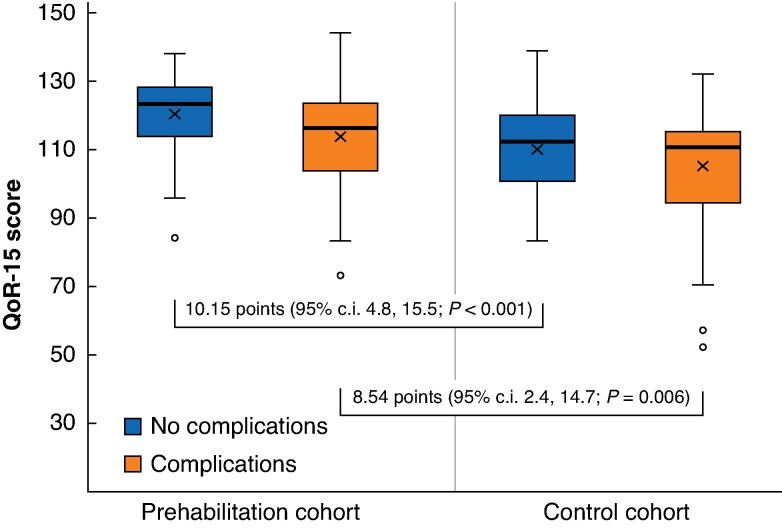 Figure 4
Peer Reviews
No public reviews on file for this paper yet. If you reviewed it on a platform where reviews are public (OpenReview, ICLR, NeurIPS, ICML), you can paste yours below so the community can read it here.
Videos
No videos yet. Explain this paper in a talk, walkthrough, or lecture? Add one.
Taxonomy
TopicsEnhanced Recovery After Surgery · Nausea and vomiting management · Intensive Care Unit Cognitive Disorders