Integrating chromosome 19 local ancestry in genetic‐regional association studies reveal novel ancestry‐specific variants associated with hippocampal volume and CSF‐Aβ42
Tavia E Evans, Elizabeth Chudleigh, Patricia Genius, Blanca Rodríguez‐Fernández, Federica Anastasi, Carolina Minguillón, Manel Esteller, Arcadi Navarro, Hieab H.H. Adams, Natalia Vilor‐Tejedor

TL;DR
This study shows how analyzing local ancestry on chromosome 19 can reveal new genetic variants linked to Alzheimer's disease traits like hippocampal volume and amyloid levels.
Contribution
The novel approach integrates local ancestry inference with regional GWAS to detect ancestry-specific variants missed by traditional methods.
Findings
SNPs in the EIF3K and ZNF675 regions were uniquely linked to African and West Asian ancestries for hippocampal volume and Aβ42 levels.
Local ancestry analysis identified APOE region SNPs with higher resolution than traditional GWAS methods.
The study highlights the importance of ancestry-specific genetic analysis for understanding Alzheimer's disease.
Abstract
Understanding the influence of genetic ancestry on Alzheimer's disease (AD) is essential to addressing health disparities and improving the generalizability of genetic discoveries. While most Genome‐Wide Association Studies (GWAS) rely on global ancestry, local ancestry inference (LAI) provides a refined methodology to detect ancestry‐specific genetic effects. We aimed to integrate local ancestry inference at chromosome 19 into regional genetic association analysis to identify local ancestry specific variants associated with hippocampal volume (HV) and cerebrospinal fluid (CSF) Amyloid beta 42 (Aβ42) levels. The framework integrated Gnomix tool for chromosome 19 local ancestry deconvolution and Tractor for regional ancestry‐informed GWAS adjusted by chronological age, sex, years of education, APOE‐ε4 status and eight components derived from LAI analysis, capturing the ancestry‐specific…
Genes, proteins, chemicals, diseases, species, mutations and cell lines named across the full text — each resolved to its canonical identifier and authoritative record.
Click any figure to enlarge with its caption.
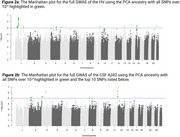 Figure 1
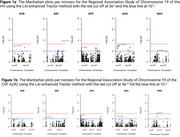 Figure 2
Peer Reviews
No public reviews on file for this paper yet. If you reviewed it on a platform where reviews are public (OpenReview, ICLR, NeurIPS, ICML), you can paste yours below so the community can read it here.
Videos
No videos yet. Explain this paper in a talk, walkthrough, or lecture? Add one.
Taxonomy
TopicsGenetic Associations and Epidemiology · Dementia and Cognitive Impairment Research · Functional Brain Connectivity Studies