PET/MR imaging of LC‐NE function for interrogation of health disparity in preclinical AD
Anmol S Bhatia, Andrew Kelleher, Ujjval Chopra, Jennifer Bernal, Sachita Gupta, Matthew Arthur, Oliver Cesar, Artem Mikheev, Jingyun Chen, Henry Rusinek, Yu‐Shin Ding

TL;DR
This study uses PET/MRI imaging to show that African Americans have higher but faster-declining brain chemical transporters linked to Alzheimer's disease, suggesting stress may contribute to health disparities.
Contribution
The study demonstrates that LC-NE function is sensitive to both age and stress effects, and validates [11C]MRB-PET as a tool for detecting health disparities in preclinical Alzheimer's.
Findings
African Americans had higher NE transporter availability in youth but faster decline with age.
Older African Americans showed steeper decline in LC transporter availability compared to whites.
Group differences in transporter availability decreased with age due to faster decline in African Americans.
Abstract
Locus Coeruleus (LC) is the earliest location for tauopathy and its decline is highly correlated with AD symptomatology. The LC‐NE system produces functional adaptive changes in response to chronic stress. [11C]MRB‐PET allows in vivo quantification of NE transporter (NET) in humans. Our previous data (ages 25‐55) demonstrated that African Americans (AA) had greater NET availability but with faster decline rate compared to whites (W), suggesting chronic lifetime discrimination/stress may contribute to health disparity. The goal of this study is to use a larger sample size and older cohort (55‐75) to further compare age and race effects on NET. Subjects underwent a 90‐min dynamic [11C]MRB‐PET via simultaneous PET/MRI. The segmentation of ROIs and LC delineation using TSE‐neuromelanin was established via registration of PET, MRI, and Freesurfer via Firevoxel…
Genes, proteins, chemicals, diseases, species, mutations and cell lines named across the full text — each resolved to its canonical identifier and authoritative record.
Click any figure to enlarge with its caption.
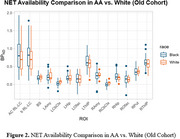 Figure 1
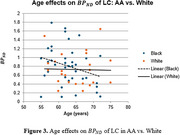 Figure 2
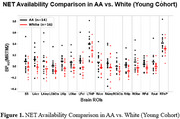 Figure 3
Peer Reviews
No public reviews on file for this paper yet. If you reviewed it on a platform where reviews are public (OpenReview, ICLR, NeurIPS, ICML), you can paste yours below so the community can read it here.
Videos
No videos yet. Explain this paper in a talk, walkthrough, or lecture? Add one.
Taxonomy
TopicsAlzheimer's disease research and treatments · Dementia and Cognitive Impairment Research · Parkinson's Disease Mechanisms and Treatments