Enzyme-cascade-amplified colorimetric biosensing platform for sub-nanomolar methylmercury in environmental waters
Wanyan Wu, Yan Guo, Lidan Deng, Wenwu Gong, Shunyu Hu, Fen Liu, Chang-ye Hui

TL;DR
A new biosensor detects very low levels of methylmercury in water using a color-changing reaction, offering a cost-effective way to monitor environmental contamination.
Contribution
The development of an enzyme-cascade-amplified biosensor with sub-nanomolar sensitivity for methylmercury detection in environmental waters.
Findings
The biosensor achieved a detection limit of 0.04 nM and a linear range of 0.02–1.22 nM.
Intracellular MerB expression provided better sensitivity than surface-displayed strategies.
The biosensor performed robustly in various water matrices with minimal matrix effects.
Abstract
We developed an enzyme-cascade-amplified whole-cell biosensor for sub-nanomolar methylmercury (MeHg) detection in environmental waters. By integrating a MerB-based organomercurial lyase with a water-soluble indigoidine reporter system in a decoupled genetic circuit, we achieved a limit of detection (LOD) of 0.04 nM and a linear range of 0.02–1.22 nM. Systematic comparison of intracellular versus surface-displayed MerB strategies revealed that intracellular expression (TOP10/pCon-IND-C-B) provided superior sensitivity. The biosensor demonstrated robust performance across tap water, surface water, and seawater matrices (R2 > 0.98) with negligible matrix effects, enabling direct colorimetric quantification of culture supernatants. Notably, metabolic burden from pigment synthesis dominated the dose-response profile rather than MeHg cytotoxicity. This biosensor offers a cost-effective…
Genes, proteins, chemicals, diseases, species, mutations and cell lines named across the full text — each resolved to its canonical identifier and authoritative record.
Click any figure to enlarge with its caption.
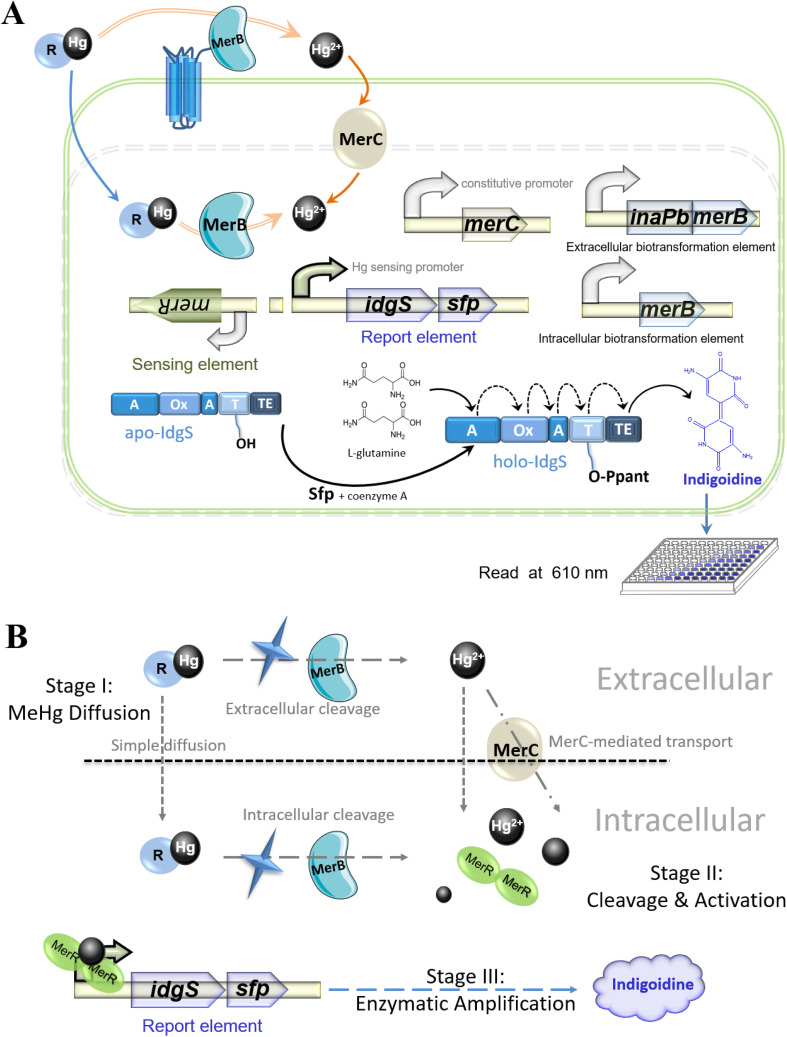 Figure 1
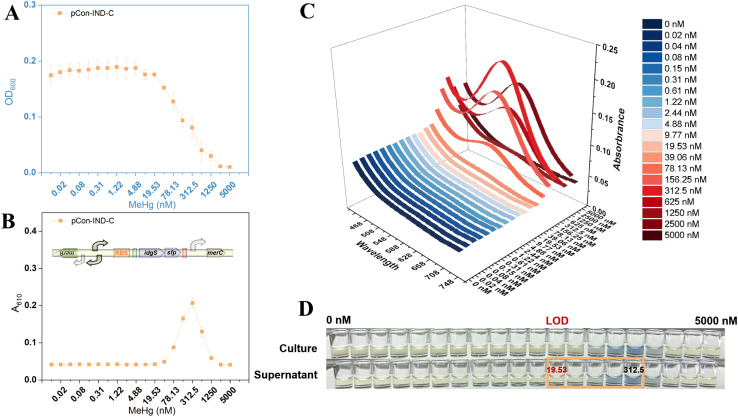 Figure 2
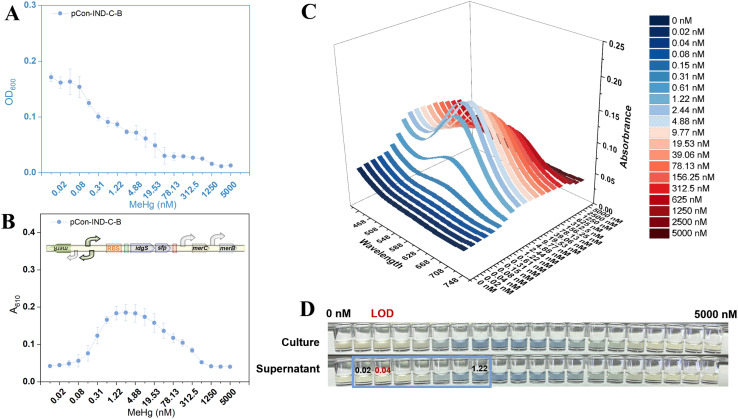 Figure 3
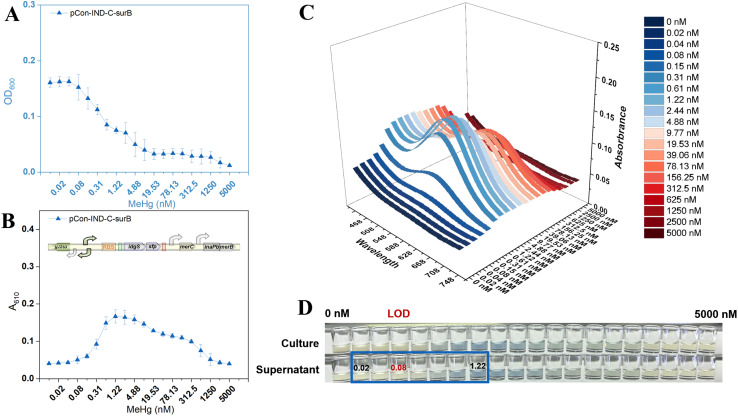 Figure 4
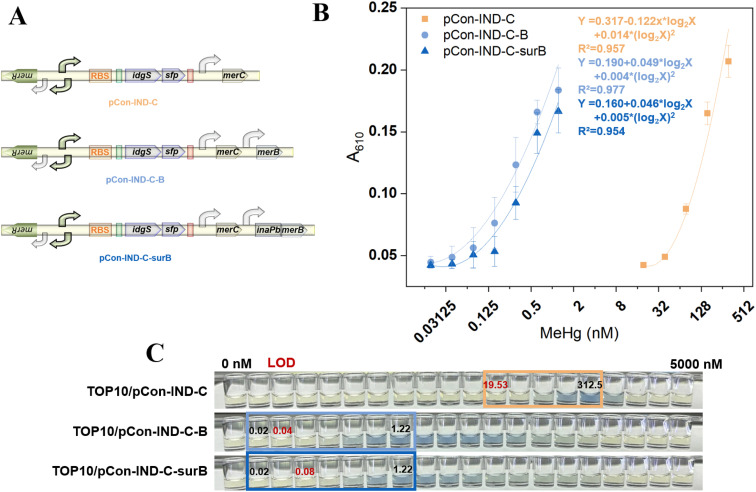 Figure 5
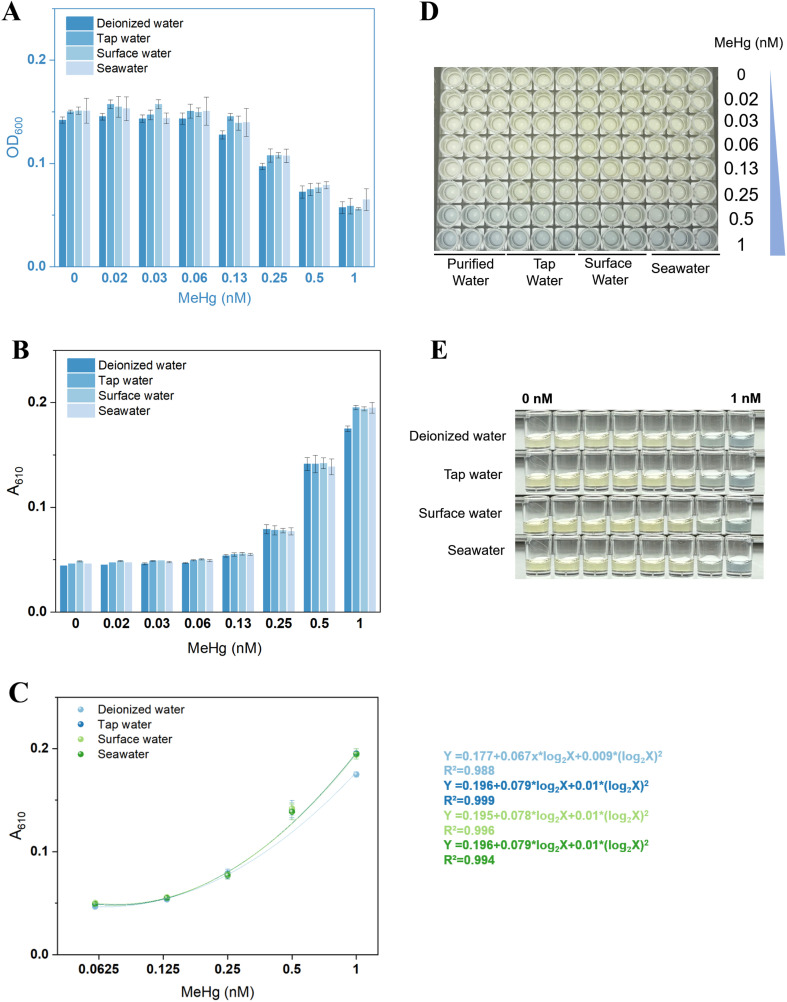 Figure 6
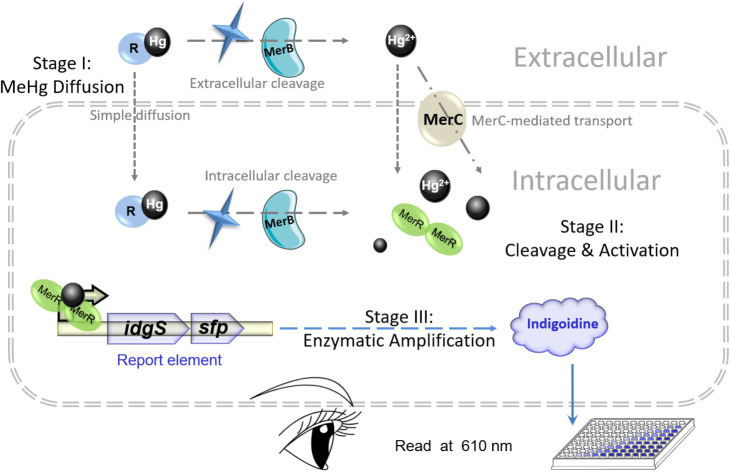 Figure 7
Peer Reviews
No public reviews on file for this paper yet. If you reviewed it on a platform where reviews are public (OpenReview, ICLR, NeurIPS, ICML), you can paste yours below so the community can read it here.
Videos
No videos yet. Explain this paper in a talk, walkthrough, or lecture? Add one.
Taxonomy
TopicsAdvanced Nanomaterials in Catalysis · bioluminescence and chemiluminescence research · Advanced biosensing and bioanalysis techniques