Thulium YAG laser versus bipolar enucleation for management of benign prostate obstruction secondary to large prostates (>80 gm): A multicenter prospective randomized study
H. Shaker, A. Yehia, M. El Adawy, Mohamed Abd El Ghani, A. Kassem, M. Abd El Hamid

TL;DR
This study compares two surgical methods for treating large benign prostates and finds similar outcomes in terms of effectiveness and complications.
Contribution
The study provides a direct comparison of THuLEP and BEEP for large prostates (>80 gm), offering insights into their respective complication rates and functional outcomes.
Findings
Both THuLEP and BEEP showed comparable improvement in IPSS score, Q max, and PVR postoperatively.
THuLEP had higher rates of urgency and stress urinary incontinence at 1 month compared to BEEP.
Incontinence rates improved in both groups by 3 months, with some persistent cases in THuLEP after 1 year.
Abstract
Endoscopic enucleation of the prostate (EEP) was introduced to treat patients with large prostate. The study compared the perioperative and post-operative outcomes of bipolar current and Thulium-YAG in endoscopic enucleation of large prostates above 80 gm. This is a prospective study conducted on 120 male patients. The patients were randomized into two equal groups; Group A Thulium laser enucleation of the prostate (THuLEP) and Group B bipolar enucleation of the prostate (BEEP). All patients were preoperatively evaluated as regards operative time, hemoglobin drop, intraoperative and early postoperative complications, hospital stay, and time of catheter removal. Patients were then followed up at 1, 3, 6, and 12 months to detect urinary and sexual functional outcome and any postoperative complications. The preoperative characteristics of both groups were comparable. The mean prostate…
Genes, proteins, chemicals, diseases, species, mutations and cell lines named across the full text — each resolved to its canonical identifier and authoritative record.
Click any figure to enlarge with its caption.
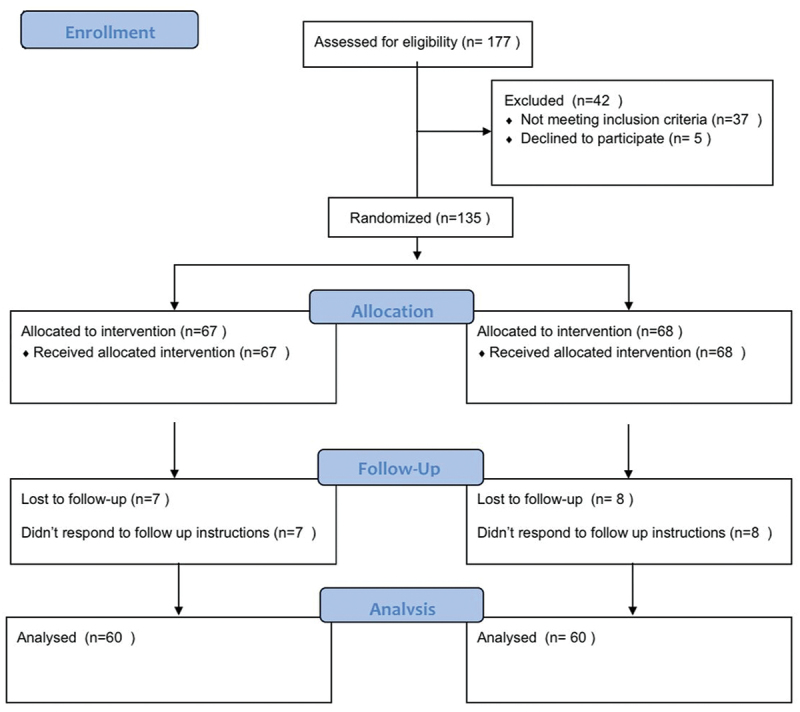 Figure 1
 Figure 2
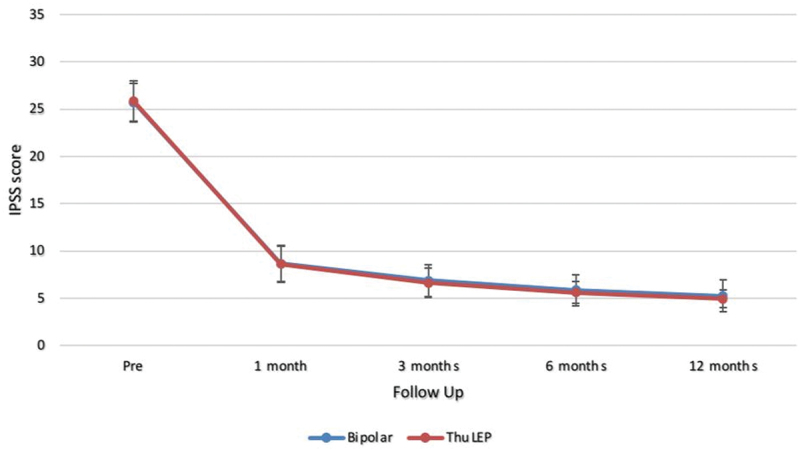 Figure 3
 Figure 4
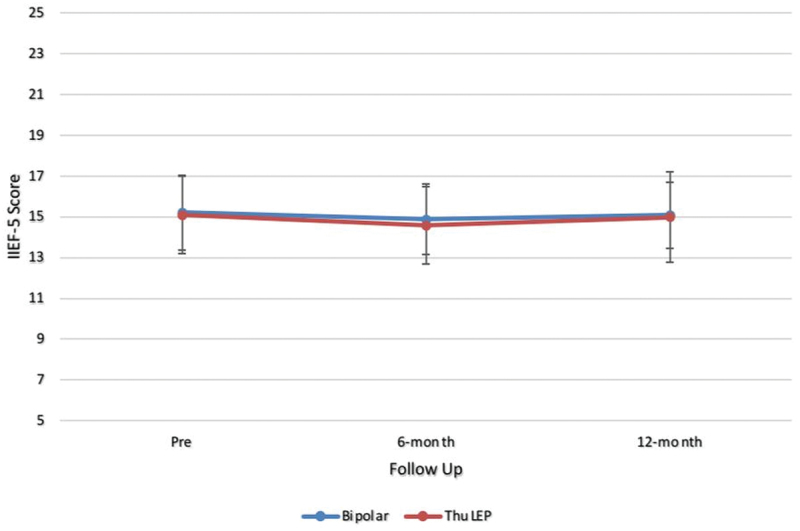 Figure 5
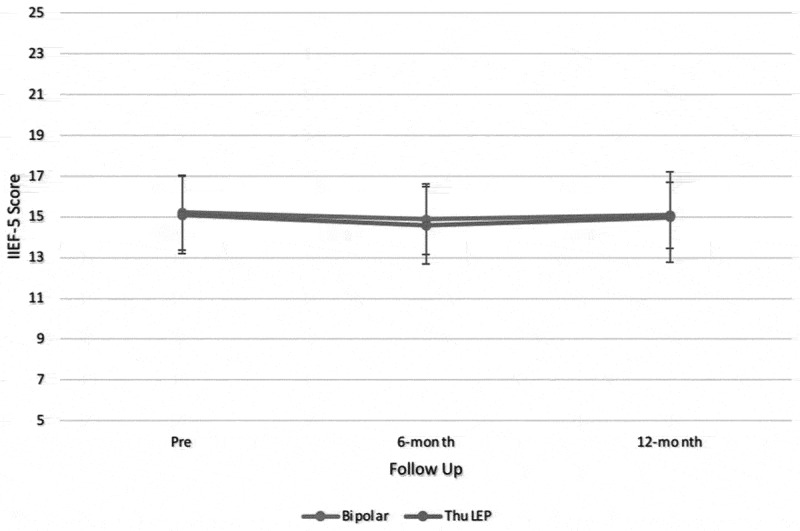 Figure 6
Peer Reviews
No public reviews on file for this paper yet. If you reviewed it on a platform where reviews are public (OpenReview, ICLR, NeurIPS, ICML), you can paste yours below so the community can read it here.
Videos
No videos yet. Explain this paper in a talk, walkthrough, or lecture? Add one.
Taxonomy
TopicsUrinary Bladder and Prostate Research · Urologic and reproductive health conditions · Urological Disorders and Treatments