Insights into the complexity of SARS-CoV-2 Mpro inhibition: Ebselen and its derivatives impair dimerisation of the enzyme
Simone Fabbian, Silvia Fabi, Laurin Schwarz, Giovanni Preto, Chiara Schiavinato, Cristiano Salata, Letizia Crocetti, Roberto Battistutta, Barbara Gatto, Alice Sosic

TL;DR
This study explores how Ebselen and its derivatives inhibit the SARS-CoV-2 protease by altering its structure, potentially offering a new treatment for COVID-19.
Contribution
The study reveals that Ebselen and its derivatives inhibit SARS-CoV-2 Mpro by inducing a dimer-to-monomer shift, a novel mechanism of action.
Findings
Ebselen and its derivatives bind covalently to SARS-CoV-2 Mpro with multiple stoichiometry.
The compounds induce a dose-dependent shift in the dimer-monomer equilibrium of the enzyme.
The monomeric state of the protease is likely inactive, contributing to the observed inhibition.
Abstract
The SARS-CoV-2 Main Protease (Mpro), a key enzyme for viral replication, represents a highly attractive target for the development of broad-spectrum anti-coronavirus therapeutics. The organoselenium drug Ebselen has shown potent in vitro inhibition of Mpro as well as antiviral activity, granting clinical interest as a COVID-19 treatment option. Here we show that Ebselen and selected derivatives with human neutrophil elastase (HNE) inhibition and anti-radical activity are able to bind covalently to the viral enzyme with multiple stoichiometry, exhibiting inhibitory activity towards SARS-CoV-2 Mpro with potencies in the nanomolar range. Employing a mass spectrometry-based approach, we show that, upon binding to the target, Ebselen and its derivatives induce a dose-dependent shift in the dimer-monomer equilibrium, favouring the inactive monomeric state of the viral protease and possibly…
Genes, proteins, chemicals, diseases, species, mutations and cell lines named across the full text — each resolved to its canonical identifier and authoritative record.
Click any figure to enlarge with its caption.
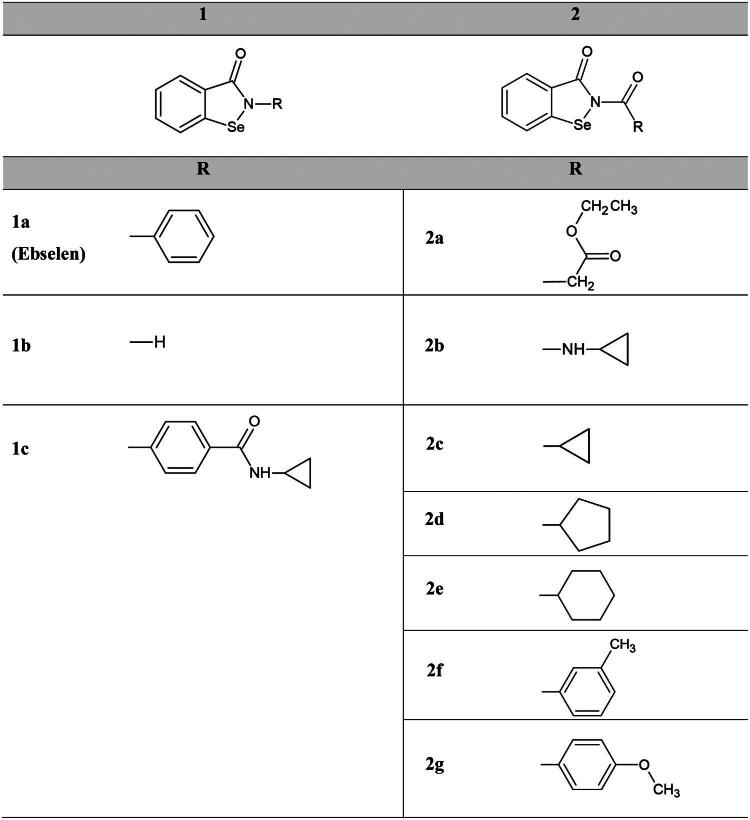 Figure 1
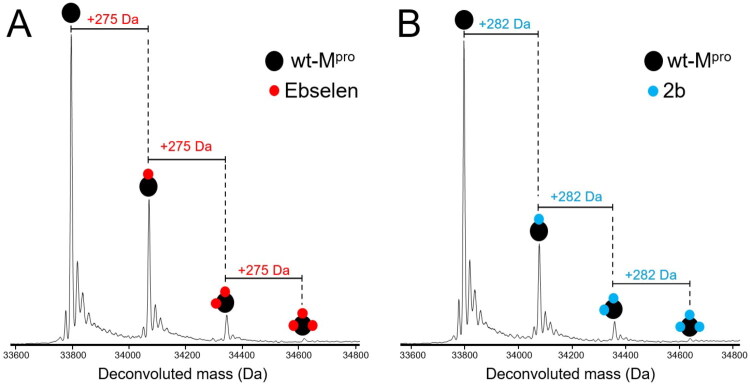 Figure 2
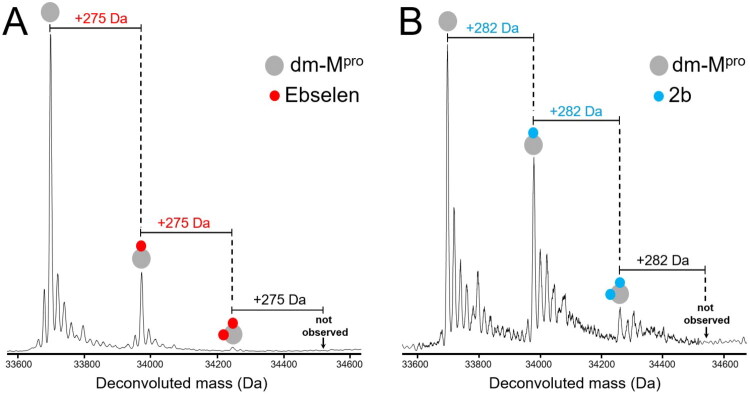 Figure 3
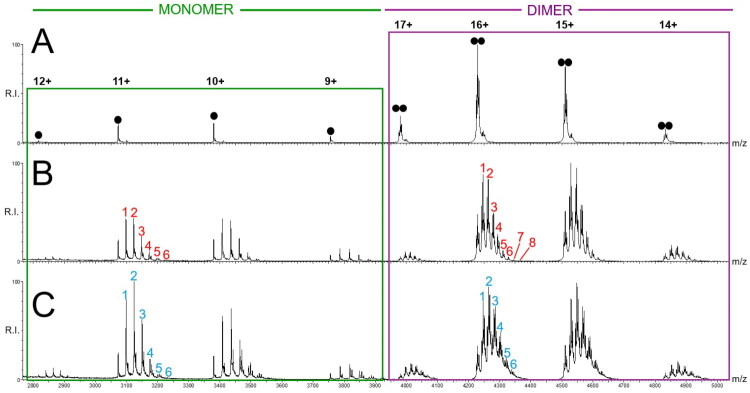 Figure 4
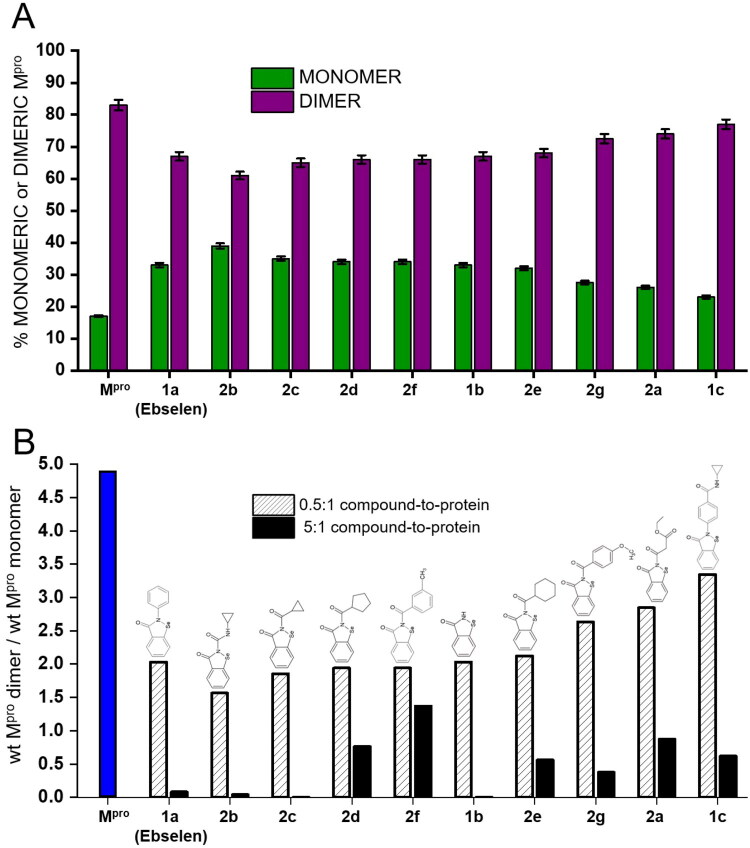 Figure 5
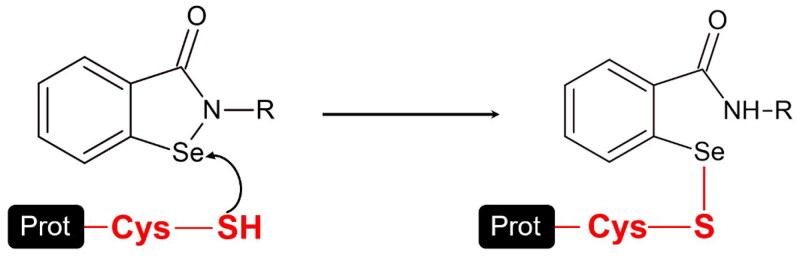 Figure 6
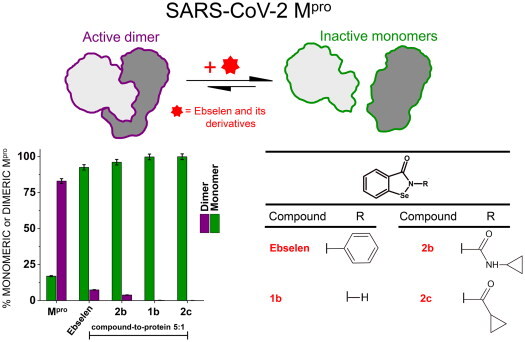 Figure 7
Peer Reviews
No public reviews on file for this paper yet. If you reviewed it on a platform where reviews are public (OpenReview, ICLR, NeurIPS, ICML), you can paste yours below so the community can read it here.
Videos
No videos yet. Explain this paper in a talk, walkthrough, or lecture? Add one.
Taxonomy
TopicsOrganoselenium and organotellurium chemistry · Redox biology and oxidative stress · Click Chemistry and Applications