Diagnostic and clinical utility of exome sequencing and chromosomal microarray in children with GDD/iD: a meta-analysis
Maliwan Tengsujaritkul, Orawan Louthrenoo, Narueporn Likhitweerawong, Nonglak Boonchooduang, Manit Srisurapanont

TL;DR
Exome sequencing provides higher diagnostic rates than chromosomal microarray for children with global developmental delay or intellectual disability.
Contribution
This meta-analysis demonstrates that whole exome sequencing outperforms chromosomal microarray in diagnosing GDD/iD in children.
Findings
WES has a pooled diagnostic yield of 0.37, significantly higher than CMA's 0.19.
WES showed higher diagnostic rates in both same-sample and different-sample comparisons.
WES may be recommended as a first-line diagnostic test for GDD/ID.
Abstract
Global developmental delay/intellectual disability (GDD/ID) is among the most common neurodevelopmental disorders, with up to half of cases are attributed to genetic factors. Chromosome microarray (CMA) has traditionally been the primary genetic test for idiopathic GDD/ID. However, whole exome sequencing (WES) and whole genome sequencing (WGS) have recently emerged, substantially increasing diagnostic yields in these populations. We conducted a comprehensive literature search of PubMed, Scopus, EMBASE, and the Cochrane Library from inception to April 29, 2025. Studies reporting the diagnostic utility of these tests in children with GDD/ID were included and analyzed. A total of 102 studies, comprising 55,752 children, were reviewed. The pooled diagnostic yield of WES was 0.37 (95% CI: 0.33–0.41; I2 = 93%), significantly higher than that of CMA at 0.19 (95% CI: 0.16–0.21; I2 = 95%).…
Genes, proteins, chemicals, diseases, species, mutations and cell lines named across the full text — each resolved to its canonical identifier and authoritative record.
Click any figure to enlarge with its caption.
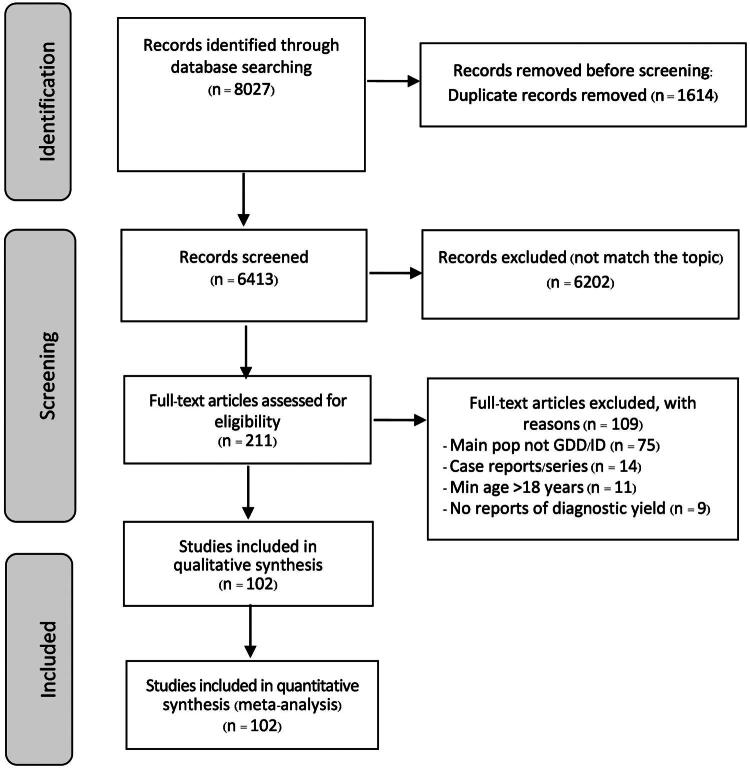 Figure 1
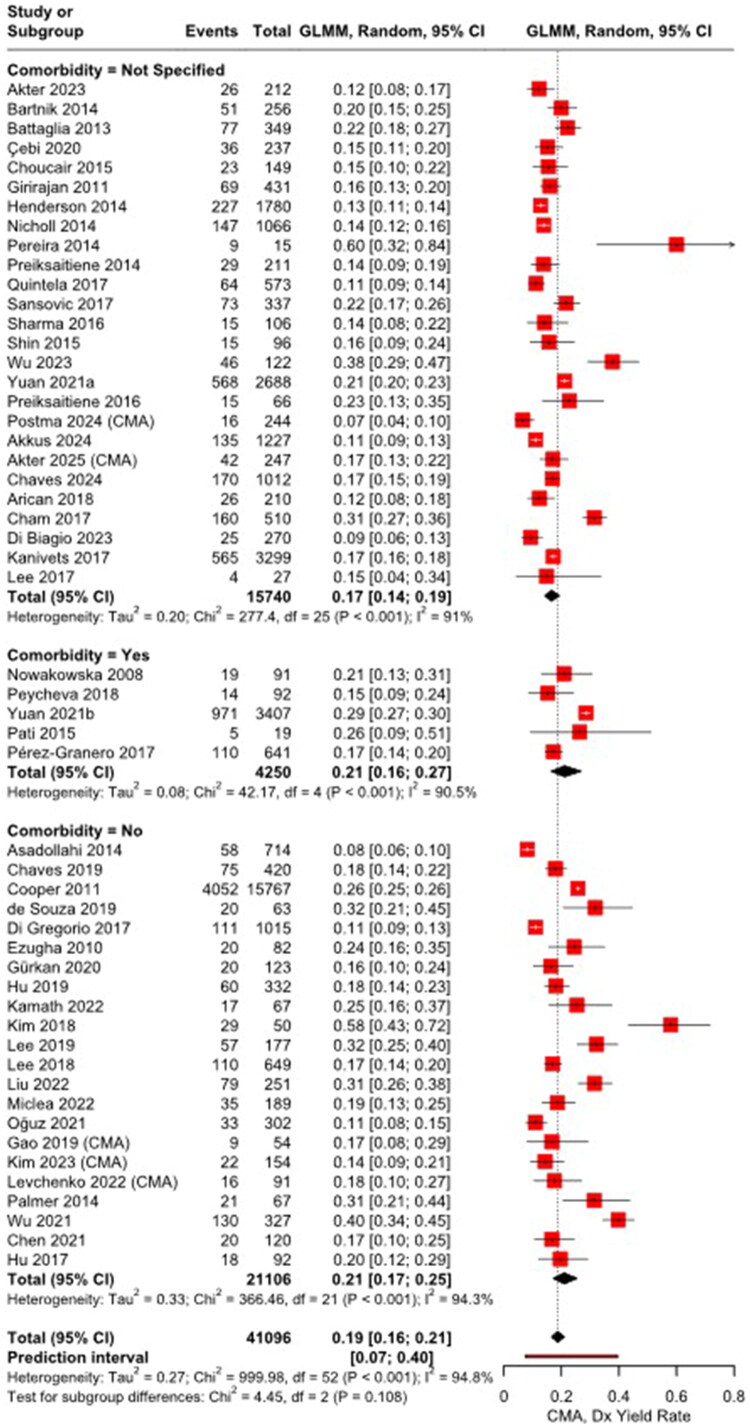 Figure 2
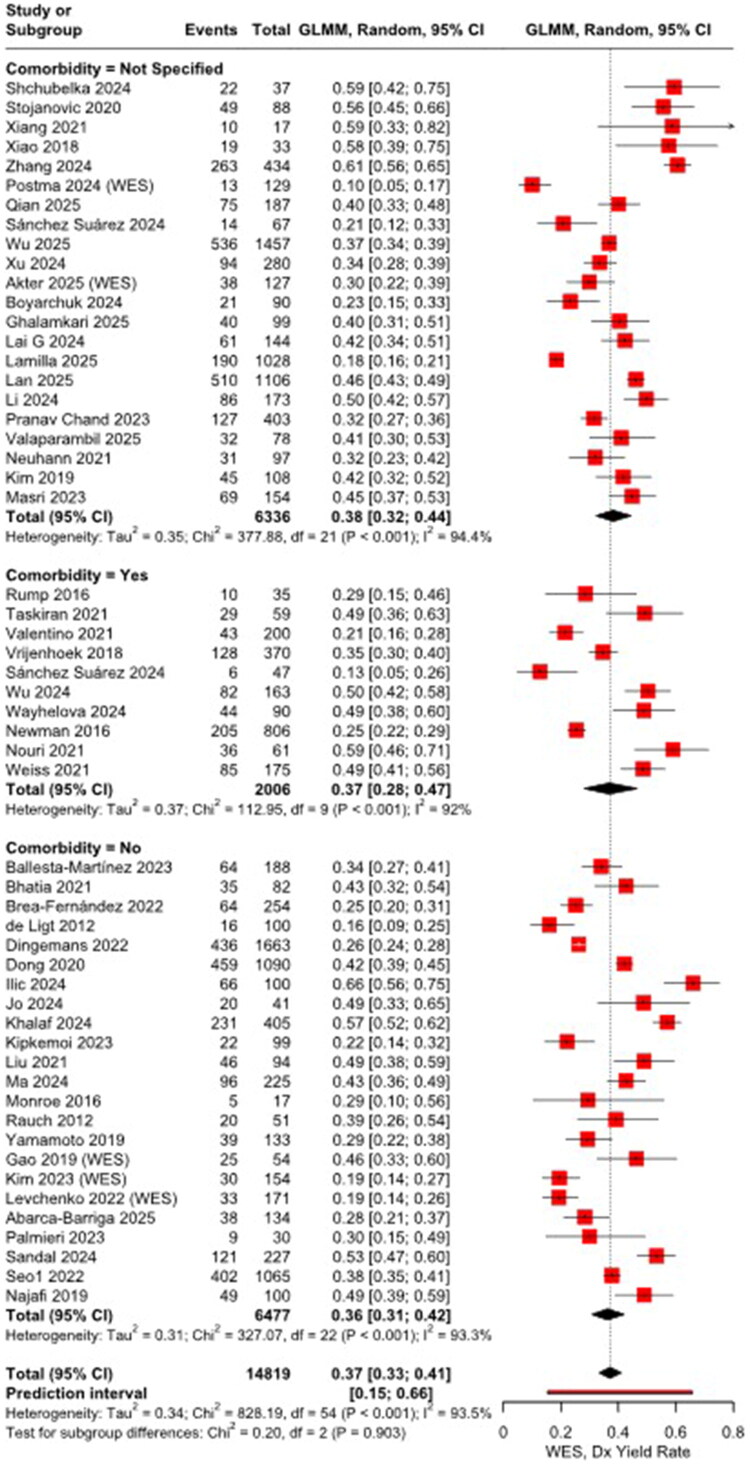 Figure 3
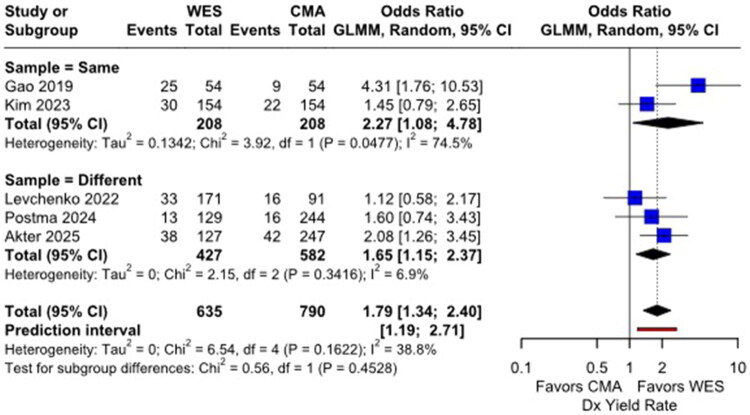 Figure 4
Peer Reviews
No public reviews on file for this paper yet. If you reviewed it on a platform where reviews are public (OpenReview, ICLR, NeurIPS, ICML), you can paste yours below so the community can read it here.
Videos
No videos yet. Explain this paper in a talk, walkthrough, or lecture? Add one.
Taxonomy
TopicsGenomics and Rare Diseases · Genetics and Neurodevelopmental Disorders · Immunodeficiency and Autoimmune Disorders